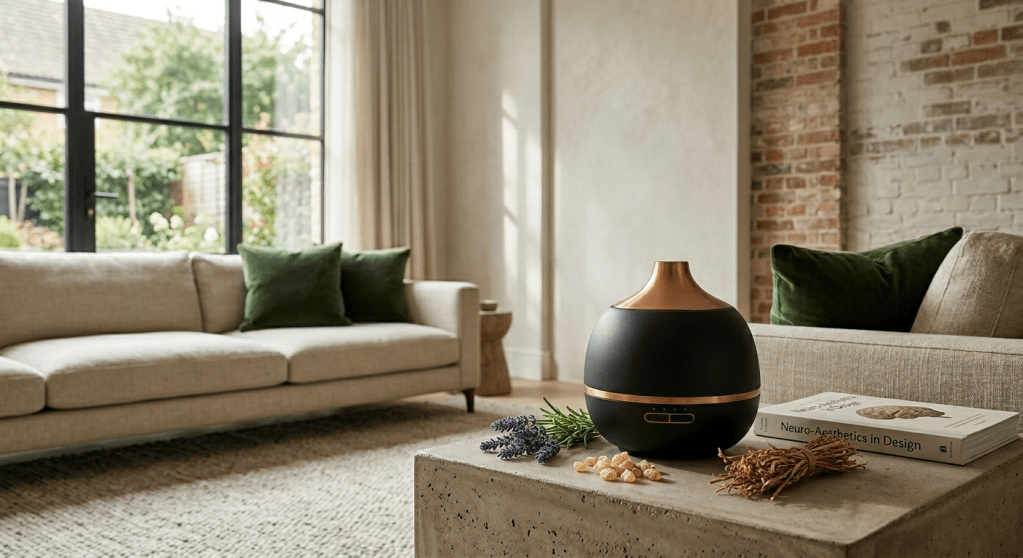
- What the Vagus Nerve Has to Do With Your Living Room
- The Case for Trace Botanical Scent (Not Fragrance Overload)
- Building a Home Scenting System for Anxiety Relief: Room by Room
- The Olfactory Architecture Protocol: A Practical Starting Point
- From a Designer’s Eye: Making the System Beautiful
- What Most People Get Wrong About Home Scenting for Anxiety
- Your Home Can Speak Directly to Your Nervous System
Your home is already speaking to your nervous system through light, texture, sound, and most powerfully, scent. The question is whether it’s saying rest or brace.
Most of us think of home fragrance as decoration. A candle lit for ambience. A diffuser running because it smells nice. But what if the scent moving through your rooms was doing something neurologically specific something measurable, something intentional? What if your living space could, quite literally, activate the branch of your nervous system responsible for calm?
This is the premise of olfactory architecture: the deliberate design of a home’s scent environment to influence physiological states. It sits at the intersection of neuroscience, interior design, and plant medicine. And right now, as anxiety rates continue climbing globally, it’s one of the most underexplored tools available to us. Not as a replacement for therapy or medication. As an ambient, ongoing layer of environmental support.
Let’s go into the science and then into the practice.
🌿Before we get into scent, it’s worth understanding the full picture of sensory wellness design. Our guide on 5 biophilic design elements that actually reduce stress (according to science) shows how light, texture, and nature-informed interiors work alongside scent to regulate the nervous system.
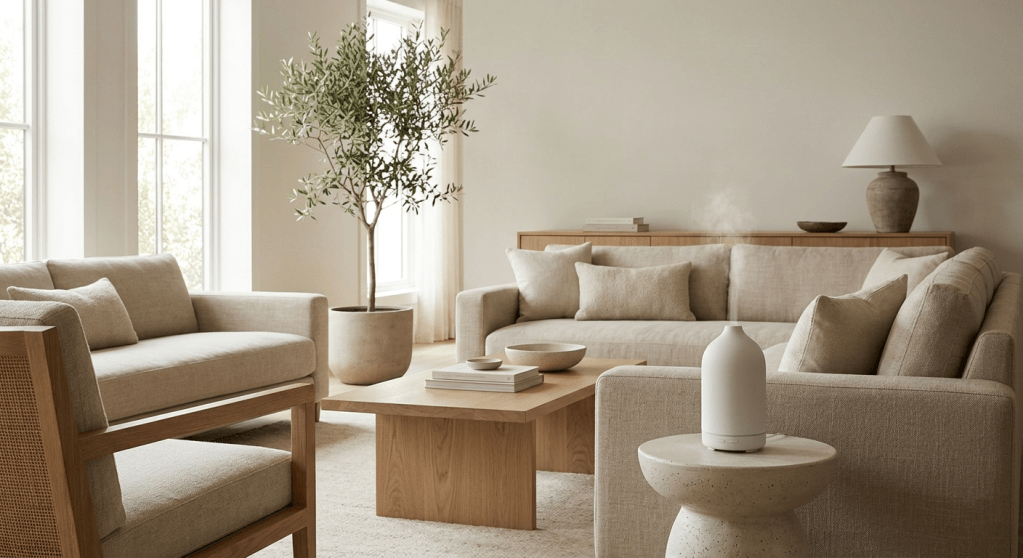
What the Vagus Nerve Has to Do With Your Living Room
The vagus nerve is the longest cranial nerve in the human body. It wanders the word “vagus” means wandering in Latin from the brainstem down through the heart, lungs, and gut. It is the primary conductor of the parasympathetic nervous system: the “rest and digest” state that opposes the cortisol-flooded, threat-scanning stress response most modern people spend far too much time in.
High vagal tone meaning a well-functioning, responsive vagus nerve is associated with lower anxiety, better emotional regulation, reduced inflammation, and improved heart rate variability. You can stimulate it through cold exposure, deep diaphragmatic breathing, humming, and yes, through smell.
Why smell? Because olfaction is the only sense with a direct neurological pathway to the limbic system the brain’s emotional processing centre without passing through the thalamus first. Every other sense routes through that relay station. Smell does not. It lands immediately in the amygdala and the hippocampus. It triggers memory, emotion, and physiological response before your rational brain has a chance to intervene.
“Scent bypasses cognition entirely. It is the fastest route to a felt sense of safety or danger that the body knows.”
This is why certain smells make your shoulders drop before you even register that you’ve inhaled. Pine. Petrichor. Lavender. The scent of a grandmother’s kitchen. The body reads them as signals. What olfactory architecture does is curate those signals deliberately, spatially, and with botanical precision.

The Case for Trace Botanical Scent (Not Fragrance Overload)
Here’s something the wellness industry doesn’t always say clearly: more is not better. In fact, when it comes to nervous system regulation through scent, trace concentrations often outperform saturation.
Heavy fragrance whether synthetic or natural can trigger the trigeminal nerve, causing irritation rather than relaxation. It can overwhelm the olfactory receptors into adaptation (where you stop smelling the scent entirely). And synthetic fragrance compounds have been linked to endocrine disruption and indoor air quality decline.
Trace botanical scent operates differently. We’re talking about a whisper of genuine plant chemistry: small concentrations of essential oils diffused intermittently, dried botanicals releasing volatile compounds slowly, or hydrosols misted onto textiles. The nervous system responds to the signal, not the volume. Think of it the way you’d think of a tuning fork rather than a loudspeaker.
💨 Synthetic fragrance and poor ventilation are a problematic combination. Our science-backed deep dive on 8 free ways to improve home air quality without purifiers explains how to create a baseline of clean indoor air before layering any scent system.
The Botanicals That Work Directly on the Vagus Pathway
Not all plants are equal when it comes to vagal stimulation. Research points to a specific set of botanical compounds that interact with GABA receptors, reduce cortisol, or directly activate the parasympathetic response.
| Botanical & Species | Active Compounds | Neurobiological Mechanism & Benefits |
|---|---|---|
| Lavender Lavandula angustifolia | Linalool, linalyl acetate | Acts on GABA-A receptors the same receptors targeted by anti-anxiety medication reducing neural excitability without sedation at trace doses.[1] |
| Frankincense Boswellia sacra | Incensole acetate | Activates TRPV3 channels in the brain, producing measurable anxiolytic and antidepressant effects. One of the most studied botanicals for emotional regulation. |
| Vetiver Chrysopogon zizanioides | Sesquiterpenes | Deep, earthy, grounding profile. Sesquiterpenes slow nervous system activity, making it particularly effective for quietening racing thoughts and managing hypervigilance states. |
| Clary Sage Salvia sclarea | Volatile aromatic esters | Shown in clinical trials to reduce systemic cortisol levels and lower respiratory rates two direct, measurable markers of vagal tone improvement when inhaled at low concentrations.[2] |
| Atlas Cedar Cedrus atlantica | Cedrene, cedrol | Promotes balance across serotonin and dopamine pathways. Forest bathing research (Shinrin-yoku) consistently documents these specific cedar compounds lowering salivary cortisol levels.[3] |
| Rose Geranium Pelargonium graveolens | Citronellol | Regulates the HPA axis the body’s core stress hormone cascade primarily through citronellol. Particularly effective for sensory regulation during neuro-hormonal fluctuations. |
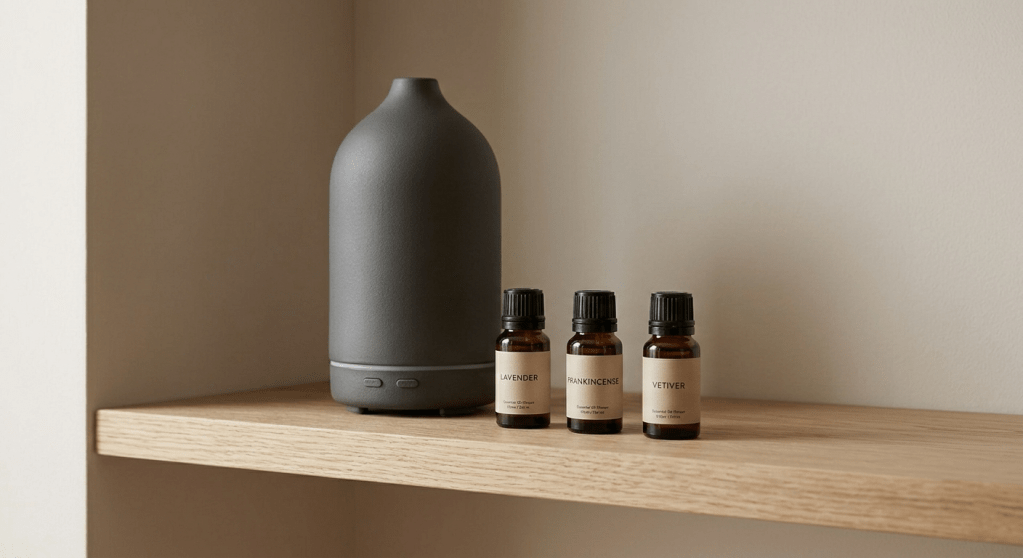
Building a Home Scenting System for Anxiety Relief: Room by Room
This is where design thinking enters. A truly intentional home scenting system for anxiety relief isn’t a single diffuser running constantly in the hallway. It’s a layered, spatial, time-aware architecture different scent signatures for different rooms, different times of day, different desired states.
Think of each room as having a nervous system intention.
| Room | Nervous System Goal | Recommended Botanicals | Delivery Method |
|---|---|---|---|
| Bedroom | Deep parasympathetic downshift; sleep onset | Lavender, Roman chamomile, vetiver | Passive diffusion (reed or dried flowers near pillow); timer diffuser 30 min before sleep |
| Home office | Focused calm; prevent cortisol spikes | Rosemary, frankincense, bergamot | Ultrasonic diffuser, 15 min on / 45 min off cycle |
| Living room | Transitional decompression; social ease | Clary sage, atlas cedar, sweet orange | Candle (100% beeswax or soy + pure essential oil); dried botanical bundles |
| Bathroom / entry ritual | Nervous system reset; pattern interrupt | Eucalyptus, peppermint, rose geranium | Hydrosol mist on towels; steam-activated eucalyptus bundle in shower |
| Hallway / threshold | Homecoming signal; cortisol comedown | Sandalwood, benzoin, warm amber resins | Simmer pot (natural ingredients); passive terracotta diffuser |
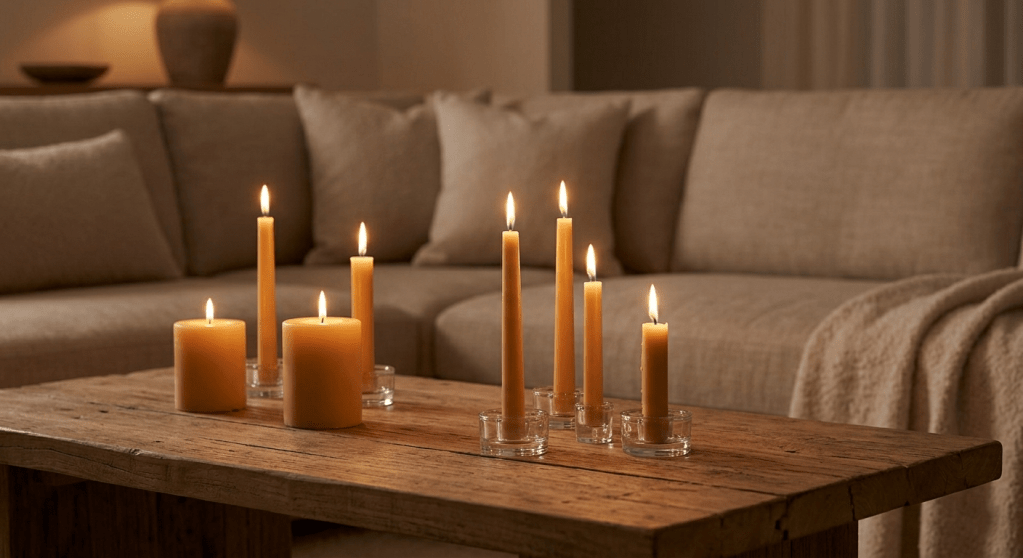
The Circadian Dimension: Scent Changes Throughout the Day
Your nervous system isn’t static. Neither should your scent environment be. Morning calls for activating, slightly stimulating botanicals rosemary, citrus, peppermint that support the natural cortisol awakening response without spiking anxiety. Midday transitions into something grounding and focus-sustaining. Evening demands the downshift: heavy base notes, resins, florals that signal the parasympathetic system to take over.
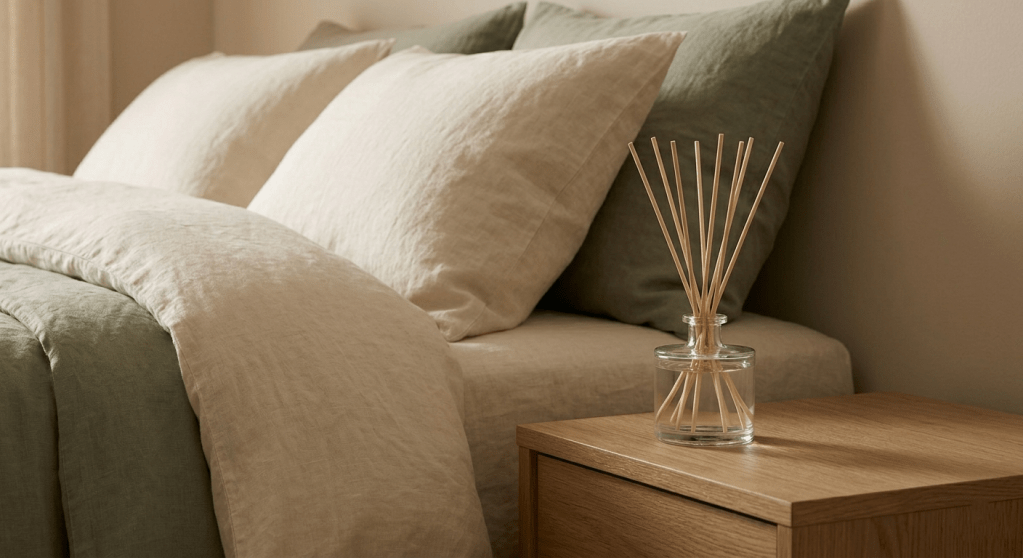
This circadian scent logic mirrors how light design functions. Just as you wouldn’t flood your bedroom with 5000K blue-white light at 9pm, you wouldn’t diffuse stimulating peppermint when your system needs to start winding toward sleep.
🌙 Scent timing pairs beautifully with light ritual. Read our guide to decor tricks for stress-reducing morning routines to see how sensory layering light, scent, texture creates a nervous system–informed start to the day.
The Olfactory Architecture Protocol: A Practical Starting Point
You don’t need a complex setup to begin. What you need is intentionality a clear connection between the scent you’re choosing and the physiological state you want to support.
A Simple 5-Step Home Scent Protocol
- Audit your current scent environment. What synthetic fragrances are present? Plug-ins, chemical cleaners, synthetic candles? Remove or significantly reduce these first. You’re creating signal clarity, not fragrance competition.
- Choose one anchor botanical per room. One primary note that defines the nervous system intention of that space. Simple. Consistent. Recognisable over time the brain learns associations.
- Select a delivery method appropriate to the space. High-traffic rooms benefit from passive diffusion (dried botanicals, terracotta). Private spaces like bedrooms can use ultrasonic diffusers with more precision.
- Institute the 15/45 rule for active diffusion. Diffuse for 15 minutes, rest for 45. This prevents olfactory fatigue and keeps the signal potent. Your nervous system notices intermittent scent more than constant background hum.
- Layer seasonal depth. Warm amber, resin, and root scents in autumn/winter. Cool florals, citrus, and green botanical notes in spring/summer. Scent seasonality mirrors nature’s own rhythm and the body responds to that biological mirroring with regulation.
From a Designer’s Eye: Making the System Beautiful
Neuroscience aside, these home scenting systems also need to live harmoniously within an interior. The vessels, the botanicals, the placement they’re part of the design conversation.
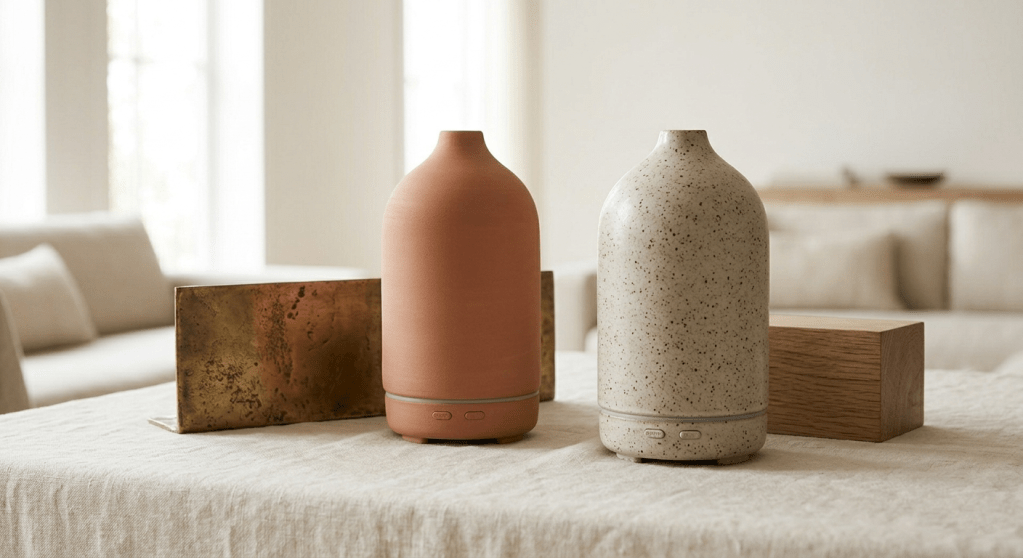
I gravitate toward terracotta and unglazed ceramic diffusers. They’re porous, they release scent passively and slowly, and visually they bring warmth and natural materiality especially beautiful against copper, aged brass, and linen. A dried bunch of lavender hanging from an exposed beam isn’t just decorative. It is, quite literally, pharmaceutical by proximity.
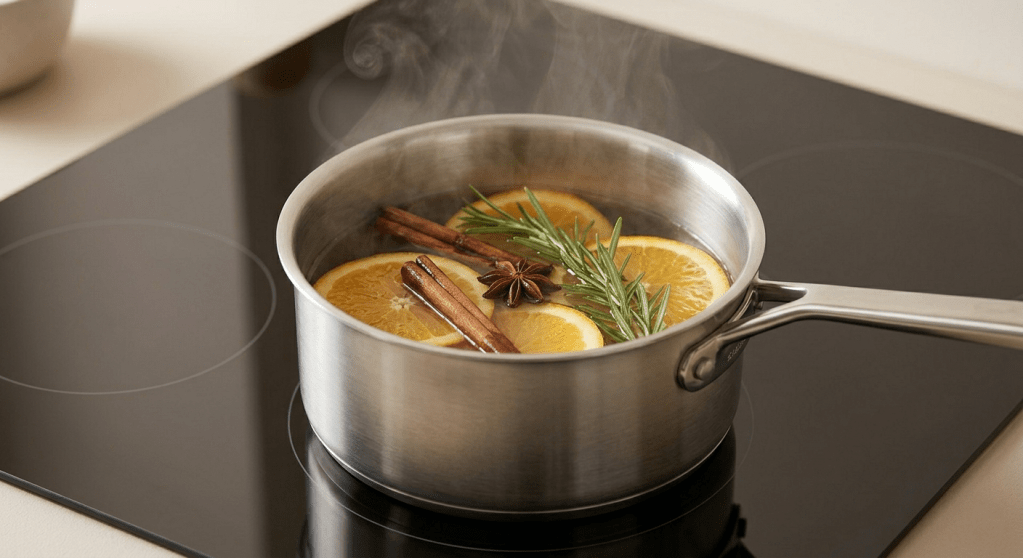
Simmer pots deserve their own paragraph. A handful of dried orange peel, a cinnamon stick, a few cloves, some fresh rosemary in simmering water: the scent that fills a home in under ten minutes is richer, more layered, and more biologically active than most synthetic alternatives. It’s also completely free of volatile synthetic compounds.
🌸 If you work from home, scent can specifically support focus and reduce ambient anxiety during the workday. Our aromatherapy guide for home offices Boost Focus and Wellbeing: Simple DIY Aromatherapy for Your Work-From-Home Office covers DIY blends and placement strategies specifically for productivity.
What Most People Get Wrong About Home Scenting for Anxiety
The biggest mistake? Reaching for fragrance intensity when what the nervous system actually needs is signal clarity and consistency.
Second biggest: choosing a scent because it smells pleasant rather than because it has documented physiological properties. Mango and vanilla smell wonderful. They do relatively little for vagal tone. Meanwhile vetiver which smells intensely earthy and strange to many noses on first encounter is among the most studied botanicals for anxiety reduction. The olfactory architecture approach asks you to lead with function, then find your way to enjoying the experience.
Third: ignoring the air quality baseline. Scent layered on top of stale, pollutant-laden indoor air simply doesn’t work as intended. VOCs and particulates disrupt olfactory receptor function. You need clean air as your canvas.
And finally: inconsistency. The brain’s response to scent as a safety signal is built through repetition. The same botanical, in the same space, at the same time of day, over weeks this is how you train an associative response. Calm doesn’t just happen; you build the neural pathway to it, one breath at a time.
Your Home Can Speak Directly to Your Nervous System
We spend enormous energy designing homes that look beautiful. Far less on designing homes that feel safe neurologically, physiologically, in the body. Olfactory architecture is one of the most accessible ways to close that gap.
You don’t need a renovation. You don’t need an expensive system. You need a few carefully chosen botanicals, an understanding of what you’re trying to signal, and the patience to let the association build. The vagus nerve is listening. It has been listening your whole life to every scent that meant danger, every scent that meant home.
The extraordinary thing about designing with that knowledge is this: you get to choose, now, what home smells like. And in doing so, you choose in a small but measurable way what calm feels like.
Scientific References
- Koulivand, P.H., Khaleghi Ghadiri, M., & Gorji, A. (2013). Lavender and the Nervous System. Evidence-Based Complementary and Alternative Medicine. pubmed.ncbi.nlm.nih.gov/23026011
- Lee, K.B., Cho, E., & Kang, Y.S. (2014). Changes in 5-hydroxytryptamine and cortisol plasma levels in menopausal women after inhalation of clary sage oil. Phytotherapy Research. pubmed.ncbi.nlm.nih.gov/24802524
- Li, Q. et al. (2009). A forest bathing trip increases human natural killer activity and expression of anti-cancer proteins. International Journal of Immunopathology and Pharmacology. ncbi.nlm.nih.gov/pmc/articles/PMC2793346
Designer’s Note & Disclaimer The information in this article is written from the perspective of an interior designer and lifestyle enthusiast, not a medical professional. The botanical and neuroscience references are provided for educational and environmental design purposes only. Olfactory architecture is a complementary lifestyle approach it is not a substitute for professional medical advice, diagnosis, or treatment. If you experience anxiety or other mental health conditions, please consult a qualified healthcare provider.
Linda Designs · Home Decor, Interior Design & Lifestyle Inspiration
Discover stunning home transformations, interior design tips, and lifestyle inspiration from DIYs to room makeovers and decor trends.
 Linda Designs | Home Decor, Interior Design & Lifestyle Inspiration