- Designing Your Perfect Meditation Corner: An Interior Designer’s Complete Guide
- The Design Psychology Behind Dedicated Meditation Spaces
- Spatial Planning: Finding and Defining Your Meditation Zone
- Foundation Elements: The Designer’s Essential List
- Color Theory for Meditation Spaces: A Designer’s Palette Guide
- Texture and Material Selection: Creating Tactile Richness
- Sensory Design: Beyond the Visual
- Budget-Friendly Design Strategies That Look High-End
- Style-Specific Design Approaches
- Common Design Mistakes (And How to Avoid Them)
- Seasonal Design Variations
- Small Space Design Solutions
- Advanced Design Considerations
- Long-Term Design Maintenance
- Final Design Thoughts: Creating Space That Supports Practice
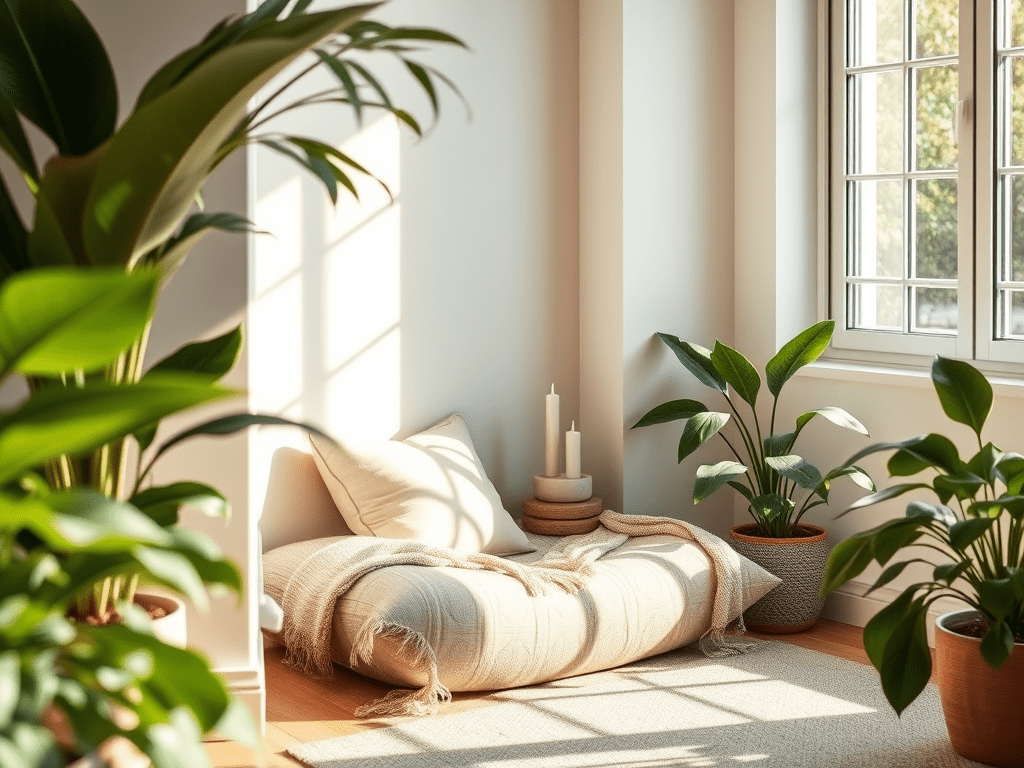
Designing Your Perfect Meditation Corner: An Interior Designer’s Complete Guide
As a home decor blogger and design enthusiast, the most common question I get from readers isn’t about kitchen styling or bedroom ideas it’s about creating a “space to breathe.”
Here’s the design challenge: how do you carve out a dedicated meditation corner in a home that’s already functioning at capacity? How do you create visual separation without building walls? And most importantly, how do you design a space that doesn’t just look peaceful but actually feels transformative?
Through researching design principles and exploring different meditation space ideas on my blog, I’ve learned that the secret isn’t square footage or budget. It’s understanding how design elements like color, light, texture, and spatial flow work together to support a specific function.
This isn’t just about throwing a cushion in a corner and calling it zen. This is about applying real interior design principles to create a meditation space that becomes the most-used corner in your home.
The Design Psychology Behind Dedicated Meditation Spaces
Why Spatial Design Matters for Meditation Practice
From a design perspective, creating a dedicated meditation corner leverages what environmental psychologists call “place identity” the idea that specific locations trigger specific behavioral patterns and emotional states.
Think about it: you probably don’t work effectively from your bed, even though it’s comfortable. That’s because your brain has already associated that space with rest.
The same principle applies to meditation. When you designate a specific corner exclusively for mindfulness practice, you’re using design to create an environmental anchor.
While health experts at institutions like the Mayo Clinic and Healthline note that consistent meditation can significantly reduce stress and improve overall wellbeing, my focus as a design enthusiast is on creating the space that makes that consistency possible.
The practice itself is between you and your meditation teacher or app but the environment that supports it? That’s where thoughtful design comes in.

Spatial Planning: Finding and Defining Your Meditation Zone
The Home Decor Approach to Space Selection
Before we talk aesthetics, let’s talk function. When designing spaces for my blog, I always start with spatial analysis.
Your meditation corner needs three fundamental design qualities:
- Visual separation from high-activity zones
- Acoustic buffering from household noise when possible
- Natural or quality artificial light to avoid creating a cave-like atmosphere
I’ve researched and featured meditation corner ideas in various spaces from walk-in closets to bedroom alcoves and even wide windowsills. The key is identifying underutilized spatial pockets in your home’s existing layout.
Measuring and Planning Your Layout
Grab your tape measure. A functional meditation corner requires a minimum footprint of approximately 3×3 feet just enough for a seated position plus a small buffer zone. Ideally, you want 4×4 to 6×6 feet for comfortable movement and additional elements.
Here’s my checklist for spatial planning:
- Ceiling height: Low ceilings can actually create cozy, womb-like enclosure (desirable)
- Traffic flow: Will people walk through this space regularly? (deal-breaker)
- Proximity to windows: Morning east-facing light is gold for meditation design
- Electrical outlets: Necessary for lamps, diffusers, fountains
- Floor material: Carpet provides natural cushioning; hardwood requires layering
Map this on paper before moving furniture. Trust me I’ve learned this lesson through researching countless design mistakes and successes.
Creating Visual Boundaries Without Building Walls
One of the most common questions I get from readers: “How do I make this feel separate without actually separating it?”
Visual separation techniques:
- Area rugs: Define the meditation zone’s perimeter instantly
- Folding screens or room dividers: Portable and flexible for renters
- Hanging fabric panels: Soft visual barrier that doesn’t block light
- Strategic furniture placement: Bookshelf backs or console tables as subtle dividers
- Paint or wallpaper accent walls: Color creates psychological boundaries
For rental situations, removable wallpaper and freestanding decorative room screens become your best design tools.

Foundation Elements: The Designer’s Essential List
Seating Design: Function Meets Form
This is where most DIY meditation corners fail. People prioritize how the cushion looks over how it functions biomechanically.
From a design perspective, your seating serves as both the functional anchor and visual focal point of the space. You need something that:
- Supports proper spinal alignment (this affects posture, which affects practice)
- Visually grounds the space (low, solid forms work best)
- Matches your overall aesthetic (coherence matters)
Popular seating options:
- Zafu meditation cushions: Traditional, elevates hips, comes in gorgeous fabrics (shop zafu cushions)
- Meditation benches: Clean-lined, works for knee issues, Scandinavian aesthetic (shop meditation benches)
- Floor cushion sets: Layered, flexible, bohemian vibe (shop floor cushion sets)
- Low accent chairs: For those who can’t do floor seating comfortably
Design Tip: Layer your seating. Place your primary cushion on a larger meditation mat or yoga rug to define the zone and add texture.

Lighting Design: Layering for Mood and Function
Through all my research on home decor, I’ve learned this truth: lighting makes or breaks a meditation space. Period.
The design goal is creating layered ambient lighting that you can adjust based on time of day and energy level. Here’s the lighting hierarchy I recommend:
Layer 1: Natural Light (Primary)
- Position your meditation corner near windows when possible
- Use sheer linen curtains to diffuse harsh direct sunlight
- Morning east-facing light has warmer color temperature ideal for meditation
Layer 2: Ambient Accent Lighting (Secondary)
- Himalayan salt lamps: Warm glow, sculptural element, mineral texture
- Dimmable table lamps with warm bulbs (2700K color temperature)
- Paper lanterns: Soft light diffusion, adds vertical interest
Layer 3: Candlelight or Flame Effect (Accent)
- LED candles with timers for safety
- Real candles in decorative holders if you’re present and attentive
Design Tip: Avoid overhead lighting, cool-toned bulbs, or anything with visible glare. These activate rather than calm.
Color Theory for Meditation Spaces: A Designer’s Palette Guide
Understanding Color Psychology in Interior Design
This is where my passion for home decor really shines. Color isn’t just aesthetic it has measurable psychological and physiological effects.
I’ve written extensively about how paint colors influence mood and spatial perception, and these principles apply perfectly to meditation corner design.
Calming Color Palette (My Go-To Recommendations):
- Soft whites and warm creams (Benjamin Moore Simply White, Farrow & Ball Pointing): Visual clarity, reflects light beautifully
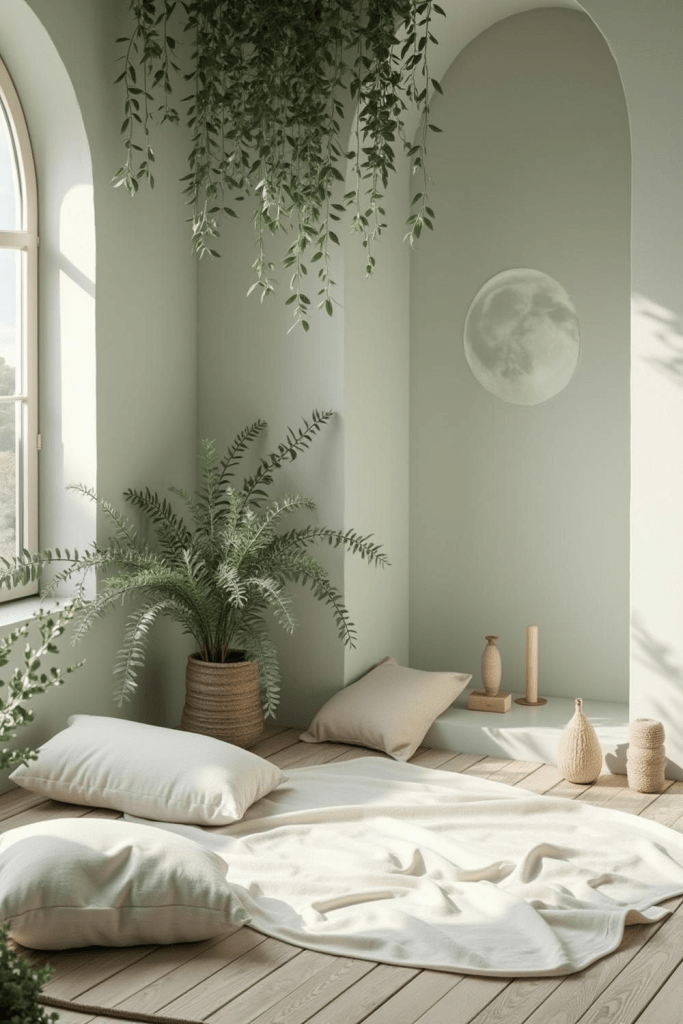
- Pale sage and celadon greens (Sherwin-Williams Sea Salt, Benjamin Moore Palladian Blue): Grounding, connects to nature
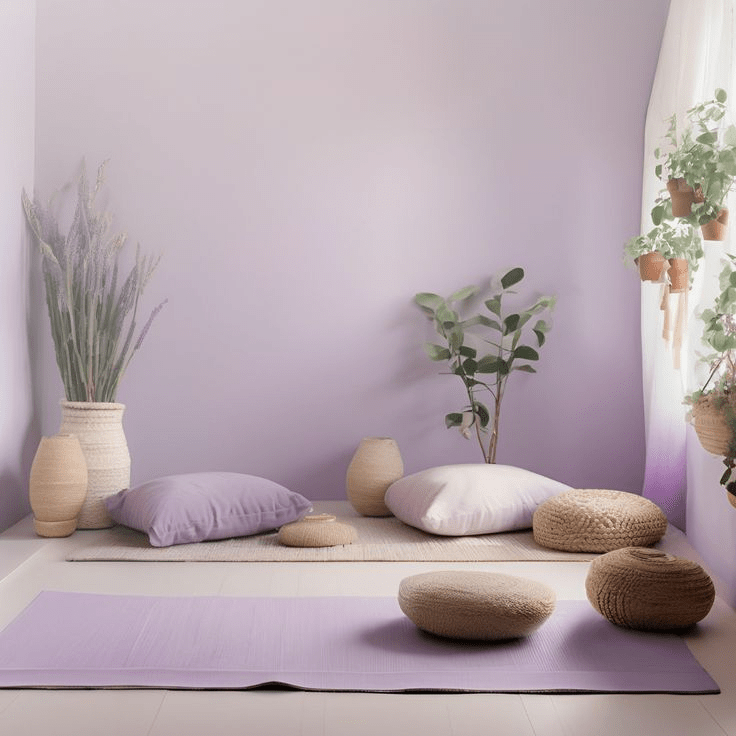
- Muted lavenders and dusty mauves (Benjamin Moore Hint of Mauve): Contemplative without being overly feminine
- Warm taupes and greiges (Sherwin-Williams Accessible Beige): Cozy, neutral backdrop for colorful textiles
Colors to Avoid:
- Bright reds and oranges (too activating)
- Pure black (too heavy)
- Cool grays without warm undertones (can feel clinical)
If you’re working with existing wall colors that aren’t ideal, use textiles strategically. A large wall tapestry or fabric wall hanging can completely shift the color story.
Bringing in Color Through Textiles and Accessories
This is where you get to play. While walls should remain calm, textiles add personality:
- Meditation cushion covers in jewel tones or natural linen
- Throw blankets in soft textures (chunky knits, woven cotton)
- Small accent pillows in complementary colors
- Area rugs with subtle patterns that don’t visually overwhelm
Design Tip: Use the 60-30-10 rule. 60% neutral base (walls, large rug), 30% secondary color (cushions, larger textiles), 10% accent color (small decorative objects).
Texture and Material Selection: Creating Tactile Richness
The Design Principle of Biophilic Elements
One of the strongest design trends in wellness spaces is biophilic design—incorporating natural materials and living elements into interiors.
From a design perspective, natural materials add warmth, texture variation, and organic irregularity that makes spaces feel more human-scaled and less sterile.
Natural Materials I Recommend:
- Wood: Bamboo mats, teak benches, driftwood objects
- Stone: River rocks, crystals, ceramic vessels
- Natural fibers: Cotton, linen, jute, wool, hemp
- Living plants: More on this below
- Metals: Brass singing bowls, copper plant stands (warm-toned metals only)
Design Tip: Avoid synthetic materials when possible plastic, polyester, artificial plants. They simply don’t have the same tactile or visual quality.
Living Plants as Design Elements
Plants aren’t just decorative they’re functional design elements that improve air quality and add movement to static spaces.
Best plants for meditation corners (low maintenance, appropriate scale):
- Peace lily: Elegant white blooms, tolerates low light
- Snake plant: Architectural form, nearly indestructible
- Pothos: Trailing habit, purifies air, grows in water
- Small succulents in ceramic planters: Minimal water needs
Design Tip: Use plants at varying heights. A tall floor plant stand in one corner, smaller plants on a low shelf or window ledge.

Sensory Design: Beyond the Visual
Acoustic Design and Sound Management
Through my research on creating peaceful spaces, I’ve learned to think about soundscaping just as carefully as visual composition.
Your meditation corner needs acoustic support:
- White noise machines to mask irregular sounds (shop white noise machines)
- Tabletop water fountains for organic ambient sound (shop water fountains)
- Sound-absorbing textiles: Heavy curtains, plush rugs, upholstered surfaces
- Strategic positioning away from HVAC vents and appliances
For renters who can’t modify spaces structurally, textile layering is your acoustic solution. Fabric absorbs sound hard surfaces reflect it.
Aromatherapy as Design Element
Scent design is underutilized in interior design, but it’s powerful.
An essential oil diffuser serves triple duty: aromatherapy, visual interest (many are beautifully designed), and humidity control.
Designer diffuser options:
- Wood grain ceramic diffusers (natural aesthetic)
- Minimalist white or black models (modern spaces)
- Brass or copper units (warm, traditional look)
Match your diffuser aesthetic to your overall design scheme. Scent aside, it’s a sculptural object that lives in your meditation corner.
Alternatively, incense holders and palo santo in ceramic bowls work for those who prefer traditional smoke-based aromatics.
Budget-Friendly Design Strategies That Look High-End
The $75 Meditation Corner
Let me be clear: expensive doesn’t mean better design. Some of the most beautiful meditation corner ideas I’ve researched and shared cost under $100.
Budget breakdown:
- Seating: Basic meditation cushion or floor pillow set ($25-35)
- Lighting: Himalayan salt lamp or LED candles ($15-20)
- Textiles: Cotton throw or small area rug ($15-25)
- Plant: Single pothos or snake plant ($10-15)
- Decorative element: Thrifted bowl or found natural objects (free-$10)
This gives you a fully functional, aesthetically cohesive meditation corner. Everything else is refinement.
For more creative budget design strategies, I’ve written an entire guide on budget home decor and DIY approaches that actually work many techniques translate directly to meditation space design.
High-Impact DIY Design Elements
The best-designed meditation corners often include handmade elements:
DIY projects I recommend:
- Natural found objects: Collect stones, driftwood, pinecones during walks (free)
- Framed quotes or mandalas: Print beautiful graphics, frame in thrifted frames ($5-10)
- Macramé wall hangings: YouTube tutorials abound, cord is inexpensive
- Painted accent walls: One gallon of paint transforms the entire corner ($30-40)
- Fabric wall panels: Stretch fabric over canvas frames for texture
The design principle: handmade elements add soul and personalization that can’t be bought.
Style-Specific Design Approaches
Minimalist Meditation Corner Design
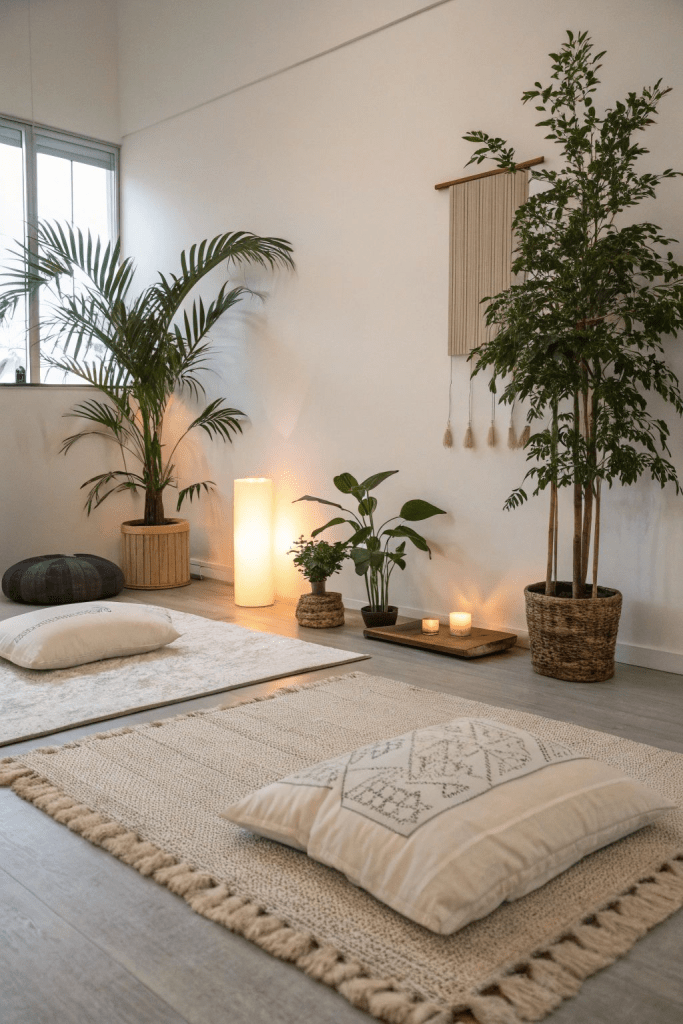
If your home follows minimalist principles, your meditation corner should too.
Minimalist design characteristics:
- Clean lines and simple geometric forms
- Limited color palette (2-3 colors maximum)
- Quality over quantity fewer, better pieces
- Functional objects only, no purely decorative items
I’ve written a comprehensive guide on minimalist furniture selection that applies perfectly here. The same principles of intentional simplicity create powerful meditation spaces.
Minimalist meditation corner essentials:
- Single zafu in neutral linen
- One perfect plant
- Dimmable lighting with clean design
- Perhaps one meaningful object no more
Embrace negative space. In minimalist design, what you don’t include matters as much as what you do.
Bohemian Meditation Corner Design
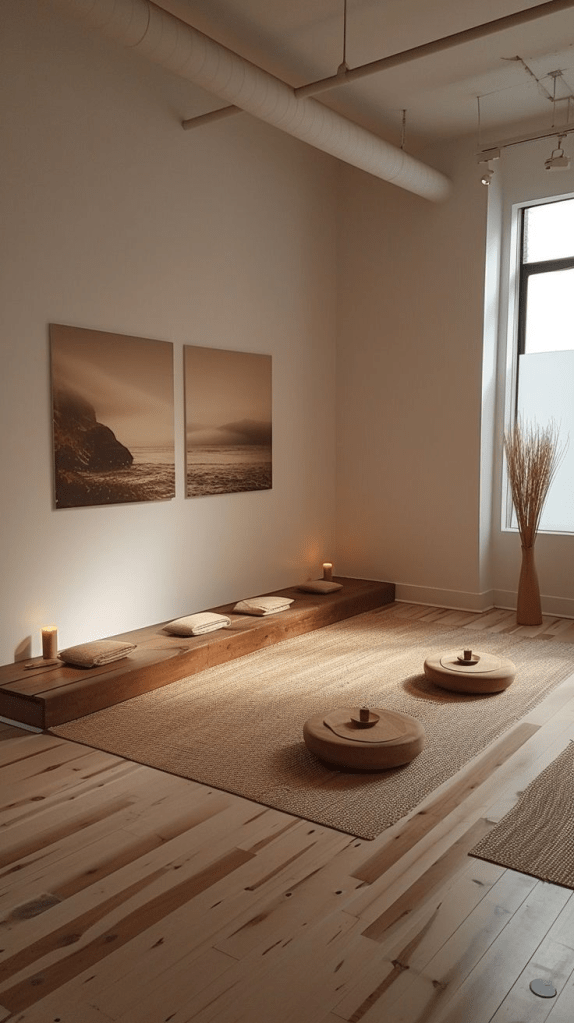
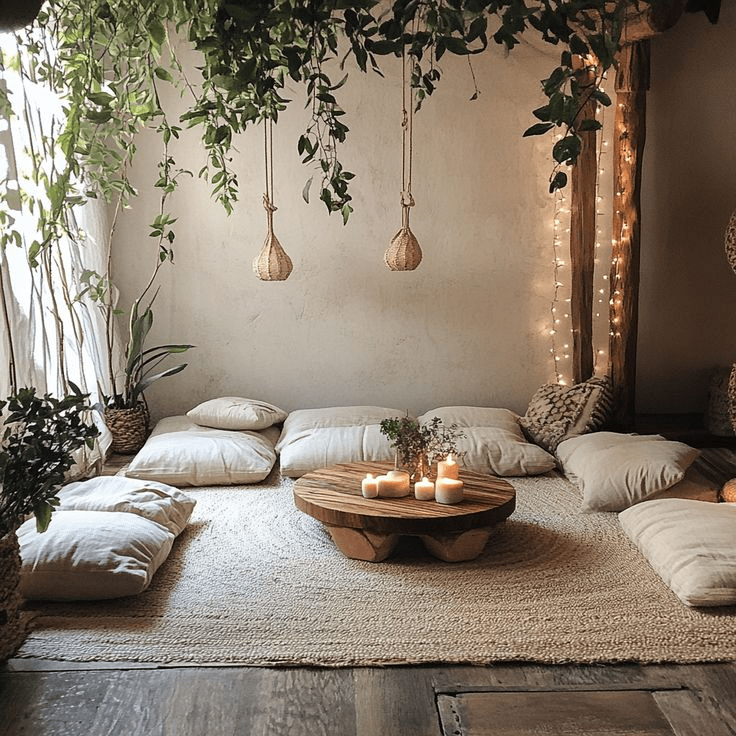
Boho design embraces layering, pattern mixing, and rich texture perfect for meditation spaces.
Bohemian design characteristics:
- Layered textiles and patterns
- Global-inspired elements (Moroccan, Indian, Japanese influences)
- Warm, saturated colors
- Eclectic mix of old and new
Bohemian meditation corner essentials:
- Layered floor cushions and poufs
- Patterned area rug (Persian, kilim, or tribal patterns)
- Macramé wall hanging or woven tapestry
- Mix of plants at various heights
- Decorative lanterns or carved wooden elements
Layer, layer, layer. The cozy, enveloping quality of boho design works beautifully for meditation.
Modern Zen Meditation Corner Design
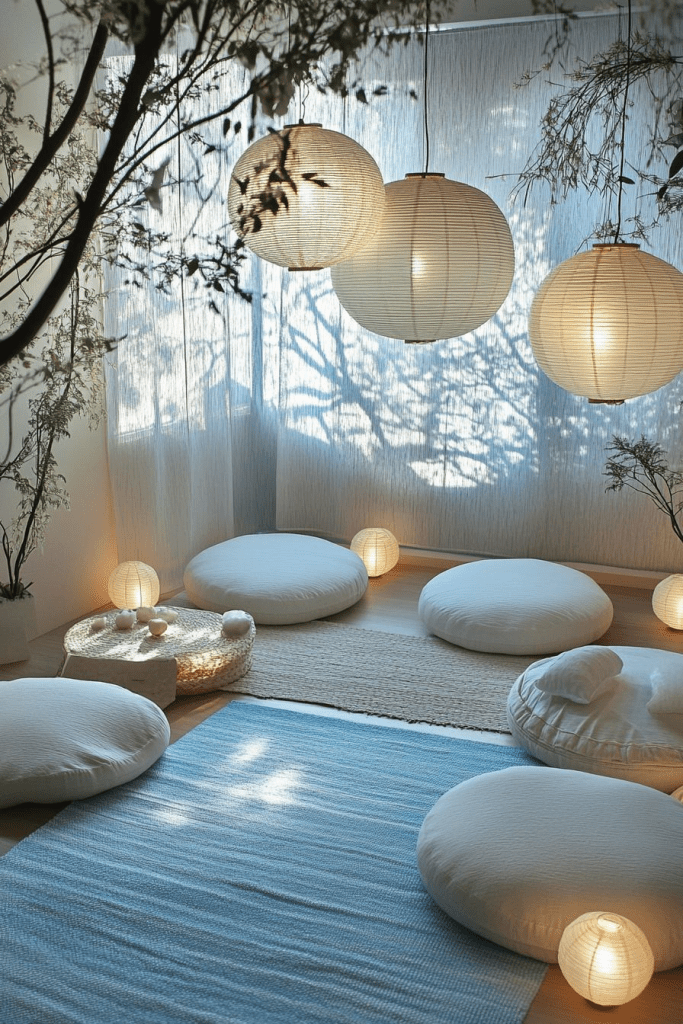
Modern zen merges Japanese minimalism with contemporary design.
Design characteristics:
- Low-profile furniture
- Natural materials (especially wood and stone)
- Neutral palette with black accents
- Clean lines with organic elements
Modern zen essentials:
- Low meditation bench in dark wood
- Black ceramic or matte vessels
- Bamboo elements
- Single statement plant (bonsai or architectural succulent)
- Pebble garden or zen garden as focal point
The aesthetic is curated restraint every element is intentional and contributes to the overall composition.
Common Design Mistakes (And How to Avoid Them)
Prioritizing Aesthetics Over Ergonomics
This is the number one mistake I see in DIY meditation corners.
That gorgeous vintage cushion that photographs beautifully but offers zero lumbar support? Design failure. That trendy floor pouf that looks amazing but positions your knees above your hips uncomfortably? Design failure.
The design solution: Test everything for minimum 20-minute sessions before committing. Beauty and function aren’t mutually exclusive but function must come first.
Over-Cluttering the Space
More stuff doesn’t equal better design. It equals visual noise.
I see this constantly: meditation corners stuffed with 15 crystals, 8 plants, multiple statues, stacks of books, incense holders, candles, diffusers, and seven decorative bowls.
The design solution: Edit ruthlessly. Choose your 5-7 most meaningful and functional objects. Remove everything else. You can always add back later, but starting minimal is easier than editing down.
Ignoring Scale and Proportion
Giant furniture in tiny corners looks absurd. Tiny objects in large spaces look lost.
The design solution: Your meditation cushion should be proportional to your available floor space. Your wall hanging should be sized appropriately for the wall. Use painter’s tape to mock up sizes before purchasing.
Poor Lighting Placement
Harsh overhead lights or lights positioned to create glare on walls ruin the atmosphere.
The design solution: Light sources should be positioned at low-to-mid height, never directly above your sight line when seated. Test lighting at actual meditation times (morning vs. evening) before finalizing placement.
Seasonal Design Variations
Winter Meditation Corner Design Adjustments
Design is responsive to seasonal changes. Your meditation corner should evolve too.
Winter design elements:
- Layer chunky knit throws and faux fur textures
- Warmer color temperatures in lighting
- Richer, deeper accent colors (burgundy, forest green, navy)
- Heated blanket for cold mornings (positioned safely)
- Grounding scents: cedarwood, cinnamon, pine
The design goal: cocooning warmth.
Summer Meditation Corner Design Adjustments
Summer design elements:
- Swap heavy textiles for lightweight linen and cotton
- Cooler accent colors (soft blues, seafoam greens, pale yellows)
- Maximize natural ventilation and air flow
- Fresh flowers or herbs in small vases
- Uplifting scents: citrus, mint, eucalyptus
The design goal: breezy lightness.
Small Space Design Solutions
Small Space Design Solutions
Living in 400 square feet? I’ve researched meditation corner solutions for spaces this size.
Small space design strategies:
- Folding/collapsible elements: Foldable meditation bench that stores flat
- Vertical storage: Wall-mounted floating shelves for meditation supplies
- Multi-functional furniture: Ottoman that stores cushions inside
- Visual separation via rugs: Define zone without permanent structures
The design principle: flexibility and dual-purpose elements.
Corner Meditation Spaces in Shared Rooms
Sharing a bedroom or living space? Visual boundaries become critical.
Shared space design solutions:
- Decorative folding screens that fold flat when not in use
- Curtain room dividers on ceiling tracks
- Headphones and portable white noise machines
- Established “meditation hours” respected by household members
Design creates physical boundaries; communication creates temporal ones.

Advanced Design Considerations
Creating Meditation Altar Surfaces
A meditation altar serves as both functional surface and focal point.
Altar design options:
- Low wooden platform or bench
- Floating wall shelf at seated eye level
- Vintage side table or plant stand
- Stack of books topped with decorative tray (budget solution)
What goes on your altar is personal, but from a design perspective: group objects in odd numbers (3, 5, 7), vary heights, and maintain visual balance.
Incorporating Smart Home Technology Thoughtfully
Technology can enhance meditation space design when used strategically.
Smart design integration:
- Smart bulbs programmed to gradually warm and dim
- Smart plugs for timed diffusers and sound machines
- Tablet in airplane mode for guided meditation apps (hide in decorative box when not in use)
The design rule: technology should be invisible when not actively in use.
Acoustic Panels as Design Elements
For meditation corners in noisy environments, acoustic treatment becomes necessary.
Acoustic design solutions:
- Fabric-wrapped acoustic panels in colors matching your palette
- Decorative sound-absorbing wall tiles
- Heavy velvet curtains (beautiful and functional)
- Upholstered headboard panels repurposed as sound barriers
These don’t have to look utilitarian many acoustic solutions double as stunning design features.
Long-Term Design Maintenance
Refreshing Your Meditation Corner Seasonally
Good design requires maintenance. I recommend a seasonal refresh every 3-4 months.
Seasonal design refresh checklist:
- Deep clean all surfaces and textiles
- Rotate decorative objects and textiles
- Prune and repot plants as needed
- Update aromatherapy scents seasonally
- Reassess lighting as daylight hours change
- Remove anything that no longer serves the space
This isn’t just about cleanliness it’s about keeping the design fresh and intentional.
Evolution of Your Meditation Space
The best-designed meditation corners evolve gradually over months and years.
Allow your space to grow organically. Add one element. Live with it. Adjust. This iterative design process creates spaces that truly reflect your needs rather than someone else’s Pinterest board.

Final Design Thoughts: Creating Space That Supports Practice
Here’s what my research and passion for home decor has taught me: the most beautiful meditation space is completely useless if you never sit in it.
My goal as a design enthusiast isn’t to create Instagram-worthy vignettes (though that’s a nice side effect). My goal is to share design principles color theory, spatial planning, lighting design, material selection that help you create an environment that makes meditation easier.
Design removes barriers. Good design makes the cushion more comfortable, the lighting more calming, the space more inviting. Great design makes you want to be there.
Your meditation corner doesn’t need to look like mine, or like anyone else’s. It needs to function for your body, your schedule, your aesthetic preferences, and your actual life circumstances.
Start with the basics: comfortable seating, appropriate lighting, visual separation. Then add thoughtfully, one element at a time, based on actual use rather than theoretical perfection.
Because at the end of the day, a meditation corner isn’t about the objects you place in it. It’s about using design principles to create an environment that supports your return to yourself.
And that’s something worth designing intentionally.
Ready to transform more spaces in your home? Explore additional interior design guides, DIY projects, and home decor inspiration at Linda Designs where thoughtful design meets everyday living.
Suscribe, Follow and Share!
 Linda Designs | Home Decor, Interior Design & Lifestyle Inspiration