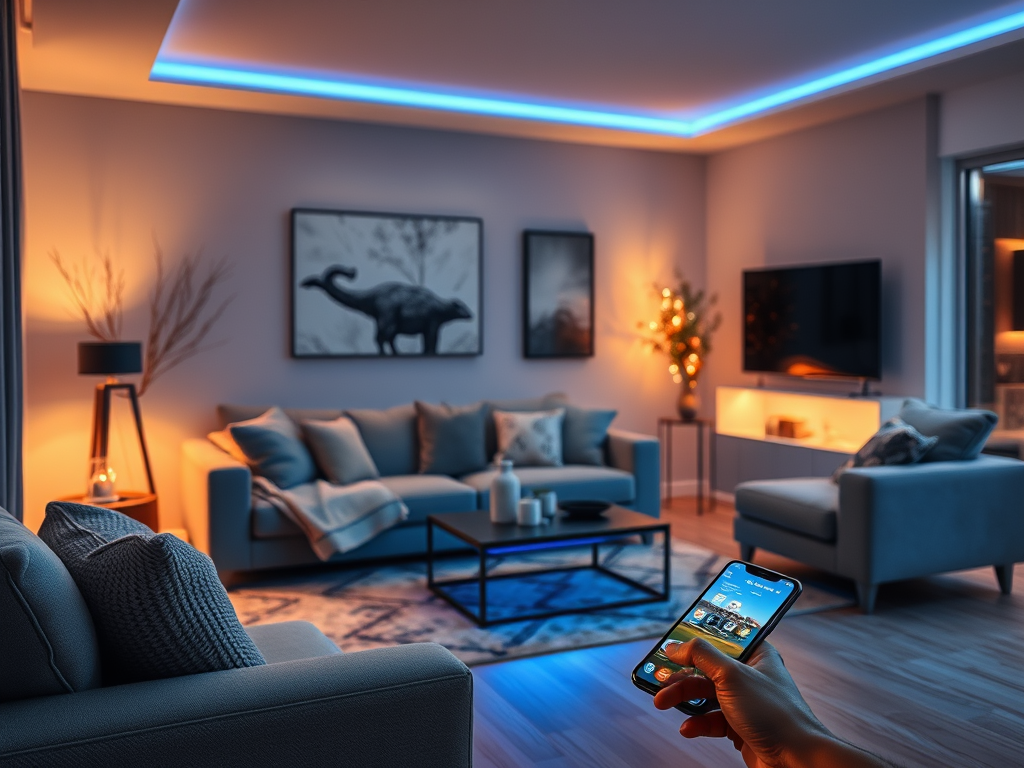
Creating Atmosphere Through Intelligent Illumination
There’s something profoundly magical about fall evenings. The air turns crisp. Leaves crunch underfoot. And suddenly, we’re drawn indoors earlier than before, seeking warmth and comfort in our homes. But here’s the thing your lighting can make or break that cozy atmosphere you’re craving.
Smart lighting isn’t just about convenience anymore. It’s become an essential tool for creating mood, ambiance, and that ineffable feeling of hygge we all chase during autumn months. Gone are the days when you had to choose between harsh overhead lights or fumbling with table lamps in the dark.
Today’s technology lets you orchestrate your home’s illumination with the precision of a conductor leading a symphony.
Why Smart Lighting Matters This Season
Traditional lighting gives you two options: on or off. Smart lighting? It opens up an entire spectrum of possibilities that can transform your space from ordinary to extraordinary.
You can adjust brightness levels, change color temperatures, set schedules, and create scenes all from your smartphone or through voice commands.
During fall, when daylight dwindles and we spend more time indoors, the quality of our artificial lighting becomes paramount.
The right lighting doesn’t just help us see; it influences our mood, our energy levels, even our sleep patterns. It can make a room feel expansive or intimate, cold or welcoming, energizing or calming.
Smart lighting systems give you unprecedented control over these variables, allowing you to fine-tune your environment to match your activities, your mood, or simply the vibe you want to create on any given autumn evening.

Understanding the Fundamentals of Smart Lighting Design
Before diving into specific products and setups, let’s talk about what makes lighting truly work in a space. Professional designers rely on a concept called “layered lighting” and it’s something you can easily implement in your own home, especially when enhanced with smart technology.
The Three Essential Layers
Ambient lighting forms your foundation. This is your general, overall illumination ceiling fixtures, recessed lights, or large pendants that wash the entire room with light. Think of it as your canvas.
Task lighting serves specific purposes: reading lamps beside your favorite armchair, under-cabinet lights in the kitchen, or a desk lamp in your home office. These focused light sources help you accomplish activities without straining your eyes.
Accent lighting adds drama and depth. Picture lights highlighting artwork, LED strips tucked behind a bookshelf, or uplights casting shadows on textured walls. This layer creates visual interest and dimensionality that makes spaces feel designed rather than merely lit.
When you integrate smart technology into all three layers, you gain the ability to adjust each independently, creating countless combinations for different times of day or different activities. Morning coffee? Bright, cool-toned ambient light energizes you.
Choosing the Right Color Temperature for Fall Ambiance
Here’s where many people stumble with their lighting design: color temperature. Measured in Kelvin (K), this determines whether your light appears warm (yellowish) or cool (bluish-white). And getting it wrong can sabotage your entire cozy fall aesthetic.
Daylight measures around 5000-6500K bright, blue-toned, energizing. It’s great for workspaces. Terrible for relaxation.
Warm white sits at 2700-3000K, mimicking the glow of incandescent bulbs or candlelight. This is your sweet spot for fall evenings. Some smart bulbs even go lower, down to 2000K, creating that deep amber glow reminiscent of firelight.
The beauty of smart bulbs like the Philips Hue White and Color Ambiance or LIFX Color is that you can adjust color temperature on demand. Start your morning with energizing cool light, transition to neutral tones in the afternoon, and sink into warm, amber tones as evening falls.
If you’ve been exploring ways to bring autumn maximalism with rich patterns and warm textures into your space, pairing those design elements with properly warmed lighting amplifies their impact exponentially. The glow brings out the depth in velvet fabrics, makes brass fixtures gleam, and adds dimension to layered textiles.

Beyond White: Colored Accent Lighting
While warm white should dominate your fall lighting scheme, don’t overlook the creative potential of colored smart bulbs for accent purposes. Deep amber, burgundy, or even muted purple can add surprising sophistication to your autumn decor when used judiciously.
Consider placing a colored smart bulb in a table lamp positioned behind a plant the backlit foliage creates stunning silhouettes. Or install LED strips under floating shelves set to a deep rust tone that complements your fall color palette.
Speaking of color palettes, if you’ve been working with fall color drenching using rich jewel tones, smart lighting can either enhance or clash with those bold choices. The key? Test your lighting at different settings throughout the day to ensure your jewel-toned walls look equally stunning in both natural and artificial light.

Smart Lighting Systems: Which One Is Right for You?
The smart lighting market has exploded in recent years. Let’s break down the major players and what makes each system unique.
Philips Hue: The Premium Choice
Philips Hue remains the gold standard for smart lighting, and for good reason. The system offers exceptional color accuracy, reliable connectivity, and the most extensive third-party integration you’ll find. Yes, it requires a hub (the Hue Bridge), but that hub enables rock-solid performance even when your internet goes down.
The Philips Hue Starter Kit typically includes the bridge and several bulbs, giving you everything needed to begin. The ecosystem includes not just bulbs, but also light strips, outdoor lights, portable lamps, and even sync boxes that make your entertainment setup respond to on-screen content.
For fall ambiance, the Hue app’s pre-made scenes like “Savanna Sunset” or “Golden Pond” capture that autumn warmth beautifully.
LIFX: Hub-Free Simplicity
LIFX bulbs connect directly to your Wi-Fi network, eliminating the need for a separate hub. This makes initial setup incredibly straightforward screw in bulb, download app, connect. Done.
LIFX bulbs also tend to be brighter than comparable Philips Hue options, which can be advantageous if you’re replacing high-wattage incandescent bulbs. The color saturation is impressive too, producing vibrant hues when you want them and lovely warm whites for everyday use.
The LIFX Mini Color works perfectly in smaller fixtures like table lamps and sconces, while the full-size bulbs handle larger spaces.
Wyze and Other Budget Options
Not everyone wants to invest hundreds in a lighting system. Wyze offers surprisingly capable smart bulbs at fraction-of-the-cost prices. The Wyze Bulb Color delivers adjustable white and color options, works with Alexa and Google Assistant, and costs less than a fancy coffee.
The trade-off? Fewer features, less sophisticated color rendering, and occasionally less reliable connectivity. But for someone dipping their toes into smart lighting, or for spaces where you don’t need premium performance, budget options make perfect sense.

Strategic Placement for Maximum Coziness
Where you place your smart lights matters just as much as which ones you buy. Let’s walk through different rooms and discuss optimal strategies for creating that enveloping fall atmosphere.
Living Room Layering
Your living room likely serves multiple purposes: TV watching, reading, entertaining, relaxing. Smart lighting lets you create distinct scenes for each activity.
Install dimmable smart bulbs in your ceiling fixture for adjustable ambient light. Add smart table lamps on side tables flanking your sofa these provide task lighting for reading while contributing to overall ambiance. Position a smart floor lamp in a corner with an uplight feature to bounce warm light off the ceiling, creating soft, indirect illumination.
Here’s a pro move: place LED light strips behind your television. Not only does this reduce eye strain, but when synced with content (using products like the Philips Hue Play HDMI Sync Box), it creates an immersive viewing experience. For fall movie nights, manually set these strips to warm amber or orange tones.
If you’re still making those late summer transitions in your decor preparation for fall, smart lighting can bridge seasonal gaps beautifully. Keep the same fixtures but adjust their color and intensity to match your evolving seasonal aesthetic.

Bedroom Sanctuary
Your bedroom lighting should support both function and relaxation. Smart bulbs excel here because they can adapt throughout the day.
Morning: Gradually brighten lights with a wake-up routine that mimics sunrise, making early fall mornings less jarring. Afternoon: Bright, neutral light if you’re working in your bedroom. Evening: Warm, dimmed lighting that signals to your body it’s time to wind down.
Consider smart bedside lamps that you can control without reaching for your phone many systems allow voice control, so you can simply say “Alexa, dim bedroom lights to 20%” as you’re settling into bed.
Add a smart bulb in a reading lamp positioned at the head of your bed. Set it to a warmer color temperature than you’d use during the day this reduces blue light exposure that can interfere with melatonin production and disrupt sleep.

Kitchen and Dining Areas
Kitchens need bright task lighting for food preparation, but that same intensity feels harsh during a leisurely fall dinner. Smart lighting solves this dilemma elegantly.
Install smart bulbs in your main ceiling fixtures and in pendant lights over islands or peninsulas. When cooking, set them to bright, neutral white. When dinner’s served and it’s time to enjoy your meal, dim them to 30-40% and warm the color temperature.
Under-cabinet lighting transforms kitchen ambiance dramatically. Smart LED strips like the Philips Hue Lightstrip Plus install easily under cabinets, providing excellent task lighting when you need it and serving as subtle accent lighting during evening hours.
For dining areas, a dimmer-enabled smart chandelier or pendant creates the perfect setting for fall gatherings. Picture this: friends around the table, candles flickering, overhead light dimmed to a soft glow that illuminates faces without overwhelming them. That’s the magic of properly executed dining room lighting.

Automation and Scheduling: Set It and Forget It
The true power of smart lighting emerges when you leverage automation. Once configured, your lights adapt to your routine without requiring constant manual adjustment.
Circadian Lighting Routines
Your body responds to light cues throughout the day a concept called circadian rhythm. Smart lighting can support this natural cycle by automatically adjusting color temperature and brightness to match the sun’s progression.
Most major smart lighting systems offer some version of circadian or “adaptive lighting” features. Enable this feature, and your lights will gradually shift from cool, bright tones in the morning to warm, dim tones in the evening, all happening so subtly you barely notice.
During fall and winter when natural daylight is scarce, these automated routines become especially valuable for maintaining energy and mood.
Scene Creation for Different Activities
Rather than manually adjusting each light every time you want to change the mood, create scenes that configure multiple lights simultaneously.
“Movie Night” might dim living room overhead lights to 5%, turn on LED strip behind the TV at medium amber, and turn off any task lighting.
“Reading Hour” might brighten your floor lamp to 80% warm white while keeping ambient lighting at 30%.
“Dinner Party” could set dining area pendant at 60% warm white, turn on accent lighting throughout open-concept spaces, and activate any decorative elements like lit shelving.
Once programmed, activating these scenes takes a single voice command or app tap.
Motion and Presence Detection
Strategic use of motion sensors adds convenience without sacrificing ambiance. A motion sensor in your hallway ensures you’re never fumbling for a light switch when walking through the house at night but set it to activate at only 20% brightness in warm white so it doesn’t jolt you awake.
Presence detection goes further, determining whether someone is actually in a room rather than just passing through. This prevents lights from turning off while you’re sitting still reading or working.

Integration with Other Smart Home Elements
Smart lighting shines brightest (pun intended) when integrated with your broader smart home ecosystem.
Voice Assistant Control
“Alexa, set living room to cozy evening.” “Hey Google, dim bedroom lights to 10%.” “Siri, turn on reading lights.”
Voice control transforms how you interact with your home, especially during fall evenings when you’re bundled under blankets and reaching for a phone or switch feels like too much effort. All major smart lighting brands work with Alexa, Google Assistant, and (with varying degrees of functionality) Apple HomeKit.
Smart Thermostats and Lighting Synergy
Connect your smart lighting to your smart thermostat for interesting combinations. When your Nest or Ecobee detects you’ve left home, it can trigger lights to turn off (or to a minimal “away” mode that simulates presence for security). When you return, warm lighting welcomes you home just as the heat kicks on.
Entertainment Sync
Modern smart lighting systems can sync with music and video content, creating immersive experiences.
Play a thunderstorm soundscape for fall ambiance, and set lights to flicker and dim accordingly. Watch a movie, and lights respond to on-screen action.
While these features might seem gimmicky, they genuinely enhance cozy fall evenings especially during Halloween season or for atmospheric background enhancement during autumn gatherings.

Practical Tips for Maximizing Smart Lighting’s Cozy Factor
Let’s get tactical with specific strategies you can implement today.
Layer Your Light Sources
Never rely on a single overhead fixture. The most inviting spaces use multiple light sources at different heights and intensities. Combine ceiling lights, floor lamps, table lamps, wall sconces, and accent lighting to create depth and visual interest.
Embrace Imperfection
Not every light needs to be smart. Mix smart and “dumb” lighting based on your needs and budget. Prioritize smart bulbs in frequently adjusted locations living room, bedroom, primary gathering spaces. Decorative candles, salt lamps, and string lights add textural variety that purely smart systems can’t replicate.
Consider Fixture Design
Smart bulbs work in any fixture, but some fixtures enhance their effectiveness. Lamps with fabric or rice paper shades diffuse light beautifully, creating that soft glow perfect for fall evenings. Fixtures with exposed bulbs show off smart bulbs’ color-changing capabilities but can feel harsh best for accent rather than ambient applications.
Use Warm Dimmers, Not Just Brightness Reduction
When dimming for evening ambiance, don’t just reduce brightness simultaneously warm the color temperature. This mimics how firelight and candlelight naturally behave (they become warmer as they dim), creating a more authentically cozy feeling.
Create Transition Routines
Abrupt lighting changes feel jarring. Most smart lighting systems allow you to set transition times so when your “evening mode” activates, lights gradually shift over 5-10 minutes rather than changing instantly. This gentle transition is far more pleasant and natural-feeling.

Budget-Conscious Approaches to Smart Lighting
You don’t need to retrofit your entire home overnight. Here’s how to approach smart lighting strategically when working within financial constraints.
Start with One Room
Choose the room where you spend most of your evening time probably your living room or bedroom. Outfit that single space completely with smart lighting across all three layers (ambient, task, accent). Experience how transformative it is before expanding to other areas.
Prioritize Frequently Adjusted Lights
That overhead light you turn on once and leave on all evening? That’s low priority for smart conversion. The bedside lamp you adjust multiple times each night? Perfect candidate for a smart bulb.
Smart Plugs as an Alternative
Can’t install smart bulbs in a particular fixture? Smart plugs turn any lamp into a “smart” device for a fraction of the cost. You lose color and brightness adjustment capabilities, but gain on/off control, scheduling, and voice assistant integration.
Watch for Sales
Major retailers regularly discount smart lighting, especially around Black Friday, Prime Day, and other shopping events. Fall is actually an excellent time to invest in these systems as holiday sales approach.

Troubleshooting Common Smart Lighting Issues
Even the best systems occasionally hiccup. Here’s how to resolve the most common problems.
Connectivity Problems
If bulbs aren’t responding: First, ensure they’re within range of your hub or Wi-Fi router. Thick walls, especially in older homes, can impede signals. Consider adding a Wi-Fi extender or mesh network system like Eero if coverage is an issue.
Sometimes simply power-cycling your hub or router resolves connectivity issues. Turn it off, wait 30 seconds, turn it back on.
Bulbs Unresponsive to Commands
Check that your bulb’s firmware is up-to-date through your smart lighting app. Manufacturers regularly release updates that improve performance and fix bugs.
Also verify that the physical light switch controlling the bulb hasn’t been turned off. Smart bulbs need constant power to maintain their connection if someone flips the wall switch off, the bulb can’t receive commands.
Color Rendering Issues
If your bulb’s colors look off: Reset the bulb according to manufacturer instructions (usually involves turning on/off in a specific pattern). Then reconfigure it in your app. Sometimes bulbs lose calibration and need a fresh start.
Beyond the Bulb: Smart Lighting Accessories
Complete your smart lighting setup with these useful accessories.
Smart Light Switches and Dimmers
Replace traditional switches with smart versions like the Lutron Caseta to control multiple bulbs simultaneously. These work especially well for ceiling fixtures with multiple bulbs rather than installing smart bulbs in each socket, one smart switch controls them all.
Smart dimmers let you adjust brightness via voice, app, or the physical switch itself, and they work with both smart and standard bulbs.
Motion and Presence Sensors
Add motion sensors to hallways, closets, and bathrooms for hands-free operation. More sophisticated presence sensors detect whether someone remains in a room, preventing lights from turning off while you’re reading quietly.
LED Light Strips
Flexible LED light strips add accent lighting almost anywhere: under cabinets, behind monitors or TVs, along stairways, under beds, inside glass-front cabinetry. They’re particularly effective for creating that layered lighting effect that makes spaces feel professionally designed.

Final Thoughts on Illuminating Your Fall
Smart lighting represents an investment in your daily quality of life. It’s not merely about convenience though the ability to control your entire home’s lighting from bed is undeniably luxurious. It’s about creating environments that support how you want to feel, whether that’s energized and productive or cozy and contemplative.
Fall evenings offer a unique opportunity to lean into comfort and warmth. The outside world grows cold and dark. Inside, you craft spaces that welcome you home, that encourage you to slow down, to savor a cup of tea, to lose yourself in a good book.
Smart lighting makes these experiences more accessible and more customizable than ever before. Start small if needed. Experiment with different color temperatures and brightness levels. Create scenes that match your lifestyle. Automate where it makes sense.
Your home should adapt to you not the other way around. As the days shorten and autumn settles in, let your lighting be a tool that enhances every cozy evening ahead.

Linda is a home décor enthusiast and the designer behind Linda Design Shop Co. She writes about beautiful interiors and creates bilingual wedding stationery for meaningful celebrations.
Follow, Share and Suscribe !