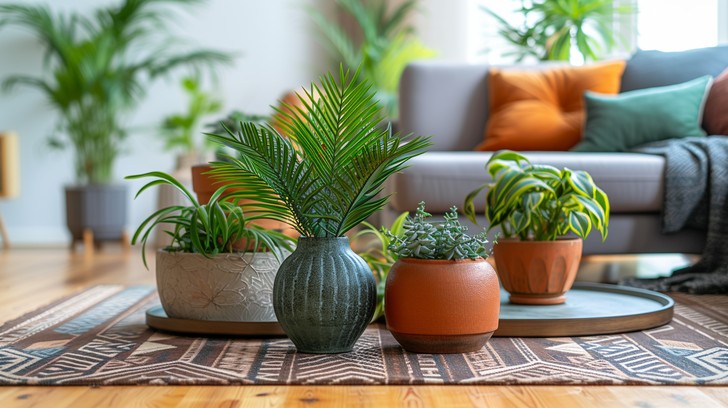
- 📌 Key Takeaways
- What is Biophilic Design, Really? (And Why Your Nervous System Cares)
- Element #1—Living Plants (The Non-Negotiable Foundation)
- Element #2—Natural Light and Circadian-Supportive Design
- Element #3—Natural Materials and Organic Textures
- Element #4—Water Features and Aquatic Elements
- Element #5—Natural Patterns, Fractals, and Organic Forms
- Putting It All Together: Creating Your Biophilic Stress-Reduction Plan
- The Bottom Line: Your Home as a Stress-Reduction Tool
- Frequently Asked Questions About Biophilic Design
- What are the easiest houseplants for beginners who want stress-reduction benefits?
- How much maintenance do indoor water features really require?
- Can biophilic design really reduce stress, or is it just aesthetic preference?
- What’s the most affordable way to start incorporating biophilic design?
- How do I maximize natural light in a dark apartment or room?
- Do I need to implement all five biophilic elements to see stress-reduction benefits?
- What natural materials are safe for homes with pets or children?
- Can renters incorporate biophilic design without making permanent changes?
📌 Key Takeaways
Bringing nature indoors isn’t just pretty it’s scientifically proven to lower stress hormones, improve sleep, and calm your nervous system. Here’s what actually works:
✅ Living Plants – Reduce cortisol by 25% and purify air (start with 2-3 unkillable varieties like pothos or snake plants)
✅ Natural Light – Workers with windows sleep 46 minutes more per night; maximize with mirrors and sheer curtains
✅ Organic Materials – Wood, stone, and natural fibers activate your “rest and digest” nervous system response
✅ Water Features – Viewing and hearing water reduces stress markers and masks jarring noise (tabletop fountains start at $30)
✅ Natural Patterns – Fractal designs reduce physiological stress by up to 60% through brain wave changes
Bottom line: You don’t need all five elements at once. Start with one (I recommend plants or natural light), see how your body responds, then build from there. Most implementations cost under $50 and work perfectly for renters.
Let me be honest with you: when I first heard the term “biophilic design,” I thought it was just another trendy buzzword floating around design blogs. Another aesthetic to chase, another Instagram-worthy trend that would fade faster. But then something shifted. I started digging into the research actual peer-reviewed studies and what I discovered stopped me in my tracks.
Turns out, our ancestors weren’t just being poetic when they felt drawn to nature. There’s hard science behind why a simple houseplant can lower your cortisol levels, why natural light makes you feel more human, and why that awkward corner you’ve been ignoring could become your sanctuary if you just… brought the outside in.
So here’s what we’re doing today: I’m breaking down five biophilic design elements that genuinely, measurably reduce stress. Not because some influencer said so, but because scientists studied it, measured it, and proved it. And better yet? I’m showing you how real homes including mine have implemented these elements without breaking the bank or requiring an architecture degree.
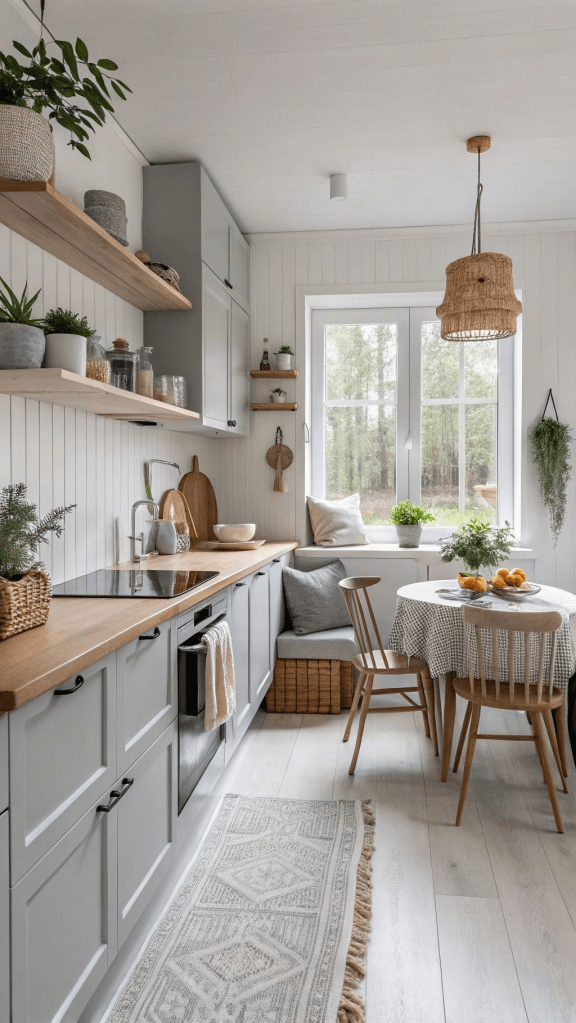
What is Biophilic Design, Really? (And Why Your Nervous System Cares)
Before we dive deep, let’s get clear on what we’re actually talking about.
Biophilic design isn’t just “putting plants everywhere” (though that’s part of it). It’s the intentional practice of connecting interior spaces with the natural world. The term comes from “biophilia,” coined by psychologist Erich Fromm and later popularized by biologist E.O. Wilson, which describes humans’ innate tendency to seek connections with nature and other forms of life.
Here’s what gets me excited: researchers at the University of Melbourne found that just 40 seconds of looking at nature even a green roof viewed from a window can significantly improve focus and performance. Forty seconds! Meanwhile, a comprehensive study published in the Journal of Physiological Anthropology demonstrated that interaction with indoor plants can reduce physiological and psychological stress by suppressing sympathetic nervous system activity and promoting comfortable, soothed, and natural feelings.
Your body knows when it’s disconnected from nature. That vague anxiety you feel in windowless offices? The exhaustion that hits after hours under fluorescent lights? That’s not just “in your head” it’s your nervous system begging for what it evolved with for millennia: natural light, organic textures, living things, and spatial patterns that mirror the outdoors.
If you’re already thinking about creating more mindful spaces in your home, you might want to check out my beginner’s guide to meditation corners at home, where we talk about intentional space design for mental clarity.
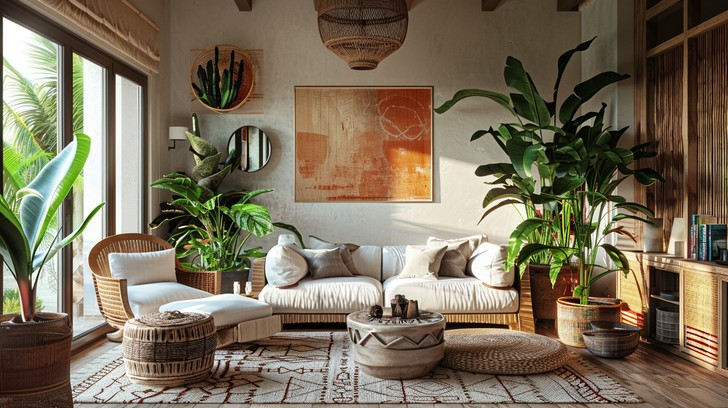
Element #1—Living Plants (The Non-Negotiable Foundation)
What the Science Actually Says
Let’s start with the obvious one, but stick with me because the research here is fascinating.
A groundbreaking study by NASA (yes, that NASA) found that common houseplants remove up to 87% of air toxins in 24 hours. But the stress-reduction benefits go far beyond clean air. Researchers at the Royal College of Agriculture in Circencester, England, found that students demonstrated 70% greater attentiveness when taught in rooms containing plants. Another study published in the Journal of Environmental Psychology showed that the presence of plants in an office setting increased productivity by 15% and significantly reduced stress markers.
But here’s what really sealed the deal for me: researchers in Norway conducted a study across multiple office environments and found that the introduction of plants led to a 25% decrease in symptoms of ill health, including fatigue, concentration difficulties, dry skin, and eye irritation.
Your body responds to plants on a cellular level. Their presence literally tells your nervous system: “You’re safe. You’re in a living environment. Relax.”
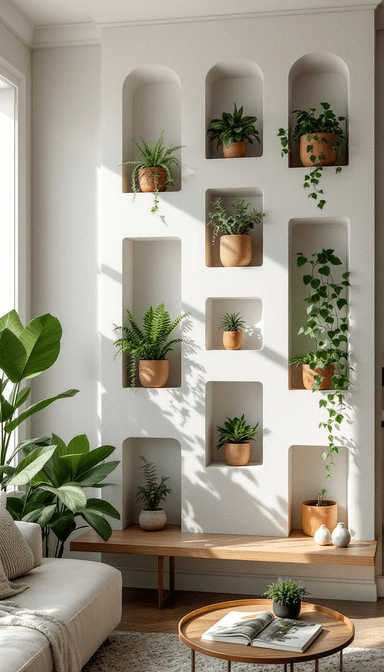
Real Home Implementation (Without Killing Everything)
You don’t need a green thumb you need the right plants for your space and lifestyle.
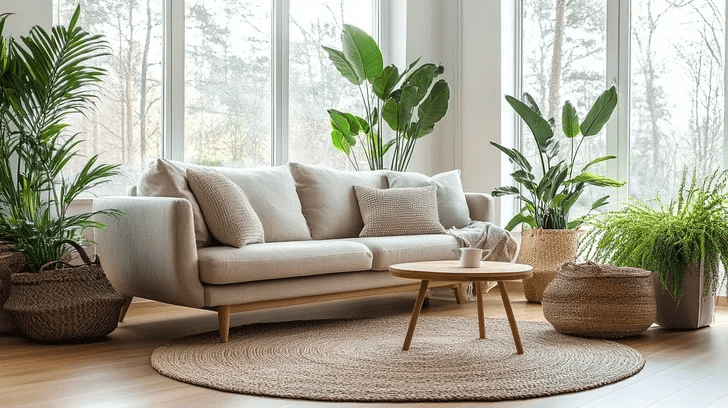
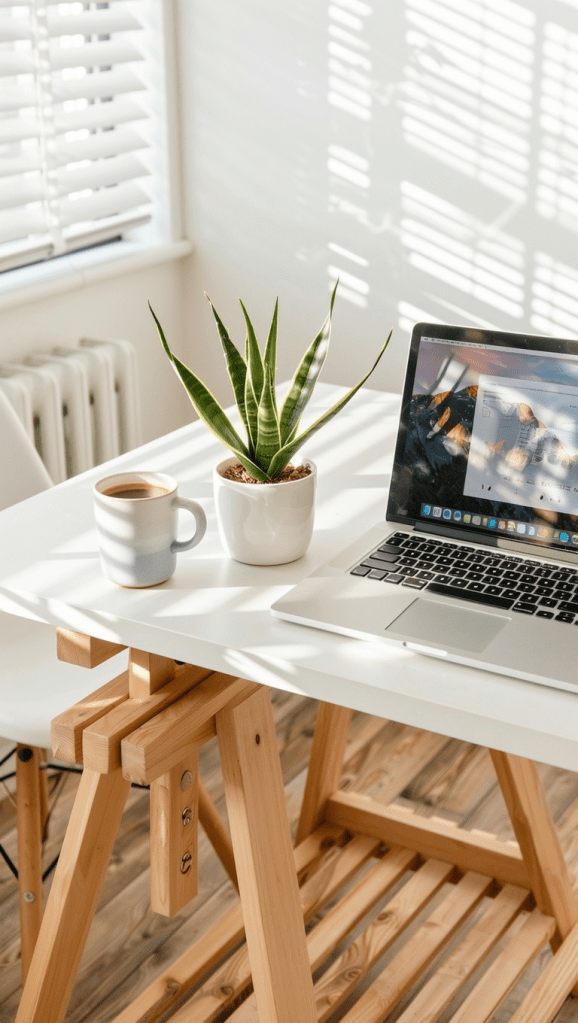
For low-light spaces: Pothos and snake plants are genuinely indestructible. I have a golden pothos in my bathroom that’s thrived for three years with nothing but shower steam and the occasional actual watering when I remember. My snake plant sits in a north-facing bedroom corner and basically ignores me which, honestly, is the relationship I need with my plants.
For bright, sunny spots: Rubber plants and fiddle leaf figs make dramatic statements. I positioned a rubber plant near my south-facing window, and it’s become an architectural feature all on its own glossy, sculptural, requiring water just once a week.
For air purification powerhouses: Spider plants, peace lilies, and Boston ferns. I keep a spider plant on my kitchen counter, and not only does it handle the variable light and kitchen chaos like a champ, but it also produces adorable baby plants that I’ve propagated and gifted to friends.
The strategy that changed everything for me? Start with three plants maximum. Master those. Let them become part of your routine (I water on Sundays). Then expand. Trying to care for fifteen plants when you’re new is a recipe for guilt and dead greenery.
Also and this matters choose pots with drainage. I cannot stress this enough. More plants die from overwatering than underwatering, and drainage holes are your insurance policy.
Element #2—Natural Light and Circadian-Supportive Design
The Science of Light and Your Stress Response
Natural light isn’t just pleasant it’s essential for regulating your circadian rhythm, which controls everything from sleep quality to hormone production to mood regulation.
A study published in Sleep Health found that workers with windows in the workplace received 173% more white light exposure during work hours and slept an average of 46 minutes more per night than workers without windows. Those with windows also reported better sleep quality, more physical activity, and better overall quality of life.
But here’s the really interesting part: research from Northwestern Medicine and the University of Illinois shows that exposure to natural light in office environments was the number one factor influencing sleep, with those receiving more daylight experiencing better sleep quality, fewer sleep disturbances, and improved mood.
Your stress hormones are directly tied to light exposure. When you’re disconnected from natural light patterns, your cortisol rhythm gets disrupted, leading to that wired-but-tired feeling that so many of us know too well.
If you work from home, this becomes even more critical. I wrote an entire piece about boosting focus and wellbeing in your home office because the connection between our environment and productivity is undeniable.
Maximizing Natural Light in Real Spaces
Not everyone has floor-to-ceiling windows or a sun-drenched loft. Most of us are working with average rooms, maybe some small windows, perhaps even a north-facing apartment where sunlight feels like a rare visitor.
Strategic mirror placement: This isn’t just design folklore,it works. I placed a large mirror directly across from my bedroom window, and it genuinely doubled the perceived light in the space. The reflection bounces light deeper into the room, making mornings feel less like crawling out of a cave.
Sheer curtains over blackouts: Unless you absolutely need darkness (shift workers, I see you), swap heavy curtains for lightweight sheers. You maintain privacy while allowing that precious natural light to filter through. I use white linen curtains in my living room they soften the light without blocking it.
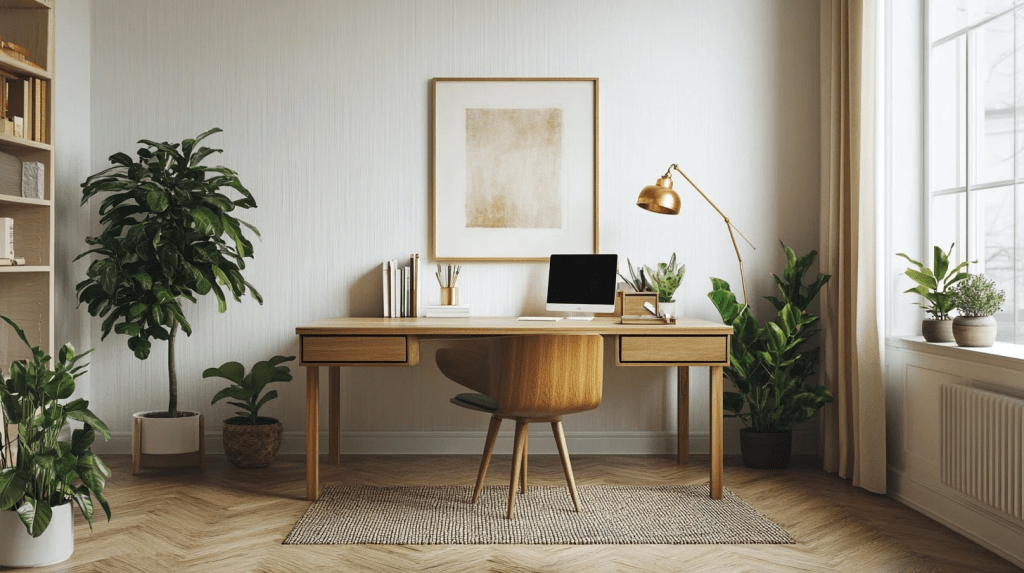
Light-colored walls and surfaces: This seems obvious, but it’s transformative. After I painted my home office from a moody gray to a warm white, the difference in perceived brightness was dramatic. Light colors reflect rather than absorb, making the same amount of natural light work harder.
Skylights or solar tubes: If you own your home and have dark hallways or interior bathrooms, this is worth the investment. My friend installed a solar tube in her windowless hallway, and it’s like a beam of actual sunshine cutting through the space.
Morning light priority: Position your morning routine spaces wherever you have breakfast, do your stress-reducing morning routine, or start your day near the best natural light sources. Morning light exposure is particularly powerful for setting your circadian rhythm for the entire day.

Element #3—Natural Materials and Organic Textures
Why Your Hands Want to Touch Wood (The Research)
There’s something about running your hand across a piece of wood, gripping a ceramic mug, or sinking your toes into a wool rug that just feels right. Turns out, there’s neuroscience behind that feeling.
A fascinating study from the University of British Columbia measured physiological stress responses when people interacted with different materials. Wood surfaces activated the parasympathetic nervous system (your “rest and digest” mode) while synthetic materials like plastic and metal triggered sympathetic nervous system responses (your “fight or flight” mode). Participants showed lower blood pressure and heart rate when exposed to wooden interiors compared to sterile, synthetic environments.
Japanese researchers studying “mokuzai” (the essence of wood) found that visual contact with wood surfaces reduced stress and produced a more comfortable feeling compared to steel or concrete surfaces. Even more fascinating: these benefits occurred whether participants consciously noticed the material or not. Your nervous system responds to natural materials even when your conscious mind doesn’t register them.
Incorporating Natural Materials Without a Complete Renovation
You don’t need to rip out your floors or replace all your furniture. Natural materials can be layered into existing spaces strategically and affordably.
Wooden cutting boards and serving pieces: These do double-duty functional and beautiful. I keep a massive wooden cutting board on my kitchen counter permanently. It’s both workspace and visual warmth.
Natural fiber rugs: Jute, sisal, wool, or cotton rugs instantly ground a space. I layered a chunky jute rug under my existing synthetic rug in the living room, and the textural contrast added depth while bringing in that organic element.
Rattan and wicker accents: Baskets, trays, light fixtures. These are affordable and abundant at thrift stores. I found a vintage rattan magazine holder for $8 that now holds my throw blankets functional, beautiful, and naturally textured.
Stone or ceramic pieces: A marble cutting board, ceramic vases, stone coasters. These small touches accumulate into a sense of organic richness. My collection of secondhand ceramic vessels on open shelving creates visual interest while bringing in that imperfect, handmade quality.
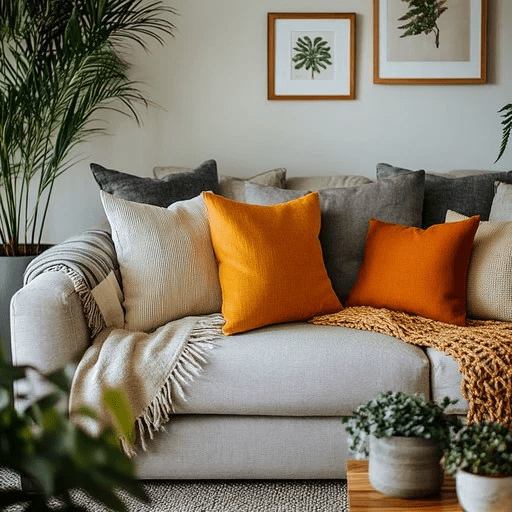
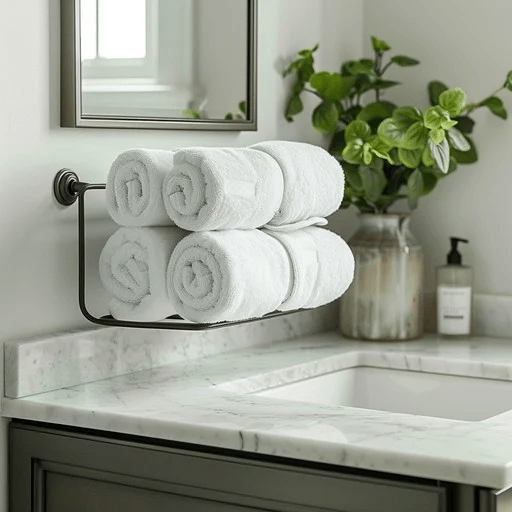
Linen and cotton textiles: Swap synthetic throw pillows for linen covers. Replace polyester curtains with cotton or linen. The difference in how a room feels not just looks is remarkable. Natural fibers breathe, drape differently, and age beautifully rather than looking worn.
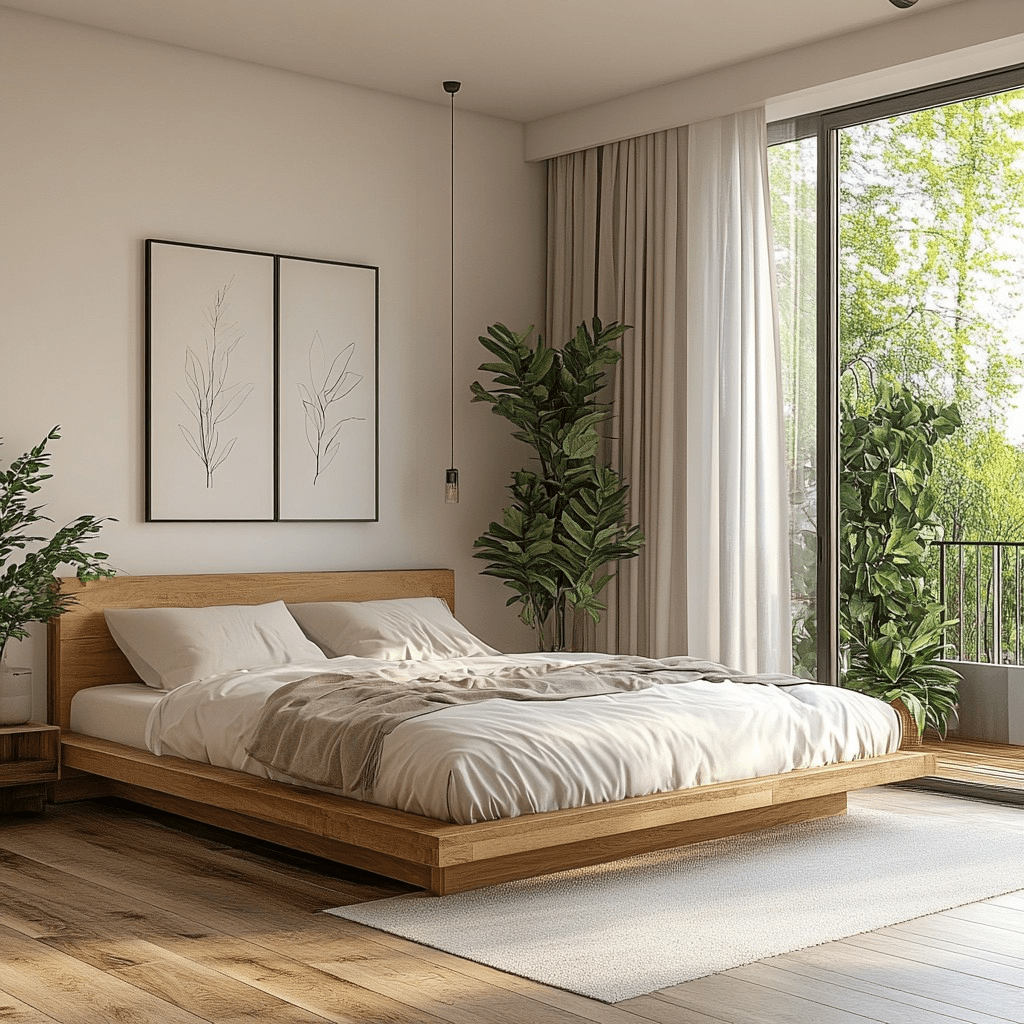
Exposed wood furniture: Even one substantial wooden piece a dining table, a bench, a side table can anchor a room. I found a solid wood coffee table at an estate sale for $40. It’s got water rings and scratches, but that’s the point. It has life. History. Realness.
Element #4—Water Features and Aquatic Elements
The Neuroscience of Running Water
Water has been central to human survival and settlement for all of human history, so perhaps it’s no surprise that our brains respond powerfully to its presence.
Research published in Health & Place found that both seeing and hearing water reduces stress and enhances positive mood states. A study using neuroimaging showed that viewing aquatic scenes activated areas of the brain associated with reward and emotional regulation while decreasing activity in areas linked to stress and threat detection.
Marine biologist Wallace J. Nichols wrote an entire book (Blue Mind) documenting the research on water’s impact on our brains. He describes how proximity to water triggers a meditative state characterized by calm focus, gentle awareness, and creative flow. The sound of running water specifically masks jarring noises and creates a consistent auditory backdrop that signals safety to your nervous system.
Even simpler: water features increase ambient humidity, which can improve respiratory comfort and skin health subtle but real impacts on physical wellbeing.

Bringing Water Elements Into Real Living Spaces
Full disclosure: I was skeptical about indoor fountains. They felt gimmicky, like something from a 90s mall storefront. But after researching the science and experimenting in my own space, I’m converted.
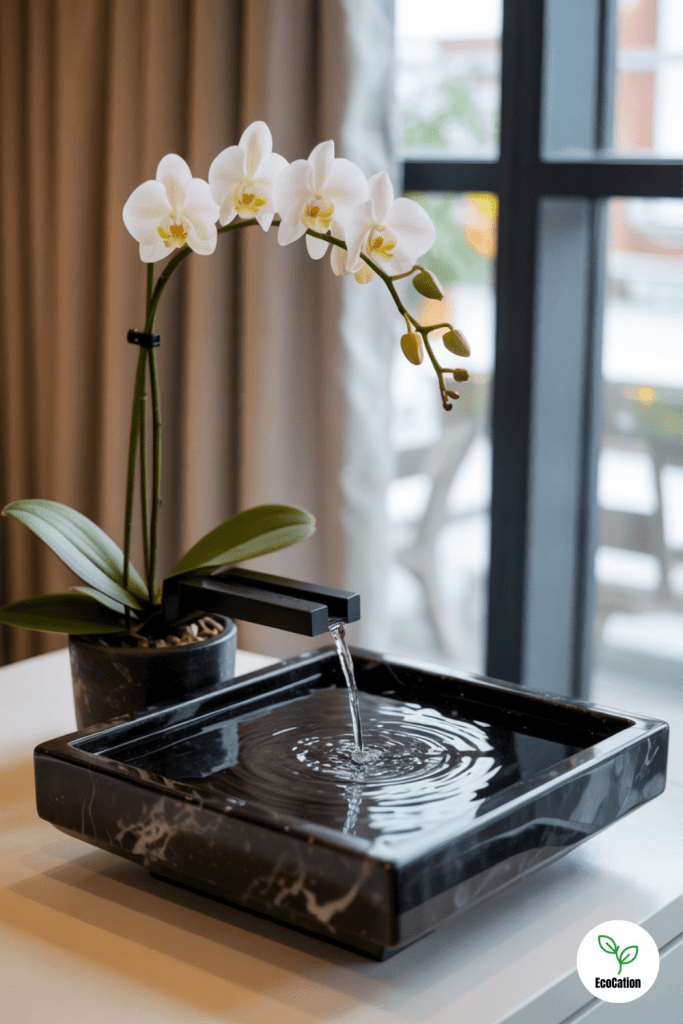
Tabletop fountains: These are surprisingly affordable ($30-$100) and genuinely effective. I have a small ceramic fountain on my desk that creates a gentle trickling sound. It gives me something to focus on during stressful work moments. Look for ones with adjustable flow you want a gentle trickle, not a waterfall.
Aquariums: Even a small aquarium (5-10 gallons) can be transformative. Research shows that watching fish swim lowers blood pressure and heart rate. You can start with a simple betta fish setup minimal maintenance, visually captivating, and genuinely calming to watch during breaks. The soft bubbling of the filter adds gentle white noise.
Water-themed art and photography: If actual water isn’t feasible, visual representations still offer benefits. Large-scale photographs of oceans, rivers, or waterfalls create focal points and trigger similar neural responses. A massive print of a foggy coastline become a visual anchor that your brain associates with calm.
Sound machines with water sounds: Okay, this isn’t technically biophilic design, but it’s an accessible entry point. I use a sound machine with stream and rain sounds in my bedroom for better sleep, and it’s made a measurable difference in how quickly I fall asleep and how rested I feel.
Maintenance reality check: Water features do require upkeep. Weekly refilling, monthly cleaning, occasional filter changes for fountains. Be honest with yourself about whether you’ll maintain it a grimy, neglected fountain does the opposite of reducing stress.
Element #5—Natural Patterns, Fractals, and Organic Forms
Why Your Brain Loves Patterns Found in Nature
This is where biophilic design gets genuinely mind-bending.
Fractals are self-similar patterns that repeat at different scales think of how a fern leaf mirrors the structure of the whole fern, or how a cauliflower’s florets replicate the pattern of the entire head. These patterns are everywhere in nature: tree branches, river systems, cloud formations, spiral shells, your own vascular system.
Neuroscientist Richard Taylor conducted groundbreaking research showing that viewing fractal patterns reduces physiological stress by up to 60%. Using EEG technology, his team found that fractal patterns with a specific mathematical dimension (between 1.3 and 1.5) produced alpha brain waves associated with relaxed wakefulness. These patterns occur throughout nature in coastlines, mountains, and yes, Jackson Pollock paintings.
Your brain is wired to find these patterns soothing because they signal diverse, healthy ecosystems precisely the environments where humans thrived throughout evolutionary history.

Translating Natural Patterns Into Interior Design
This element is perhaps the most abstract, but also the most creatively satisfying to implement.
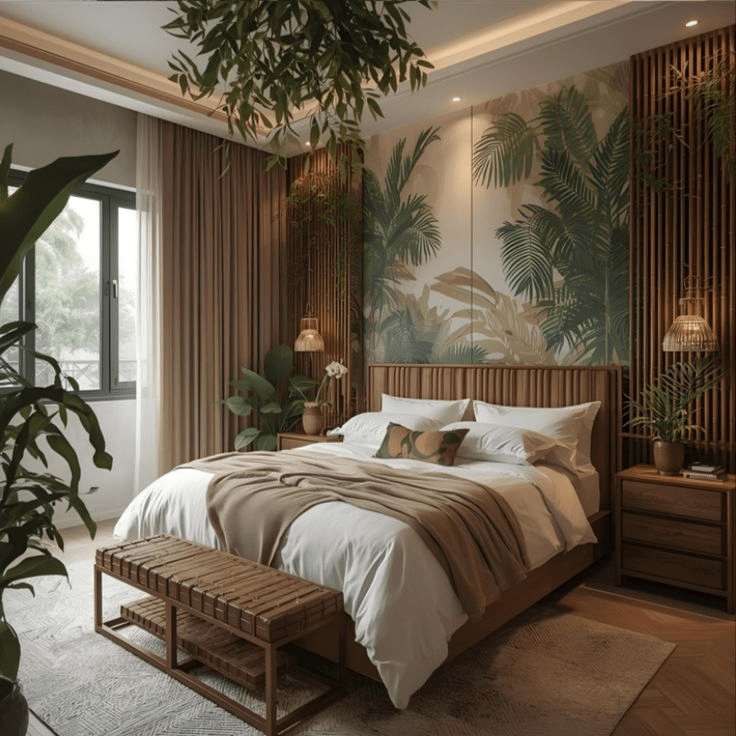
Wallpaper and textiles with organic patterns: Florals, leaves, branches, topographic maps, wave patterns. I installed botanical wallpaper on one accent wall in my entryway the pattern creates visual complexity without feeling chaotic. The key is choosing patterns that feel irregular and flowing rather than perfectly geometric and rigid.
Art featuring natural forms: Botanical illustrations, landscape photography, abstract pieces inspired by natural phenomena. I rotate prints from a local artist who creates watercolors of native plants each piece brings that fractal complexity into the space.
Curved furniture and rounded forms: Sharp corners and perfect rectangles don’t exist in nature. I deliberately chose a rounded coffee table, arched mirrors, and a curved sofa. The effect is subtle but significant the space feels more inviting, more organic.
Organic arrangement and asymmetry: Nature isn’t symmetrical. I arrange items on shelves in odd-numbered groupings with varying heights. My plants cluster in one corner rather than spacing evenly around the room. This mimics how vegetation naturally grows and feels more alive.
Natural color palettes: Earth tones, sky blues, plant greens, stone grays. These colors exist in nature in endless subtle variations, and they work harmoniously without needing a design degree. I pulled my living room palette from a single photo of a foggy forest muted greens, warm grays, soft browns.
Biomorphic lighting fixtures: Fixtures that mimic natural forms branching pendants, woven shades, sculptural pieces that suggest organic growth. My dining room pendant light is a woven rattan sphere that casts dappled shadows reminiscent of sunlight filtering through leaves.
Putting It All Together: Creating Your Biophilic Stress-Reduction Plan
Here’s the truth that nobody tells you: you don’t need to implement everything at once. In fact, you shouldn’t. Overwhelming yourself with a massive home redesign is counterproductive to the entire point of stress reduction.
Start with one element. Which of these five resonates most? What feels most achievable for your space, budget, and lifestyle right now?
For me, it was plants. I started with three unkillable varieties and built from there. Once those were thriving and integrated into my routine, I tackled natural light swapping curtains, adding mirrors, rearranging furniture to maximize morning sun exposure. Then came natural materials, layered gradually through secondhand finds and thoughtful purchases.
Measure your own response. Everyone’s nervous system is unique. Pay attention to how you feel in spaces. Do you gravitate toward your plant corner during stressful moments? Do you sleep better after maximizing bedroom light? Does the fountain genuinely soothe you, or is it just another thing to maintain?
Make it sustainable. The most beautifully biophilic home means nothing if you can’t maintain it. Choose plants you can actually keep alive. Select water features you’ll actually clean. Invest in natural materials that fit your budget and lifestyle.
The goal isn’t perfection it’s connection. Connection to nature, to living systems, to the patterns and materials that your body recognizes as home. Because that’s what biophilic design ultimately offers: a sense of coming home to an environment that supports rather than depletes you.
The Bottom Line: Your Home as a Stress-Reduction Tool
We spend roughly 90% of our time indoors. Let that sink in for a moment. Ninety percent. Our ancestors spent their entire existence embedded in nature, and now we’ve systematically removed ourselves from it and then wonder why we’re anxious, exhausted, and disconnected.
Biophilic design isn’t about creating some pristine, magazine-worthy showcase. It’s about recognizing that your home environment is either working for you or against you when it comes to stress, and that you have more control than you think over which it is.
The science is clear: plants reduce cortisol, natural light regulates your circadian rhythm, organic materials activate your relaxation response, water features calm your nervous system, and natural patterns literally change your brain waves. These aren’t aesthetic preferences they’re biological necessities we’ve neglected.
So start somewhere. Buy one plant. Move your bed closer to the window. Swap one synthetic item for a natural material. Add one water feature. Hang one piece of nature-inspired art.
Your nervous system will thank you. And in a world that seems designed to keep us stressed, that’s a form of quiet rebellion worth embracing.
Frequently Asked Questions About Biophilic Design
What are the easiest houseplants for beginners who want stress-reduction benefits?
Start with pothos, snake plants, or spider plants. These three varieties are nearly indestructible and offer genuine air purification benefits. They tolerate low light, forgive forgotten waterings, and still provide the stress-reducing presence of living greenery. Begin with just 2-3 plants, master their care routine (I water mine every Sunday morning), and expand only when you’re confident. Always choose pots with drainage holes more plants die from overwatering than underwatering.
How much maintenance do indoor water features really require?
Tabletop fountains need weekly refilling (water evaporates quickly) and monthly deep cleaning to prevent algae buildup and mineral deposits. Small aquariums require weekly partial water changes (about 25%), monthly filter maintenance, and daily feeding if you have fish. If you’re not prepared for this level of upkeep, consider water-themed artwork or sound machines with water sounds instead they provide similar calming benefits without maintenance demands.
Can biophilic design really reduce stress, or is it just aesthetic preference?
The stress-reduction benefits are scientifically validated, not just subjective preference. Research published in the Journal of Physiological Anthropology shows that interaction with indoor plants suppresses sympathetic nervous system activity (your stress response) by measurable amounts. Studies on natural light exposure demonstrate improved cortisol regulation and better sleep quality. Neuroscience research on fractal patterns shows up to 60% reduction in physiological stress markers. Your nervous system responds to these elements whether you consciously notice them or not.
What’s the most affordable way to start incorporating biophilic design?
Begin with natural light optimization it costs nothing. Rearrange furniture to maximize window exposure, swap heavy curtains for sheers, and position mirrors to reflect light deeper into rooms. Next, add one or two low-maintenance plants (pothos typically cost $5-15). Thrift stores are goldmines for natural material items: wooden bowls, ceramic vases, wicker baskets, and natural fiber textiles. I’ve built most of my biophilic elements through finds under $20 each.
How do I maximize natural light in a dark apartment or room?
Use strategic mirror placement directly across from windows to bounce light deeper into the space. Paint walls in light, reflective colors (warm whites work better than stark whites). Replace heavy window treatments with sheer linen or cotton curtains that filter light without blocking it. Remove or minimize furniture blocking windows. If you own your space, consider installing solar tubes in windowless areas—they channel actual sunlight through reflective tubes from your roof.
Do I need to implement all five biophilic elements to see stress-reduction benefits?
Absolutely not. Start with the single element that feels most achievable for your space, budget, and lifestyle. Research shows benefits from individual elements you don’t need a complete biophilic overhaul to experience stress reduction. I started with just plants, saw genuine improvements in my stress levels, then gradually added natural light optimization months later. Choose one element, implement it properly, let it become part of your routine, then expand if desired.
What natural materials are safe for homes with pets or children?
Focus on non-toxic, durable options: untreated solid wood furniture, cotton and linen textiles, wool or jute rugs, and ceramic or stone accessories. Avoid essential oils in aromatherapy if you have cats (many are toxic to them). Research pet-safe plants spider plants, Boston ferns, and parlor palms are safe for cats and dogs, while pothos and peace lilies are toxic if ingested. For children, avoid sharp-edged stone pieces and secure heavy ceramic items that could tip.
Can renters incorporate biophilic design without making permanent changes?
Everything I’ve recommended works for renters. Plants, natural light optimization, portable water features, natural material accessories, and organic textiles require zero permanent modifications. Use removable wallpaper for natural patterns if desired. Freestanding mirrors don’t require wall mounting. Layering natural fiber rugs over existing flooring is completely reversible. Focus on furniture, textiles, plants, and portable elements rather than architectural changes.
External Research References:
- University of Melbourne (attention and nature study)
- Journal of Physiological Anthropology (plant stress reduction)
- NASA air purification study
- Royal College of Agriculture (plant attentiveness study)
- Journal of Environmental Psychology (workplace plants and productivity)
- Sleep Health journal (natural light and sleep study)
- Northwestern Medicine and University of Illinois (daylight and wellbeing)
- University of British Columbia (materials and stress response)
- Health & Place journal (water and stress reduction)
- Wallace J. Nichols – Blue Mind research
- Richard Taylor – fractal patterns and stress reduction
Follow, Share and Suscribe!
 Linda Designs | Home Decor, Interior Design & Lifestyle Inspiration