
- Decor Tricks for Stress-Reducing Morning Routines
- Why Your Morning Environment Matters More Than You Think
- The Foundation: Creating Visual Calm Through Strategic Color Choices
- Decluttering Your Morning Sightlines
- Lighting Design That Supports Your Circadian Rhythm
- Strategic Furniture Placement for Morning Flow
- Textural Elements That Ground Your Morning Experience
- Incorporating Calming Scents into Your Morning Design
- Sound Design for Peaceful Awakening
- Plants as Stress-Reducing Design Elements
- Creating Zones for Specific Morning Activities
- Smart Storage for Morning Efficiency
- Why This Works for ADHD and Neurodivergent Minds
- Technology Management for Peaceful Mornings
- Seasonal Adjustments for Year-Round Stress Reduction
- Personalizing Your Stress-Free Morning Space
- Step-by-Step Implementation Guide
- Visual Implementation Resources
- Final Thoughts
Decor Tricks for Stress-Reducing Morning Routines
You know that feeling when your alarm goes off and your heart immediately starts racing? When you stumble through a cluttered room, frantically searching for matching socks while your anxiety levels spike before you’ve even had coffee?
I’ve been there. Too many times.
But here’s what changed everything for me: I realized my space was sabotaging my mornings before they even began.
As someone who’s spent years exploring how our environments shape our emotional states, I’ve discovered that the design choices we make in our bedrooms and morning spaces have an outsized impact on our stress levels. Your decor isn’t just about aesthetics it’s a functional tool that either supports or undermines your morning wellness. And when you get it right? The difference is transformative.
Let me walk you through the specific decor strategies that turned my chaotic, stress-inducing mornings into grounded, intentional rituals. These aren’t just pretty Pinterest ideas. They’re research-backed, designer-tested tricks that actually work.
Why Your Morning Environment Matters More Than You Think
Before we dive into the specifics, let’s talk about why this matters.
Research from UCLA’s Center on Everyday Lives of Families (CELF) has consistently shown that our physical surroundings directly influence our cortisol levels that stress hormone that spikes when we’re overwhelmed. Women who perceive their homes as cluttered tend to have flatter diurnal slopes of cortisol, a profile associated with adverse health outcomes.
When your bedroom is chaotic, visually cluttered, or poorly organized, your nervous system registers that chaos before your conscious mind even processes it. You’re literally starting your day in fight-or-flight mode.
Conversely, when your morning environment is thoughtfully designed with calm and function in mind, your body responds accordingly. Lower stress hormones. Clearer thinking. Better emotional regulation.
This is why I’m so passionate about bringing mindfulness habits into the bedroom because where you wake up shapes everything that follows.
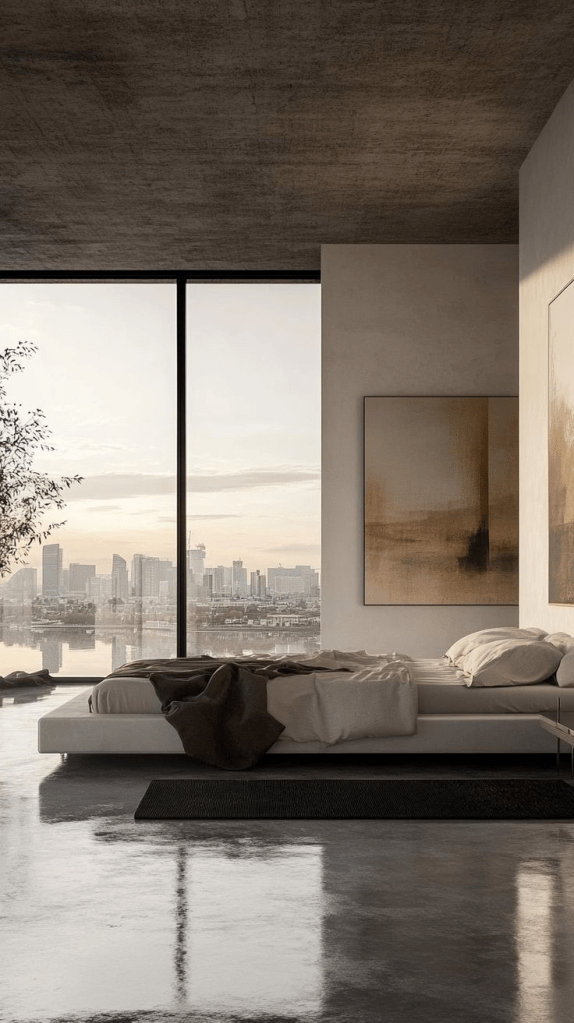
The Foundation: Creating Visual Calm Through Strategic Color Choices
Color is one of the most powerful yet underutilized tools in stress reduction.
Soft, Muted Palettes That Soothe Rather Than Stimulate
Forget what’s trending on Instagram. If you want mornings that feel peaceful rather than jarring, you need to think strategically about your bedroom color palette.
I learned this the hard way when I had bright coral accent walls energizing during the day, absolutely terrible for waking up peacefully. Now? I swear by soft, desaturated tones. Think sage greens, warm grays, dusty blues, creamy whites, and gentle taupes.
These colors don’t demand attention. They whisper rather than shout. And that matters when your nervous system is transitioning from sleep to wakefulness.
The science backs this up too. Studies published in PubMed have demonstrated that blue light exposure can decrease systolic blood pressure, while cool colors such as green and blue relax the autonomic nervous system. Research on hypertensive patients found that blue and green colors both significantly lowered blood pressure and heart rate, while red had the opposite effect.
In practical terms? Soft blues can actually lower your blood pressure. Gentle greens create feelings of renewal and balance.
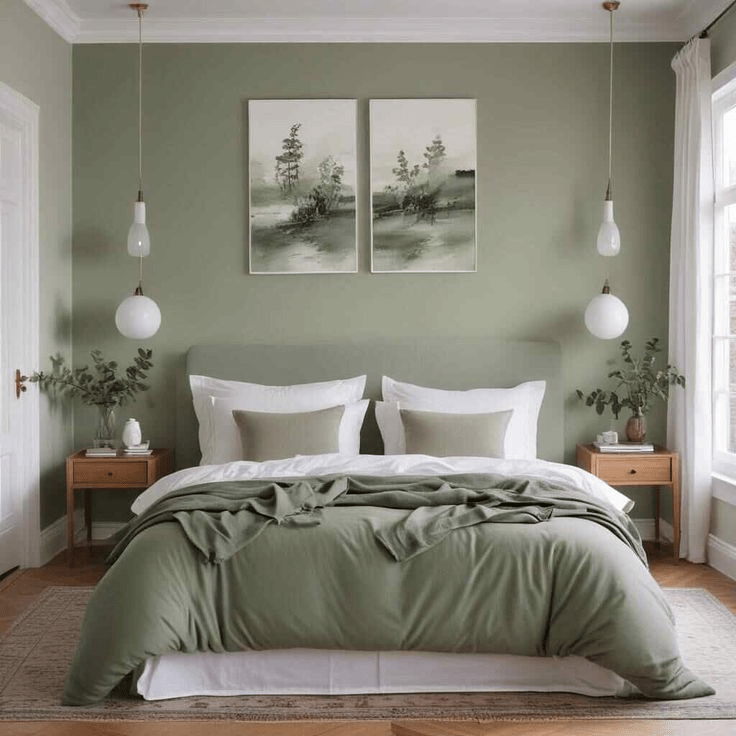
The 60-30-10 Rule for Bedroom Color Balance
Here’s a designer trick that makes color selection foolproof: the 60-30-10 rule.
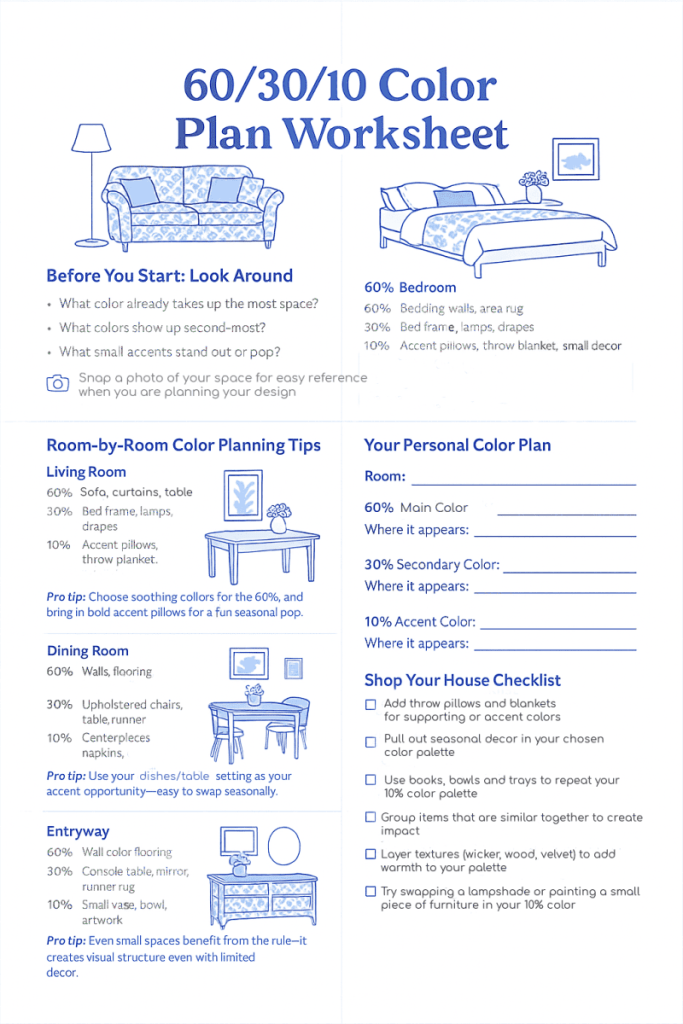
- 60% should be your dominant color (usually walls and large furniture)
- 30% should be your secondary color (bedding, curtains, rugs)
- 10% should be accent colors (pillows, artwork, small decor items)
This creates visual harmony without monotony. Your eye has a clear path to follow, which reduces cognitive load that mental effort your brain expends processing your environment.
Less cognitive load in the morning? More mental energy for what actually matters.
Decluttering Your Morning Sightlines
Let’s talk about what you see the moment you open your eyes.
This might be the single most important aspect of stress-reducing morning design, yet it’s where most people get it wrong. Visual clutter even if it’s “organized” clutter creates mental clutter. Your brain has to process every item in your field of vision, and that processing happens unconsciously, draining your energy before you’ve even gotten out of bed.
The First-Sight Principle
Stand where you sleep and look around. What do you see immediately upon waking?
If your answer includes piles of laundry, stacks of papers, exercise equipment, or a desk covered in work materials, we need to make some changes. Your first visual impression of the day should be intentionally calming not a reminder of everything you need to do.
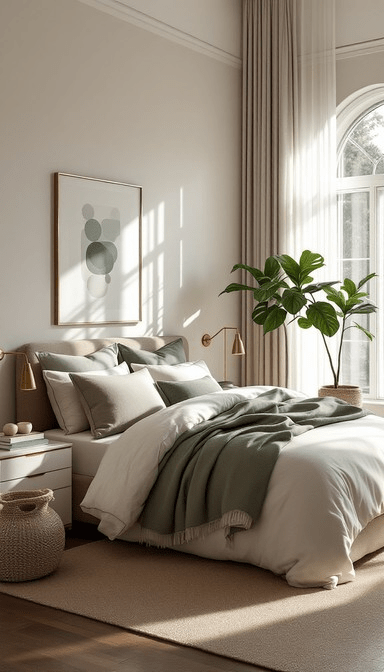
I reorganized my entire bedroom layout based on this principle. Now, when I open my eyes, I see a peaceful corner with a small plant, a piece of calming artwork, and natural light filtering through sheer curtains. The difference in my morning anxiety levels was immediate and dramatic.
Hidden Storage Solutions That Actually Work
Here’s where function meets design.
You need places to put things that’s reality. But those places don’t need to be visible. Invest in furniture with built-in storage: beds with drawers underneath, ottomans that open up, nightstands with closed cabinets rather than open shelves.
I’m particularly fond of floating shelves with back panels or closed cabinets mounted at eye level. They keep essentials accessible while maintaining that crucial visual calm.
The key is this: if you use something daily for your morning routine, it should have a dedicated, hidden home. Phone chargers? Tuck them into a nightstand drawer with a cutout for the cord. Skincare products? Behind a medicine cabinet mirror or in attractive closed containers.
Lighting Design That Supports Your Circadian Rhythm
Lighting is where most people unknowingly sabotage their stress-free mornings.
Layered Lighting for Gradual Awakening
Harsh overhead lighting the moment you wake up is physiologically jarring. It spikes cortisol and can trigger headaches or eye strain. Instead, you want layers of light that progressively introduce brightness.
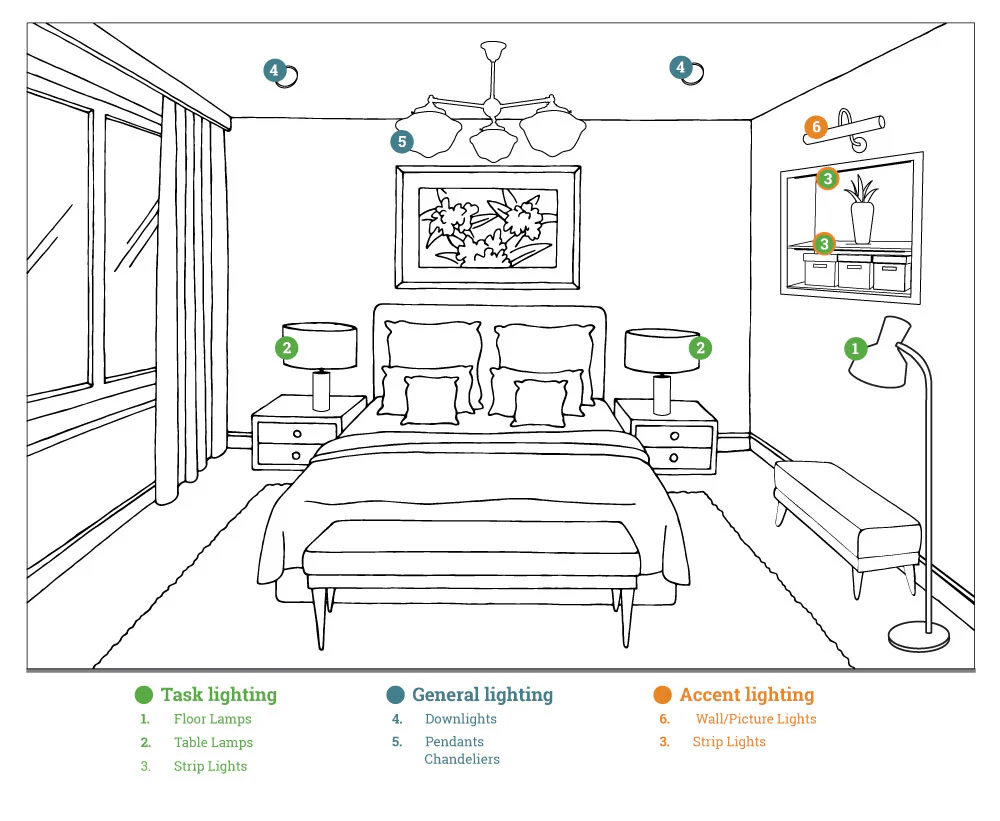
Here’s my three-layer approach:
Layer 1 – Dawn Simulation: Use a sunrise alarm clock or smart bulbs that gradually increase in brightness over 20-30 minutes before your alarm. This mimics natural dawn and helps your body transition from sleep to wakefulness gently. I cannot overstate how much this changed my mornings.
Layer 2 – Soft Ambient Light: Bedside lamps with warm-toned bulbs (2700K-3000K) that you can turn on without leaving bed. These provide enough light to move around safely without shocking your system.
Layer 3 – Task Lighting: Brighter focused light for specific activities like choosing clothes or doing makeup, but positioned where it’s not your first visual experience.
The goal is giving yourself choice. Some mornings you’ll need that gradual awakening. Others you might be ready for more light. Having options reduces stress because you’re in control.
Natural Light Optimization
Nothing and I mean nothing beats natural light for regulating your circadian rhythm and reducing morning stress.
If possible, position your bed where morning light can reach it. East-facing windows are ideal. But even if that’s not possible, think about window treatments that allow you to control light gradually.
I switched from blackout curtains to a double-layer system: sheer curtains underneath that allow soft morning light, with heavier curtains overtop that I can close when needed. This gives me darkness for sleep but doesn’t leave me waking up in a cave.
For those without good natural light access, full-spectrum light therapy lamps can help. They’re not just for seasonal depression they’re powerful tools for establishing healthy wake-up routines. I keep mine on my dresser, positioned where I can turn it on while still in bed.
Strategic Furniture Placement for Morning Flow
The way you arrange your furniture determines how smoothly your morning routine flows or doesn’t.
The Morning Movement Path
Think about your typical morning sequence. Alarm off, feet on floor, walk to bathroom, return to closet, get dressed, leave room. That’s your morning movement path, and it should be as obstacle-free and intuitive as possible.
I mapped mine out literally drawing it on paper and realized I was circling my bed twice to reach my closet. Small frustration, but it added stress every single morning. After rearranging, my path is direct and logical.
Ensure there’s clear floor space for this path. No dodging laundry baskets or sidestepping chairs. Your morning self groggy, not fully awake deserves easy navigation.
Creating a “Landing Zone” for Morning Essentials
This concept borrowed from professional organizing has been game-changing. Designate one specific spot a small tray on your dresser, a wall-mounted organizer, a specific drawer where everything you need in the morning lives.
My landing zone includes: phone, glasses, water bottle, morning supplements, and a small notebook for intentions. Every evening, I restock it as part of my wind-down routine. Every morning, I know exactly where everything is.
No searching. No decision fatigue. Just grab and go.
If you’re interested in taking this concept further, I’ve written extensively about meditation corners at home and how dedicated spaces for specific practices can transform your daily rituals.

Textural Elements That Ground Your Morning Experience
We often focus on visual design while forgetting that touch is equally important for emotional regulation.
The First Touch of the Day
What’s the first thing your feet touch when they hit the floor? For me, it used to be cold hardwood not exactly welcoming. Now, I have a plush, high-pile rug positioned exactly where my feet land.
This might seem trivial, but sensory experiences have immediate emotional impacts. Soft, warm textures activate the parasympathetic nervous system your body’s “rest and digest” mode. They signal safety and comfort. Hard, cold surfaces do the opposite.
Consider layering textures throughout your morning spaces:
- Soft rugs with good cushioning
- Smooth, natural-fiber bedding that feels luxurious
- A cozy robe or slippers within arm’s reach
- Textured throw blankets that invite touch
These aren’t indulgences. They’re functional tools for nervous system regulation.
Natural Materials for Grounding
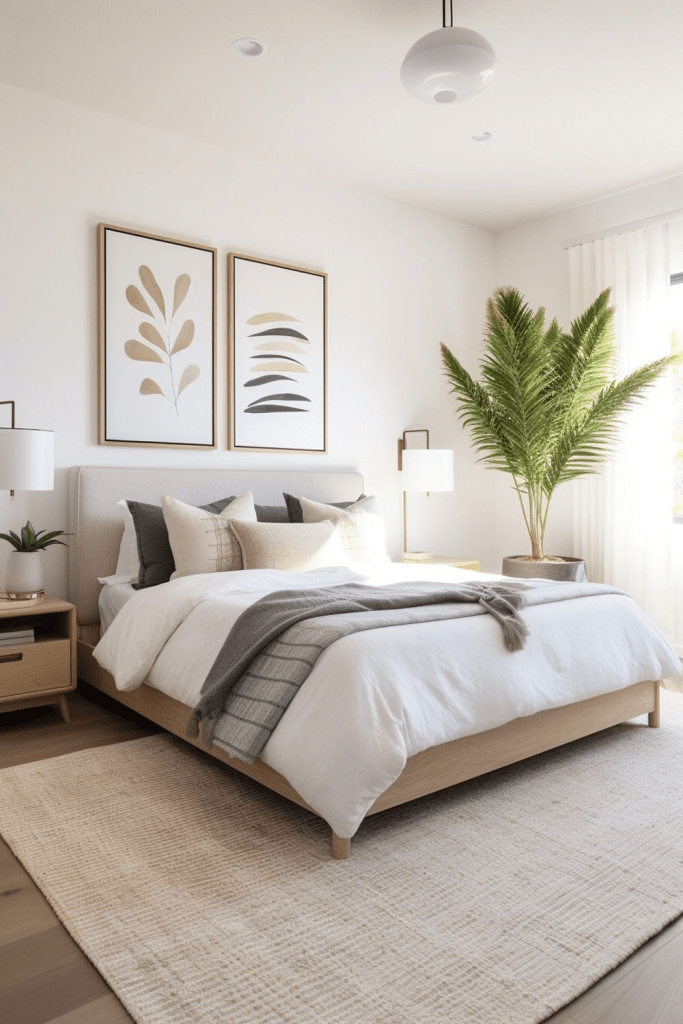
There’s something about natural materials wood, linen, cotton, wool, stone that feels inherently calming in a way synthetics don’t replicate.
I’ve gradually replaced plastic organizers with wooden boxes, synthetic rugs with natural-fiber options, and polyester bedding with linen. The difference isn’t just aesthetic. Natural materials have subtle textural variations and respond to temperature in ways that feel more… alive? More connected to something beyond the manufactured world?
This might sound woo-woo, but environmental psychology research supports it. Biophilic design incorporating natural elements into built environments consistently reduces stress markers and improves mood.
Incorporating Calming Scents into Your Morning Design
Scent is the most direct route to your emotional brain. It bypasses rational processing and triggers immediate responses.
Strategic Scent Diffusion
I keep a small essential oil diffuser on my dresser with a simple automation: it turns on 20 minutes before my alarm. When I wake up, my room already smells like lavender and eucalyptus calming but not sedating.
Key scents for stress-reducing mornings:
- Lavender: Clinically proven to reduce anxiety in randomized controlled trials comparing Silexan (lavender oil preparation) to pharmaceutical anxiolytics
- Eucalyptus: Invigorating without being harsh
- Bergamot: Uplifting and balancing
- Frankincense: Grounding and centering
- Peppermint: Energizing for those who need extra wake-up support
The trick is keeping scents subtle. You want a gentle presence, not an overwhelming cloud. And switch scents periodically your nose adapts, reducing effectiveness over time.
For a deeper dive into this topic, my guide on scent and sound for home calm explores the science behind sensory sanctuary design.
Scent-Infused Textiles
Another approach: scent your textiles directly. I keep lavender sachets in my bedding drawer, spray my pillowcases with a light linen mist before bed, and occasionally add a few drops of essential oil to my laundry.
This creates a subtle, long-lasting scent environment without requiring devices or electricity. Plus, scent becomes associated with comfort and relaxation through repeated pairing.

Sound Design for Peaceful Awakening
What you hear matters as much as what you see or smell.
Eliminating Jarring Alarms
Standard alarm sounds are designed to startle you awake they trigger your fight-or-flight response by design. If stress reduction is your goal, this is counterproductive.
Switch to gentler alternatives:
- Gradually increasing nature sounds
- Soft chimes or bells
- Instrumental music that builds slowly
- Your favorite calming song at low volume
I use a combination approach: a sunrise lamp that gradually brightens while soft acoustic plays at increasing volume. By the time I’m conscious enough to register it, I’m already mostly awake. No jolt. No spike of anxiety.
Acoustic Absorption
Hard surfaces reflect sound, creating echoes and amplifying noise. Soft surfaces absorb it, creating quiet.
If your mornings include sounds you can’t control roommates, traffic, neighbors focus on acoustic absorption. Add:
- Thick curtains or drapes
- Upholstered furniture
- Wall hangings or tapestries
- Dense area rugs
- Acoustic panels (they make decorative ones now)
These absorb sound waves, creating a quieter environment even when external noise persists. For me, adding heavy curtains and a large fabric wall hanging reduced ambient noise noticeably. My mornings feel quieter, even though the actual sound sources haven’t changed.
Plants as Stress-Reducing Design Elements
Living plants do triple duty: they’re visually calming, they improve air quality, and they provide a nurturing ritual.
Low-Maintenance Morning-Friendly Plants
The key word is low-maintenance. You don’t want plants that create stress through demanding care requirements.
My morning-space favorites:
- Snake plants: Tolerate neglect beautifully, purify air, striking vertical interest
- Pothos: Thrives in low light, gorgeous trailing growth, nearly impossible to kill
- ZZ plants: Glossy, architectural leaves, tolerates low light and irregular watering
- Peace lilies: Elegant flowers, forgiving care needs, air-purifying
I keep a small snake plant on my nightstand and a larger pothos on my dresser. They require minimal attention watering every week or two but provide daily visual interest and a sense of life in the space.
Strategic Plant Placement
Position plants where you’ll see them during your morning routine, particularly during still moments. Next to where you sit to put on shoes. On the windowsill where you brush your teeth. Near your meditation corner if you have one.
These small moments of connection with living things have documented stress-reducing effects. There’s even research showing that caring for plants can reduce cortisol levels over time.
Plus, there’s something grounding about tending to another living thing, even briefly. It pulls you out of your own head and into the present moment which is exactly what stress-reducing morning routines should do.
Creating Zones for Specific Morning Activities
Rather than one undifferentiated space, think about creating mini-zones optimized for different parts of your routine.
The Dressing Zone
This should be organized for quick, low-stress decision-making. I use a capsule wardrobe approach with a specific section of my closet dedicated to frequent-rotation pieces. Everything’s arranged by type and color, so finding what I need is visual and intuitive.
Add a full-length mirror with good lighting. Include a small chair or bench getting dressed while balanced on one foot is an unnecessary morning stressor. Keep a small basket for accessories so you’re not hunting for that specific necklace or watch.
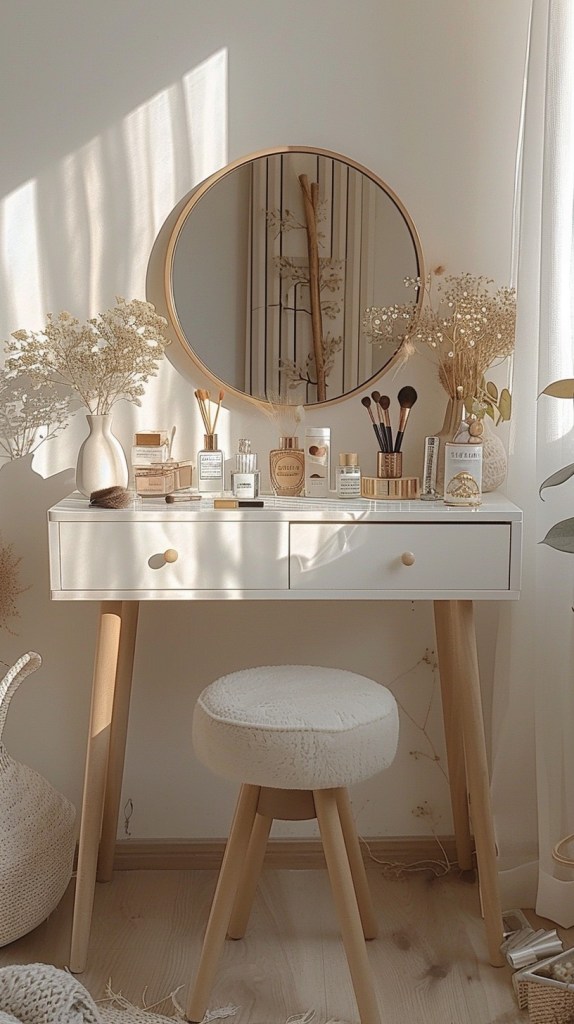
The Grooming Zone
If your bathroom is separate, that’s fine. But having a small grooming station in your bedroom even just a mirror and a small organizer for essentials can streamline your routine significantly.
I have a small vanity with a magnifying mirror and good task lighting. All my daily skincare and makeup is organized in a small drawer system where everything has a specific spot. My morning skincare routine now takes three minutes instead of ten because I’m not searching for products or figuring out what order they go in.
The Mindfulness Zone
This is where meditation corner design principles really come into play.
Even if you don’t meditate formally, having a designated spot for a few minutes of quiet morning reflection can transform your day. Mine is incredibly simple: a comfortable floor cushion, a small side table with a candle and journal, positioned near my east-facing window.
I spend five to ten minutes there most mornings sometimes meditating, sometimes journaling, sometimes just sipping tea while watching light patterns on the wall. It’s become the anchor of my stress-free morning routine, and the dedicated space makes it effortless to maintain.
Smart Storage for Morning Efficiency
The less time you spend searching for things, the more peaceful your morning.
The Open vs. Closed Storage Balance
There’s a design debate here: open shelving (visually accessible) vs. closed storage (visually calm). For morning spaces, I lean heavily toward closed storage for most items, with very selective open display.
Open storage works for:
- Items you use literally every single day
- Decorative objects that genuinely bring you joy
- Plants and natural elements
Everything else? Hide it. Closed drawers, cabinets with doors, attractive boxes with lids.
The exception: if open storage is so impeccably organized that it’s visually calming rather than cluttering. Think matching containers, everything labeled, grouped by category. But be honest with yourself can you maintain that long-term, every day, even when you’re exhausted?
For most of us, closed storage is more realistic and significantly less stressful.
Vertical Organization Systems
Wall-mounted organizers, pegboards, and hanging systems maximize storage while minimizing floor clutter. I installed a simple pegboard system inside my closet door for jewelry, scarves, and bags. Everything’s visible when the door’s open, completely hidden when it’s closed.
Similarly, over-door hooks, wall-mounted coat racks, and floating shelves keep essentials accessible without taking up valuable surface space or creating visual clutter.

Why This Works for ADHD and Neurodivergent Minds
The strategies I’ve shared aren’t just beneficial for everyone they’re particularly transformative for ADHD and neurodivergent individuals.
The “Landing Zone” and visible-when-needed storage techniques directly address executive dysfunction challenges. For ADHD brains that struggle with object permanence, having dedicated spaces where essential items always live eliminates the cognitive burden of remembering where things are.
By reducing visual noise and creating clear pathways, we lower the executive functioning demands required just to get through a morning routine. Each simplified decision from knowing exactly where your keys are to having a pre-determined outfit zone preserves precious mental energy for the day ahead.
The layered lighting approach is especially helpful for sensory processing differences, allowing for gentle transitions rather than overwhelming sensory input. And the emphasis on reducing visual clutter? That directly combats the attention competition that makes ADHD mornings so exhausting.
These aren’t workarounds. They’re optimizations that acknowledge how different brains actually function and design environments that support rather than fight against neurodivergent processing styles.
Technology Management for Peaceful Mornings
Technology is often the biggest morning stressor and the trickiest to design around because we need it, but it undermines calm.
Phone Charging Stations Outside the Bedroom
This is controversial, but hear me out: your phone doesn’t belong in your bedroom.
If the first thing you do upon waking is check your phone, you’re immediately flooding your brain with other people’s priorities, worries, and demands. Your stress response activates before you’ve even brushed your teeth.
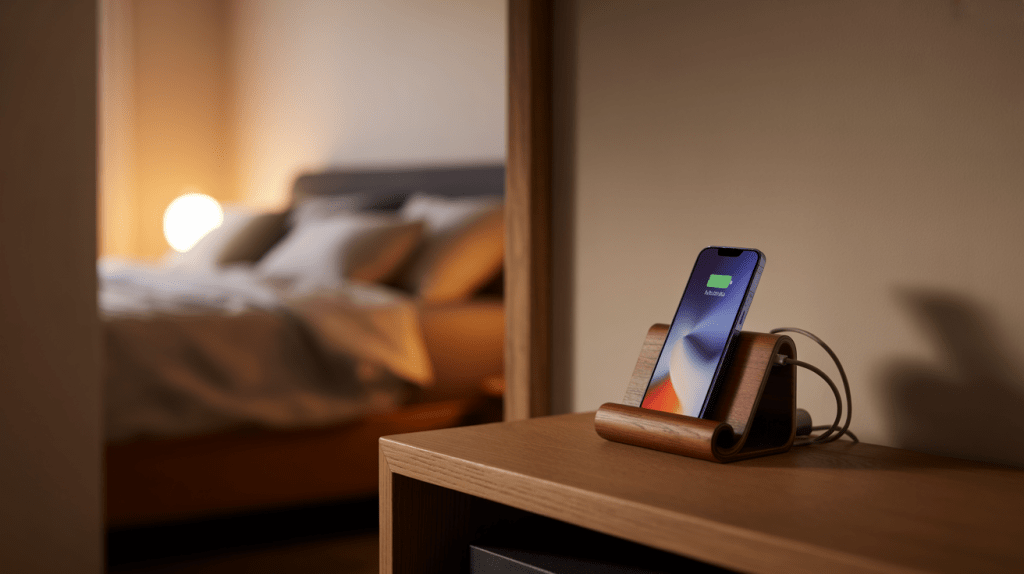
I charge my phone in my bathroom now. When my alarm goes off, I have to physically get out of bed to turn it off. By the time I’ve done that, I’m awake enough that going back to sleep isn’t tempting. And I don’t immediately grab my phone because it’s not within arm’s reach.
This single change reduced my morning anxiety dramatically. I now start my day on my terms rather than reacting to notifications.
Designated Tech Zones
If phones-outside-the-bedroom isn’t feasible, at minimum create a designated charging station that’s not on your nightstand. A small desk on the far side of the room. A shelf near the door. Somewhere that requires intentional movement to access.
Same principle for laptops, tablets, and other devices. They live in specific spots, ideally spots you don’t encounter until you’re ready to engage with work or digital demands.
Seasonal Adjustments for Year-Round Stress Reduction
Your morning needs change with the seasons, and your decor should flex accordingly.
Winter Morning Design
Darker mornings require extra attention to lighting layer those light sources aggressively. Add warmth through textiles: heavier blankets, plush rugs, warm-toned accent pillows. Scents might shift toward spicier, warmer notes like cinnamon or cedar.
I also add a small space heater on a timer so my room is pre-warmed before I wake up. Getting out of bed into a cold room spikes stress hormones. Waking up in comfortable warmth makes everything easier.
Summer Morning Design
Lighter, cooler textiles. Shift to fresher scents like citrus or mint. Consider blackout options if early sunlight disrupts your sleep schedule.
I swap to linen bedding, remove some layered textiles, and adjust my curtains to block intense morning sun until I’m ready for it. The goal is preventing overheating while maintaining that gentle awakening process.
Personalizing Your Stress-Free Morning Space
Everything I’ve shared are principles and strategies, but your specific stress-reducing morning environment needs to reflect your unique needs and preferences.
Identify Your Personal Stress Triggers
What specifically stresses you out in the morning? Visual clutter? Noise? Rushing? Difficulty finding things? Feeling cold? Not enough light?
List your top three morning stressors, then design specifically to address those. If rushing is your biggest issue, focus on organization and streamlining your routine flow. If it’s visual chaos, prioritize decluttering and closed storage. If it’s difficulty waking up, invest heavily in lighting solutions.
Honor Your Chronotype
Morning people and night owls have fundamentally different morning needs. If you’re naturally a night owl being forced into an early schedule, your stress-reducing design needs to work harder.
Extra emphasis on gradual lighting. Potentially energizing rather than calming scents. Maybe a coffee station in your bedroom so you can caffeinate before fully engaging with the world.
Honor how your body naturally works rather than fighting against it. Your design should support your reality, not some idealized version of who you think you should be.
Step-by-Step Implementation Guide
If all of this feels overwhelming, here’s your actionable roadmap:
Step 1: Clear Your First-Sight Line (Week 1) Remove all visible clutter from what you see when you wake up. This is your foundation. Take everything off surfaces within your immediate sight line and find permanent homes preferably in closed storage for these items.
Step 2: Layer Your Lighting (Week 2) Upgrade your alarm to a gradual wake-up method using a sunrise simulator or smart bulbs. Add a bedside lamp with warm-toned bulbs if you don’t already have one. This two-layer system alone will transform your mornings.
Step 3: Establish Your Landing Zone (Week 3) Designate one specific spot for morning essentials. A small tray, a drawer, a wall organizer whatever works for your space. Stock it with everything you need each morning and commit to restocking it each evening.
Step 4: Adjust Your Color Temperature (Week 4) If harsh colors dominate your space, start small. Add soft blue or sage green accent pillows, a muted area rug, or calming artwork. You don’t need to repaint immediately incremental color shifts work.
Step 5: Add One Sensory Element (Week 5) Choose one: a low-maintenance plant, a subtle scent diffuser, or a plush rug where your feet land. This sensory anchor will ground your entire routine.
Each improvement compounds on the previous ones. Within a couple months, you’ll have transformed your morning experience without a single overwhelming overhaul.
Visual Implementation Resources
To help you implement these strategies, I’ve created visual guides:
60-30-10 Color Rule Diagram: This shows exactly how to balance your bedroom color palette with 60% dominant color (walls, large furniture), 30% secondary (bedding, curtains), and 10% accents (pillows, decor) for maximum calm.
Layered Lighting Layout: This diagram illustrates the three lighting layers dawn simulation placement, ambient bedside positions, and task lighting zones so you can replicate the setup in your own space.
These visual references make implementation straightforward and eliminate guesswork about placement and proportion.
Final Thoughts
Your morning sets the tone for everything that follows. When you wake up into chaos visual clutter, harsh lighting, organizational frustration you’re starting from a stress baseline that’s hard to recover from.
But when you wake up into an environment that’s been thoughtfully designed to support calm, efficiency, and intention? Your entire day shifts.
This isn’t about perfection or achieving some Instagram-worthy aesthetic. It’s about creating a space that functionally serves your wellbeing. Sometimes that looks beautiful. Sometimes it’s just beautifully practical.
The rooms where we begin and end our days deserve as much thoughtful design as any other space in our homes—maybe more. Because these spaces don’t just house our routines. They shape them.
For more inspiration on creating intentional morning spaces, explore how morning intentions can anchor your day, starting from the moment you open your eyes.
What’s one stress-reducing decor trick you’re going to try this week? I’d love to hear what resonates with you and how it transforms your mornings. Because at the end of the day, that’s what this is all about—creating spaces that let us show up as our best selves, starting from the very first moment we open our eyes.
Sweet dreams, and even sweeter mornings ahead.
 Linda Designs | Home Decor, Interior Design & Lifestyle Inspiration