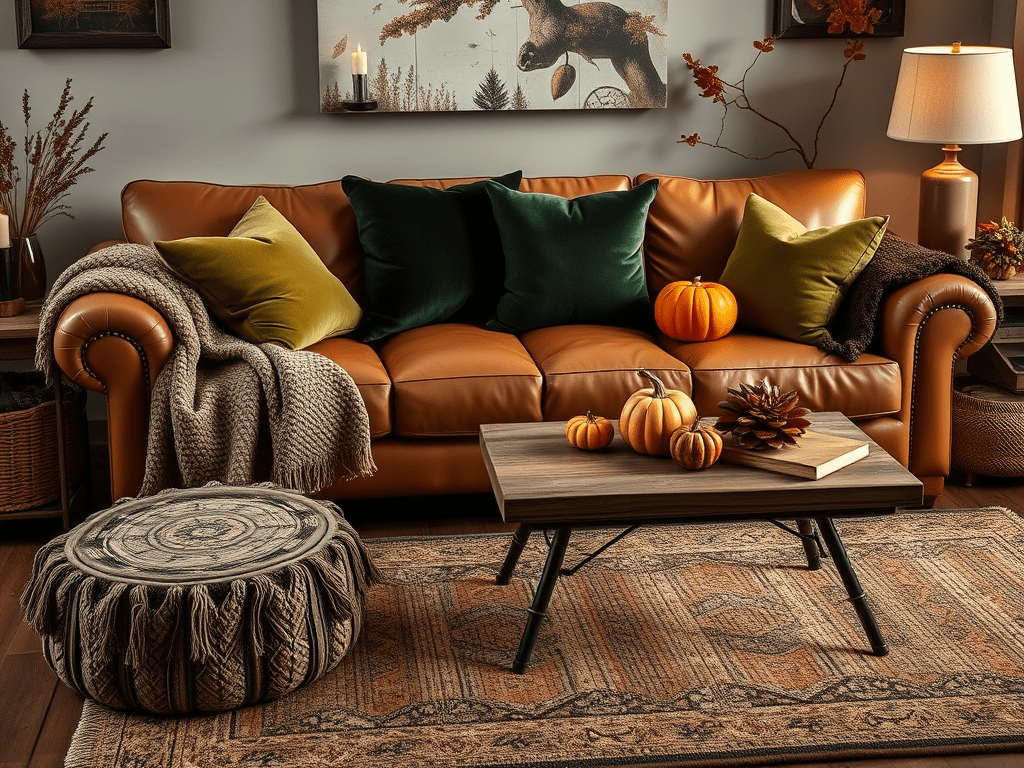
- Autumn Maximalism: Rich Patterns and Warm Textures
- Understanding Autumn Maximalism’s Unique Appeal
- Building Your Autumn Color Foundation with Jewel Tones
- The Art of Pattern Mixing in Maximalist Fall Decor
- Layering Textures: The Tactile Soul of Autumn Maximalism
- Curating Collections: Displaying Abundance with Intention
- Furniture Selection: Vintage Meets Opulent
- Lighting: Creating Ambient Warmth in Layered Spaces
- Textiles and Soft Furnishings: Layering Comfort
- Managing Maximalist Abundance: Storage Solutions That Work
- Transitioning from Summer to Autumn Maximalism
- Common Autumn Maximalism Mistakes to Avoid
- Bringing It All Together: Creating Your Autumn Maximalist Haven
- Frequently Asked Questions About Autumn Maximalism
- What makes autumn maximalism different from other maximalist styles?
- Can I embrace autumn maximalism in a small apartment or room?
- How do I make my home look maximalist and cozy, not just cluttered and messy?
- What’s the best way to start with autumn maximalism on a budget?
- What are the 3 most important elements for a successful autumn maximalist look?
- Related posts
Autumn Maximalism: Rich Patterns and Warm Textures
Fall whispers its arrival through golden leaves and crisp morning air. But for those of us who adore maximalist design, autumn doesn’t just whisper it roars with possibility. This is the season when “more is more” truly shines, when layering becomes an art form, and when your home can transform into a cocoon of visual richness that makes you never want to leave.
Autumn maximalism isn’t about throwing random items together and hoping for the best. No. It’s a deliberate celebration of abundance, a curated chaos that feels both intentional and wonderfully lived-in.
Think Persian rugs layered over sisal, velvet cushions competing for attention with tapestry throws, and walls so richly adorned they tell stories with every glance.
Understanding Autumn Maximalism’s Unique Appeal
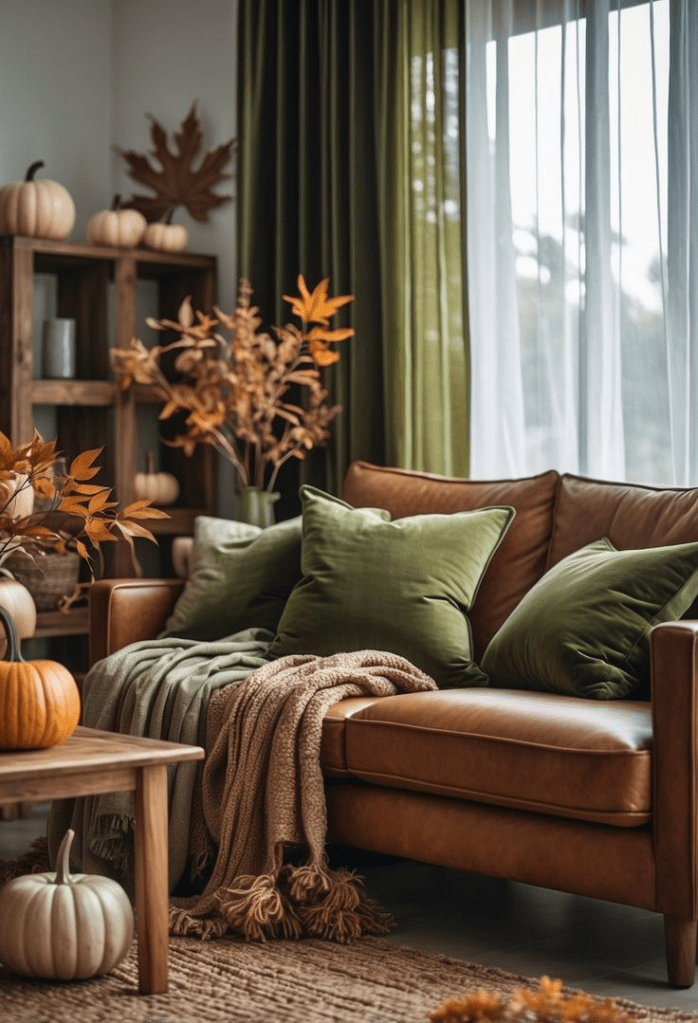
Maximalism has always danced to its own rhythm, but autumn gives this design philosophy a particularly sumptuous stage. The season’s natural palette those deep burgundies, burnt oranges, forest greens, and golden ambers aligns perfectly with the maximalist love for richness and depth. When summer’s brightness fades, we crave warmth. We want textural abundance. We need visual complexity that mirrors the layered beauty of fall foliage.
What makes autumn maximalism distinct? It’s the marriage of coziness and opulence. Spring maximalism might lean toward floral exuberance and pastel chaos; winter maximalism often embraces metallics and crystalline sparkle. But autumn?
Autumn maximalism wraps you in velvet and wool while surrounding you with patterns that demand attention. It’s unapologetically rich without being cold, abundant without feeling cluttered.
The psychology behind this seasonal shift matters. As daylight diminishes, our homes become our sanctuaries. We spend more time indoors, which means our spaces need to work harder to stimulate and comfort us simultaneously.
This is where maximalism excels providing endless visual interest that prevents cabin fever while creating genuine warmth.
Building Your Autumn Color Foundation with Jewel Tones
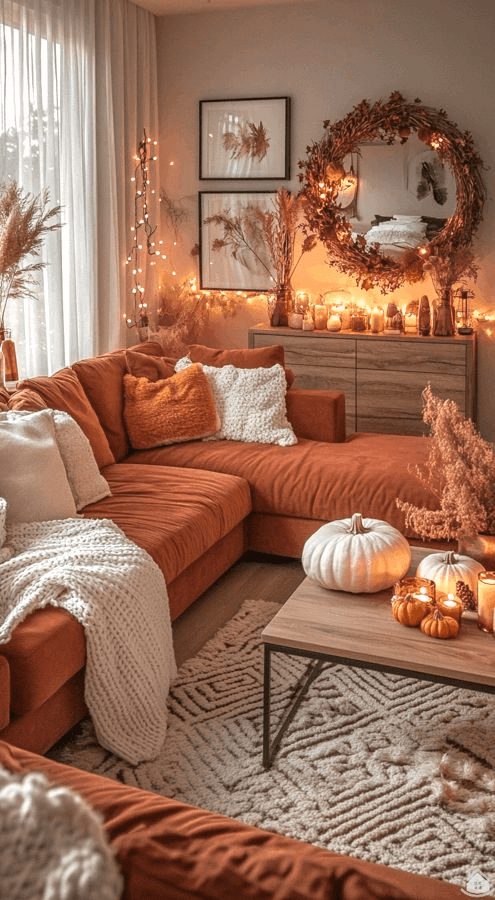
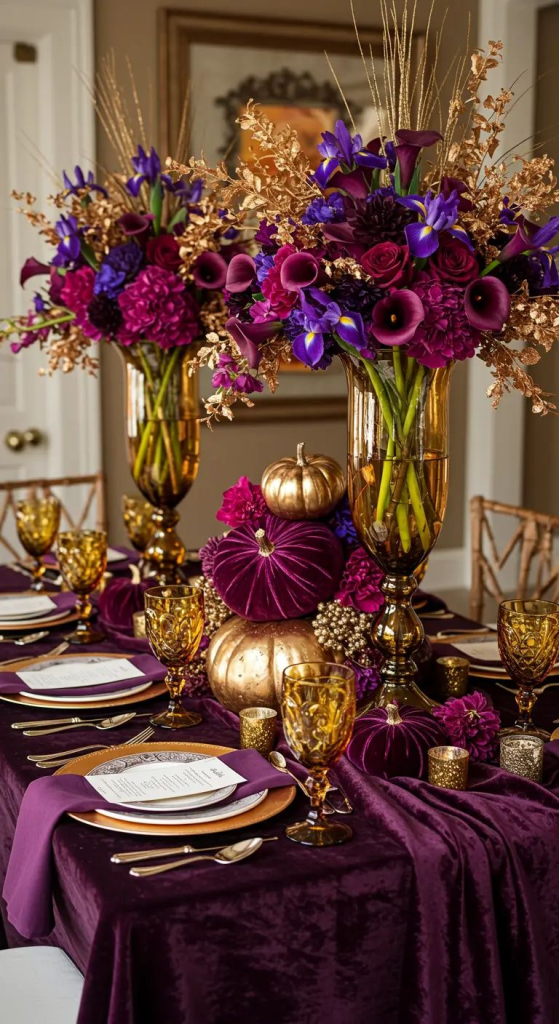
Jewel tones are autumn maximalism’s secret weapon. These deeply saturated hues emerald, sapphire, ruby, amethyst bring instant sophistication while maintaining that cozy fall feeling. Unlike pastels that can feel washed out or primaries that might seem childish, jewel tones carry gravitas. They’re colors with confidence.
Start with a dominant jewel tone as your anchor. Perhaps a deep emerald green becomes your base note, appearing in your largest furniture piece or as a wall color.
Then layer in complementary jewel tones a sapphire blue throw here, ruby velvet cushions there, touches of amber in your lighting choices. The key is saturation. These aren’t timid colors; they’re bold statements that refuse to apologize.
I’ve explored this concept extensively in my piece on fall color drenching with rich jewel tones, where I dive deep into creating immersive color experiences. Color drenching using one saturated hue throughout a space pairs beautifully with maximalist layering. You maintain color cohesion while still achieving that “more is more” aesthetic through varied patterns and textures.
Don’t fear mixing warm and cool jewel tones. A warm ruby can absolutely coexist with cool sapphire when grounded by neutrals or connected through pattern. Consider a jewel-toned area rug as your foundation piece, then build layers upon it.
The Art of Pattern Mixing in Maximalist Fall Decor
Pattern mixing intimidates many people. Understandably so it requires confidence and a willingness to break conventional design rules. But autumn maximalism thrives on pattern collision, where florals meet geometrics, paisleys dance with stripes, and damasks converse with ikats.
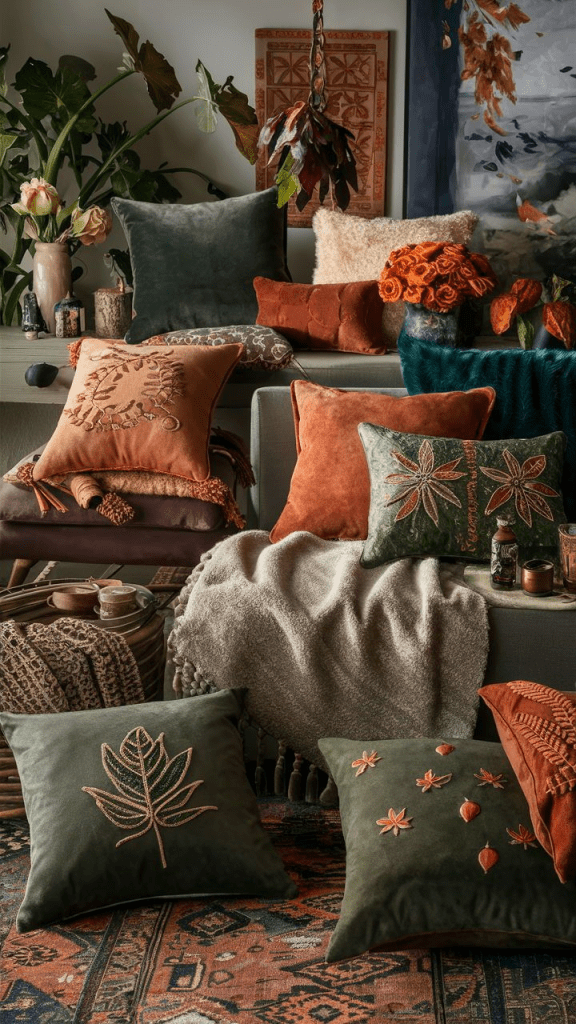
The secret? Vary your pattern scales. If you have a large-scale floral on your sofa, pair it with medium-scale geometrics on your chairs and small-scale patterns on your cushions.
This creates visual hierarchy and prevents patterns from competing at the same frequency. Think of it like music you need bass notes, melody, and harmony all playing together.
Color provides your common thread. When patterns share even one or two colors, they naturally harmonize despite their differences. A burgundy paisley cushion will befriend a geometric throw featuring that same burgundy, even if their patterns couldn’t be more different. This is pattern mixing’s golden rule: let color be your connector.
Texture adds another dimension to pattern play. A velvet cushion with embossed patterns creates tactile interest that complements visual patterns elsewhere. Jacquard weaves, tapestries, and embroidered textiles all contribute patterns through texture rather than just print.
Consider pattern distribution throughout your space. You don’t want all your patterns clustered in one corner while the rest of the room sits naked. Spread them strategically patterns on walls (through wallpaper or art), patterns on floors (rugs and runners), patterns on furniture, and patterns in accessories. This creates a cohesive visual experience.

Layering Textures: The Tactile Soul of Autumn Maximalism
If patterns are autumn maximalism’s visual feast, textures are its tactile soul. Fall naturally invites us to touch to run our fingers over nubby wool, sink into plush velvet, wrap ourselves in chunky knits. Maximalist spaces should engage all the senses, and texture delivers that sensory richness.
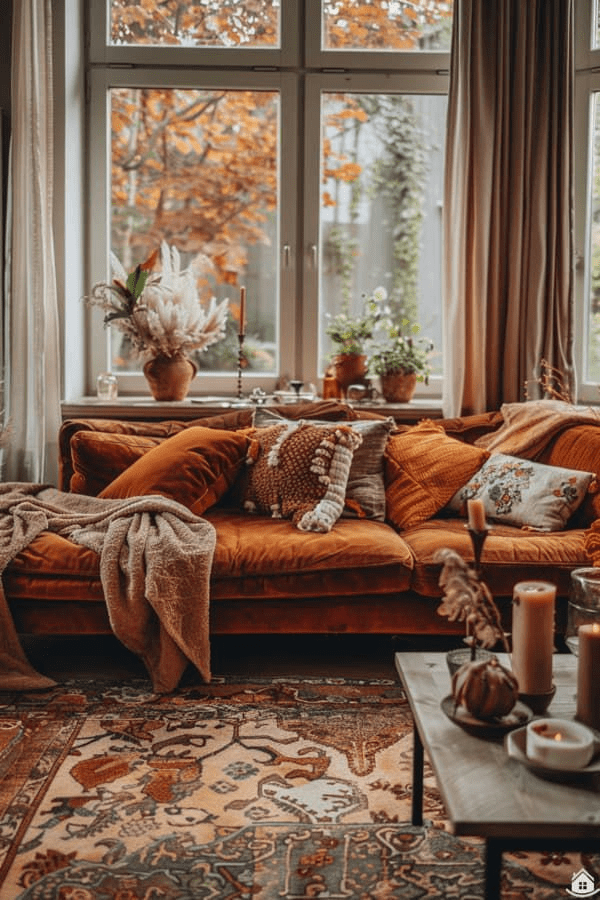
Start with your foundation textures. Perhaps a jute or sisal rug grounds your space with organic roughness. Layer a Persian or Turkish rug over it for softness and visual complexity. Yes, layer rugs this is maximalism, and rules about one rug per room don’t apply here.
Upholstery offers enormous textural opportunity. Velvet remains the autumn texture par excellence, with its light-catching sheen and incredible softness. But don’t stop there. Leather (especially worn, vintage leather), linen, wool, and even mohair all contribute unique textural notes. A chunky knit throw blanket draped over a smooth velvet sofa creates instant visual and tactile interest.
Window treatments deserve special attention in maximalist spaces. Heavy curtains in rich fabrics like velvet, tapestry, or even vintage quilts (unconventional but spectacular) add warmth while contributing to your layered aesthetic. Consider thermal velvet curtains that serve double duty providing insulation as temperatures drop while delivering that luxurious maximalist look.
Wall textures often get overlooked, but they’re crucial for creating dimensional spaces. Textured wallpapers, fabric wall hangings, macramé pieces, and even textile art all add tactile dimension. If you’re creating a stylish maximalist office space, textured walls can reduce echo while adding visual interest function meeting aesthetics beautifully.
Curating Collections: Displaying Abundance with Intention
Maximalism celebrates collections, but autumn maximalism specifically loves objects that feel gathered, cherished, and storied. This isn’t about buying matching sets at big-box stores. It’s about curating pieces that each tell a tale, then displaying them with deliberate abundance.
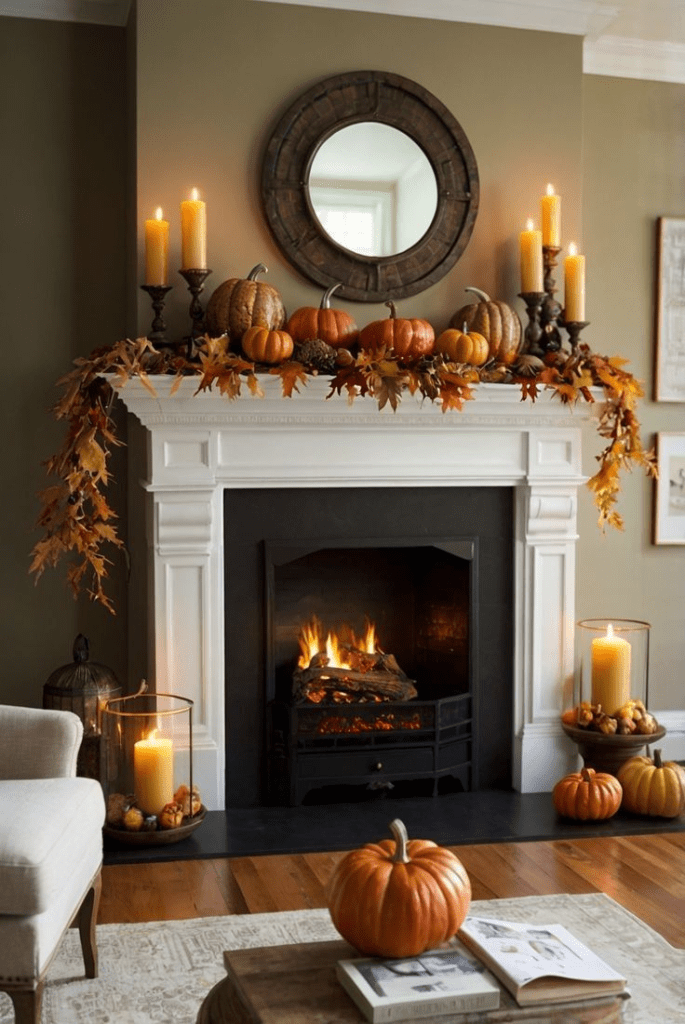
Vintage finds are your best friends here. Scour estate sales, antique shops, and online marketplaces for pieces with patina and history. A collection of vintage brass candlesticks, varying in height and style, creates more interest than a matched set ever could. Cluster them together on a mantel, bookshelf, or console table for maximum impact.
Books deserve special mention in maximalist spaces. Stack them horizontally and vertically, organize by color or deliberately avoid organization, let them spill from shelves onto surfaces. Books add instant warmth, color, and sophistication. They also provide perfect platforms for displaying smaller objects a vintage trinket box atop a stack of art books becomes a vignette.
Collections of ceramics, particularly in autumn’s warm glazes think ochre, terracotta, deep blues create stunning displays when grouped by color or shape.
Don’t hide these treasures in cabinets. Maximalism demands visibility. Open shelving, plate rails, and display cabinets (with doors left open) all work beautifully.
Gallery walls represent maximalism’s triumph over minimalist restraint. Mix frame styles, sizes, and finishes. Combine paintings with prints, photographs with textile art, mirrors with decorative plates. The only rule? Leave minimal space between pieces usually just 2-3 inches. This creates that packed, abundant feeling that defines maximalist gallery walls.
But here’s the crucial point about displaying collections: curation prevents chaos. Even abundant displays need editing. Not everything you own needs to be visible simultaneously. Rotate items seasonally, edit ruthlessly (yes, even maximalists must edit occasionally), and ensure your displays have focal points rather than existing as undifferentiated visual noise.

Furniture Selection: Vintage Meets Opulent
Autumn maximalism favors furniture with presence. Substantial pieces with curved lines, ornate details, and rich finishes create the foundation for your layered decor. Forget about furniture “disappearing” into your space maximalist pieces announce themselves.
Vintage and antique furniture fit naturally into autumn maximalism’s aesthetic. A Victorian settee with carved wooden details and original upholstery (or reupholstered in sumptuous velvet) becomes a statement piece that modern furniture rarely achieves. Mid-century pieces can work too, particularly those with bold lines and rich wood tones like walnut or teak.
Mix furniture eras and styles deliberately. A Rococo-style chair can absolutely coexist with a mid-century credenza when united by color palette and textural richness. This eclectic approach prevents your space from feeling like a museum recreation while maintaining visual interest.
Upholstery choices matter enormously. For autumn, lean into rich fabrics velvet in jewel tones, leather in cognac or burgundy, tapestry fabrics with intricate patterns, mohair for its textural appeal. Consider a velvet tufted ottoman as both seating and a textural focal point.
Don’t neglect furniture’s decorative potential. Console tables become stages for abundant displays, bookcases transform into curated collections, and even dining chairs can sport different upholstery fabrics for maximum pattern play. The goal is furniture that contributes to your space’s visual richness rather than merely functioning quietly in the background.
Lighting: Creating Ambient Warmth in Layered Spaces
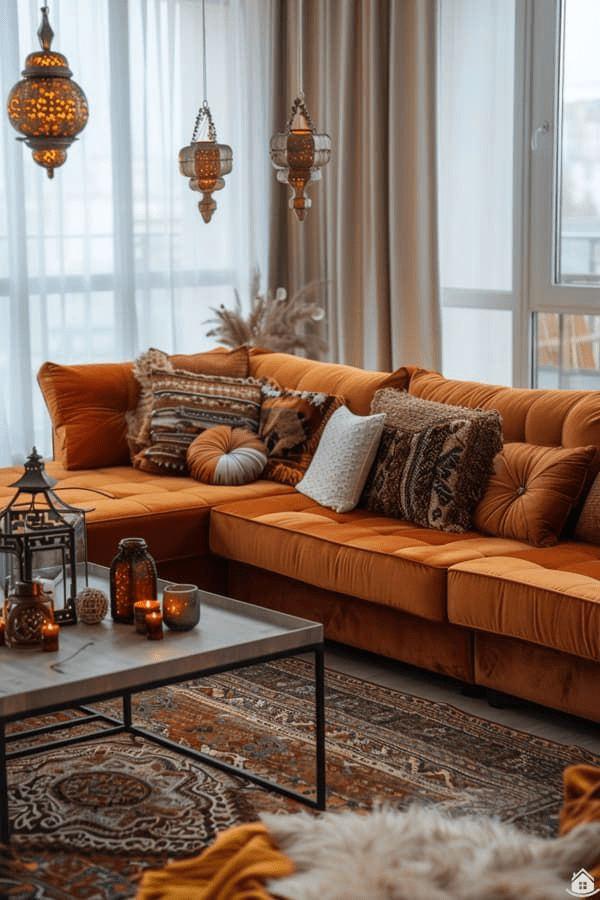
Lighting makes or breaks maximalist spaces, particularly in autumn when natural light diminishes. You need multiple light sources at various heights, each contributing to your space’s warm, abundant atmosphere.
Overhead lighting alone creates harsh, flat illumination that does maximalist spaces no favors. Instead, layer lighting types: ambient (overhead fixtures, but dimmed), task (reading lamps, desk lights), and accent (highlighting artwork or collections). This creates depth and allows you to control your space’s mood.
Choose fixtures with personality. Crystal chandeliers, vintage brass sconces, ceramic table lamps with patterned shades, and Moroccan-style pendant lights all contribute to maximalist aesthetics while providing necessary illumination. Don’t match your fixtures eclectic lighting choices add to your space’s collected-over-time feeling.
Warm light temperature is crucial for autumn maximalism. Choose bulbs in the 2700K-3000K range for that golden, cozy glow that makes jewel tones and warm textures sing. Cool white light (4000K+) will make your carefully curated warm palette feel clinical and unwelcoming.
Candles deserve their own category. Clustered in groups of varying heights, displayed in vintage brass or mercury glass holders, candles add both ambient light and atmospheric magic. Real candles beat electric ones for ambiance, though flameless options work for safety-conscious households. Consider amber glass candle holders that enhance autumn’s warm glow.
Textiles and Soft Furnishings: Layering Comfort
Textiles are autumn maximalism’s most accessible entry point. You can transform a space dramatically through strategic textile additions without moving a single piece of furniture.
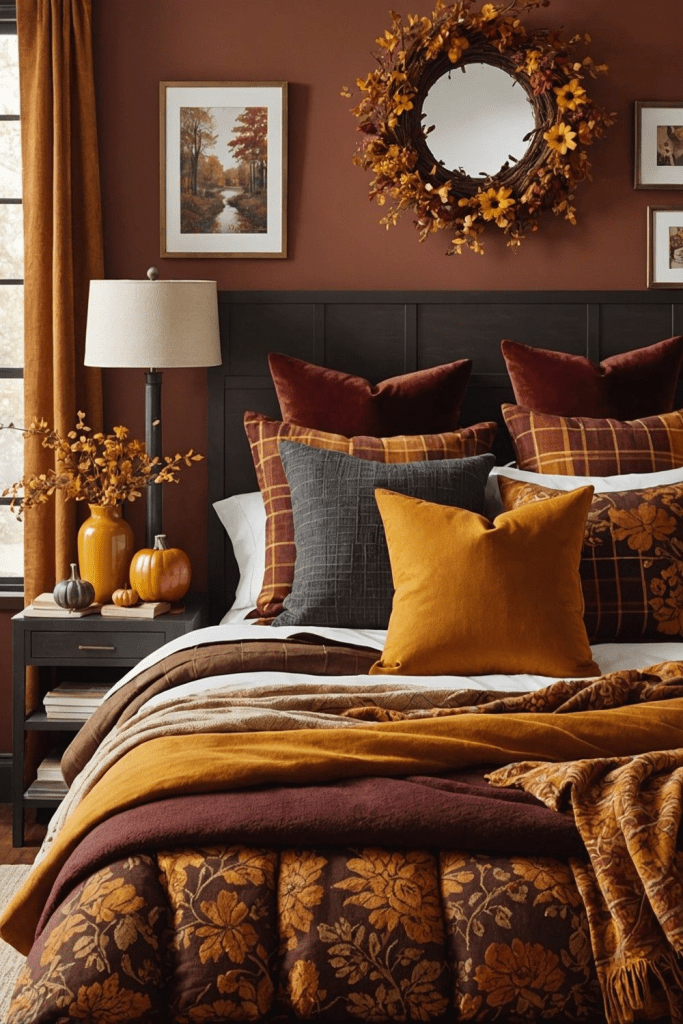
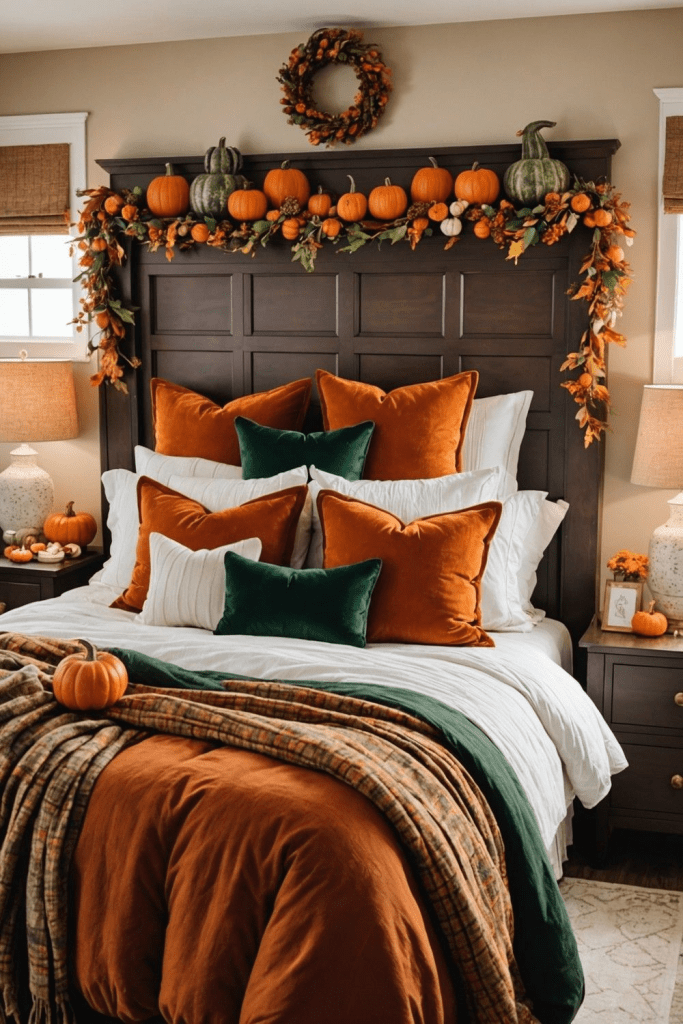
Start with throw pillows lots of them. Maximalist sofas shouldn’t have two or three pillows; they should have eight, ten, twelve. Mix sizes from large euro pillows in the back to smaller lumbar pillows in front. Vary your fabrics: velvet, silk, tapestry, embroidered linen, printed cotton. Let them pile and overlap naturally.
Throws should cascade rather than fold neatly. Drape a faux fur throw over your sofa arm, layer a wool plaid blanket on your reading chair, let a vintage quilt spill from a basket. These textiles add warmth (literally and visually) while contributing to your layered aesthetic.
Bed linens in maximalist spaces become opportunities for pattern and texture explosion. Layer a patterned duvet with contrasting printed sheets, pile on decorative pillows in various fabrics and sizes, add a velvet quilt or tapestry bedspread, top with a fur or chunky knit throw. The bed should feel like a textile sculpture, inviting but also visually stunning.
Table linens often get relegated to special occasions, but maximalist spaces use them daily. A richly patterned tablecloth layered under a runner in a contrasting pattern creates instant visual interest. Velvet table runners add luxury to everyday dining.
Managing Maximalist Abundance: Storage Solutions That Work
Here’s the honest truth about maximalism: it requires storage strategy. You can’t successfully embrace “more is more” without systems for managing that abundance. Otherwise, you cross from curated maximalism into actual clutter.
I’ve written extensively about storage solutions for maximalist homes because this challenge affects everyone in the maximalist community. The goal is hiding functional clutter (bills, random papers, everyday items) while displaying your beautiful collections and textiles prominently.
Furniture with hidden storage becomes essential. Ottoman storage, storage benches, credenzas with closed cabinets, and console tables with drawers all provide places to tuck away life’s necessary but unlovely items.
Choose these storage pieces in keeping with your maximalist aesthetic vintage credenzas with character beat bland modern storage every time.
Decorative storage works beautifully in maximalist spaces. Vintage suitcases stacked as a side table provide hidden storage while adding visual interest. Woven baskets in various sizes corral items while contributing texture.
Decorative boxes on shelves hide small items while looking intentional. The key is choosing storage that contributes to your aesthetic rather than detracting from it.
Rotate your displays seasonally. Not everything needs to be visible constantly. Box up spring and summer items as autumn arrives, making room for fall’s specific treasures.
This rotation keeps your space fresh while preventing that tipping point from abundant to overwhelming.
Transitioning from Summer to Autumn Maximalism
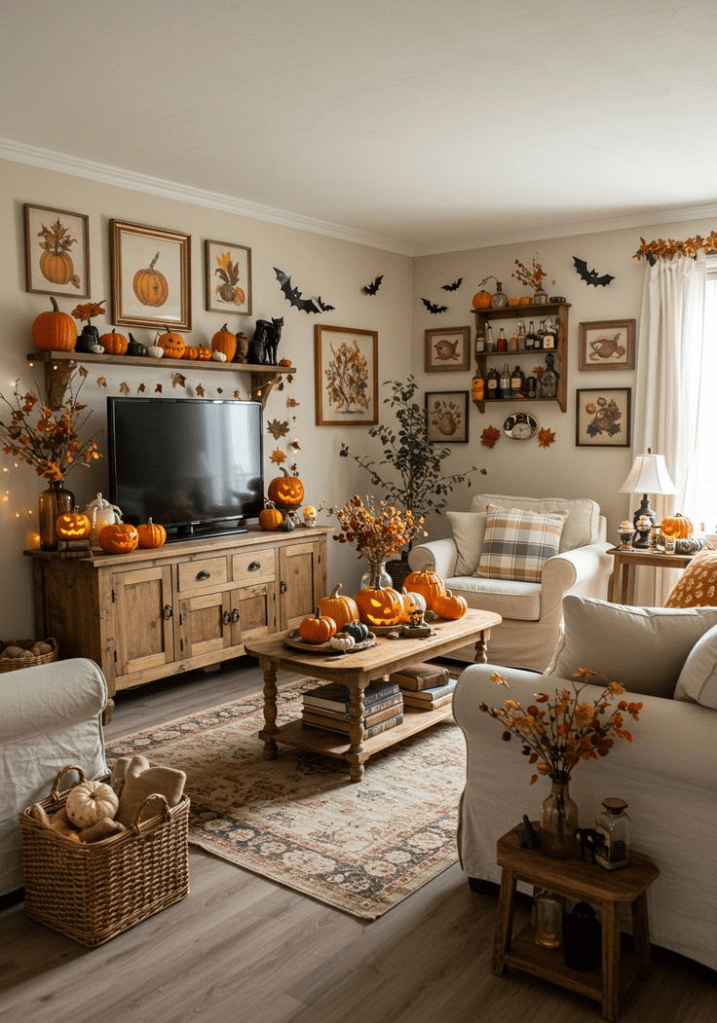
The shift from summer to autumn in maximalist spaces requires more than just swapping a few pillows. It’s about transforming your entire color story, texture palette, and mood.
I discussed this transition in detail in my post about preparing your decor for fall, where I outlined specific strategies for this seasonal shift.
The process begins earlier than you might think late August or early September allowing you to gradually layer in autumn elements without shocking your space with sudden change.
Start by editing out your brightest summer colors and patterns. Those coral cushions? Store them. The tropical print throw? Box it for next year. This creates visual breathing room for autumn’s richer palette.
Next, introduce transitional pieces that bridge summer and fall. Deep purples work beautifully here, as do forest greens and golden yellows. These colors feel appropriate for early autumn without jumping directly into Halloween territory.
Layer in textures progressively. Add wool throws before bringing out the velvet cushions. Introduce heavier curtains before completely transforming your bedding. This gradual layering feels natural rather than jarring.
Finally, adjust your lighting. As days shorten, increase your lamp count and ensure you have adequate warm lighting throughout your space. Add candles progressively a few more each week until your space glows with autumn’s characteristic warm ambiance.
Common Autumn Maximalism Mistakes to Avoid
Even experienced maximalists can stumble when embracing autumn’s particular aesthetic challenges. Let’s address the most common pitfalls.
Going too dark, too fast. Yes, autumn embraces deep colors, but a space that’s entirely dark feels cave-like rather than cozy. Balance your jewel tones and dark woods with lighter elements cream textiles, brass metallics, areas of lighter color. Your space should feel enveloping, not oppressive.
Ignoring scale and proportion. Maximalism isn’t about cramming every available surface with objects regardless of size. Large rooms can handle substantial furniture and bigger collections; smaller spaces require more careful curation even within a maximalist framework. That enormous vintage armoire might be stunning, but not if it consumes half your room.
Forgetting about negative space. Yes, I said it maximalists need negative space too. Not every wall needs gallery treatment. Not every surface needs stacking. Strategic empty spaces let your eye rest and actually make your abundant areas feel more intentional.
Buying everything new. Maximalism loses its soul when everything comes from the same store in the same shopping trip. The collected-over-time feeling requires actual collection over time. Mix vintage with new, inherited pieces with deliberate purchases, thrift finds with investment pieces. This layered history creates authentic maximalist character.
Neglecting maintenance. More objects mean more dust collection, more textile cleaning, more general upkeep. If you’re not willing to maintain your maximalist space, it will quickly cross from abundant to grimy. Regular dusting, periodic deep cleaning, and textile care become essential rather than optional.
Bringing It All Together: Creating Your Autumn Maximalist Haven
Autumn maximalism isn’t achieved overnight. It’s a gradual process of layering, editing, collecting, and refining. Your space should evolve organically, telling your story through the pieces you choose and how you display them.
Start with one room if transforming your entire home feels overwhelming. Perhaps your living room becomes your maximalist laboratory, where you experiment with pattern mixing and texture layering. Or maybe your bedroom transforms into a jewel-toned cocoon, leaving other spaces for later.
Trust your instincts. Maximalism rules are guidelines, not commandments. If a combination of patterns speaks to you despite breaking conventional wisdom, try it. You can always change it, and that experimentation is part of maximalism’s joy.
Invest in key pieces that anchor your space. That perfect vintage rug, the velvet sofa you’ve been eyeing, the statement chandelier that makes your heart sing these foundational pieces justify their cost by anchoring your entire aesthetic. Build around them with more affordable finds.
Remember that maximalism is deeply personal. Your autumn maximalist space should reflect your specific tastes, collections, and history. Don’t try to recreate someone else’s maximalist aesthetic use inspiration as a jumping-off point, then make the style entirely your own.
Most importantly, enjoy the process. Maximalism celebrates the joy of living with beautiful things, of being surrounded by colors and patterns and textures that spark happiness. Your space should energize rather than stress you. If something isn’t working, change it.
The beauty of maximalism is its inherent flexibility there’s always room for one more beautiful thing, one more perfect pattern, one more rich texture.
As autumn settles in and the world outside turns golden and crimson, your maximalist interior becomes a celebration of the season’s abundance.
Rich patterns dance across surfaces, warm textures invite touch, jewel tones glow in lamplight, and every corner tells a story. This is autumn maximalism unapologetically abundant, deeply cozy, and entirely your own.
Frequently Asked Questions About Autumn Maximalism
What makes autumn maximalism different from other maximalist styles?
Autumn maximalism distinguishes itself through its focus on coziness and opulence. While spring maximalism might use bright florals and winter maximalism leans into metallics, autumn maximalism is all about creating a warm, enveloping sanctuary.
It achieves this by combining a rich jewel-toned color palette (emerald, ruby, sapphire) with an abundance of tactile, warm textures like velvet, wool, chunky knits, and vintage leather. The goal is a curated, layered space that feels both visually rich and deeply comforting.
Can I embrace autumn maximalism in a small apartment or room?
Absolutely! Maximalism in a small space is about being intentional, not just adding more stuff. For an autumn theme, focus on going deep, not wide. Use a dark, jewel-toned paint color on all walls (a technique called color drenching) to create a cozy, immersive feeling that blurs the room’s edges.
Prioritize vertical space with gallery walls that go up to the ceiling, use mirrors to create depth, and layer rich textiles like rugs and throws to add warmth without taking up floor space. The key is curated abundance, not clutter.
How do I make my home look maximalist and cozy, not just cluttered and messy?
The line between curated maximalism and clutter is intention. To keep your autumn decor feeling cozy and chic, focus on three things:
- Color Cohesion: Use a consistent color palette. Even if you’re mixing a dozen patterns, if they all share shades of burgundy, emerald, and gold, they will look harmonious.
- Curation: Group similar items together to create collections (e.g., a cluster of brass candlesticks, a stack of art books). This turns “stuff” into a deliberate display.
- Negative Space: Even maximalism needs room to breathe. Leave a small part of a wall blank or a surface clear. This allows the eye to rest and makes the abundant areas feel more impactful.
What’s the best way to start with autumn maximalism on a budget?
Maximalism is perfect for a budget because it celebrates collected, vintage, and personal items over expensive matching sets. Start with textiles. You can dramatically change a room’s feel by adding jewel-toned velvet pillow covers, a chunky knit throw from a thrift store, and a richly patterned area rug from a marketplace.
Scour flea markets and secondhand shops for vintage finds like brass objects, ornate frames, and unique ceramic pieces that add history and character for a fraction of the cost of new items.
What are the 3 most important elements for a successful autumn maximalist look?
If you’re starting your autumn maximalist journey, focus on mastering these three key elements:
- A Rich Jewel-Tone Palette: Anchor your space with deep, saturated colors like emerald green, sapphire blue, or ruby red.
- Deliberate Pattern Mixing: Confidently mix patterns of different scales (large, medium, small), using a shared color to tie them all together.
- Layered Warm Textures: Combine multiple textures to engage the senses. Think velvet cushions on a wool chair with a faux fur throw, all layered on a Persian rug.
Ready to Transform Your Space?
Autumn maximalism offers endless possibilities for creating rich, layered, deeply personal interiors. Whether you’re just beginning your maximalist journey or you’re a seasoned collector looking to embrace autumn’s specific aesthetic, remember: there’s no single right way to do maximalism. The best maximalist space is the one that makes you happy every single day.
Explore more seasonal design inspiration on Linda Designs for additional tips on transforming your home throughout the year.
Follow, Share,Suscribe for more inspirations!
 Linda Designs | Home Decor, Interior Design & Lifestyle Inspiration