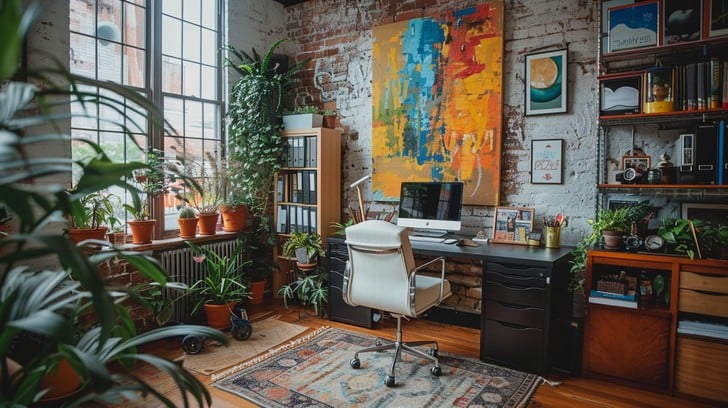
- The Psychology Behind Maximalist Workspaces
- What Is Maximalist Office Design?
- How to Use Color Psychology in Your Maximalist Home Office
- Key Elements That Make Maximalist Office Spaces Work
- Mastering Pattern Mixing in Your Office Design
- Displaying Personal Collections in Your Workspace
- Blending Technology with Maximalist Aesthetics
- How Can I Make My Small Home Office Look Maximalist?
- Seasonal Updates for Your Maximalist Workspace
- What Are the Best Budget-Friendly Maximalist Design Ideas?
- Is a Maximalist Office Hard to Keep Organized?
- Famous Maximalist Office Inspirations
- The Future of Bold Workspace Design
- Frequently Asked Questions About Maximalist Home Offices
- Related Posts
Gone are the days when home offices were relegated to spare bedrooms with nothing but a folding table and harsh fluorescent lighting. Today? We’re witnessing a revolution.
The maximalist movement has crashed into our work-from-home reality like a kaleidoscope exploding in slow motion, bringing with it an intoxicating blend of patterns, textures, and colors that would make even the most conservative minimalist pause and reconsider.
This isn’t just about aesthetics, though the visual feast is undeniably spectacular. It’s about creating spaces that energize, inspire, and reflect the complex, multifaceted nature of modern professional life.
The Psychology Behind Maximalist Workspaces
Think about it: our homes became our offices overnight during the pandemic. Suddenly, that corner of the living room wasn’t just where you paid bills it became command central for Zoom calls, creative brainstorming sessions, and those late-night deadline pushes that test your mettle.
Research from environmental psychology suggests that our surroundings profoundly impact cognitive function and emotional well-being. While minimalism promotes calm through visual restraint, maximalism stimulates creativity through sensory abundance.
Dr. Sally Augustin, a renowned environmental psychologist, notes that “visually rich environments can enhance divergent thinking and problem-solving abilities when thoughtfully curated.”
In my own maximalist home office transformation, I initially worried about the overwhelming nature of bold patterns and vibrant colors.
However, after implementing these principles over six months, I noticed a significant boost in my creative energy and overall work satisfaction. The key lies in intentional curation rather than chaotic accumulation.
What Is Maximalist Office Design?
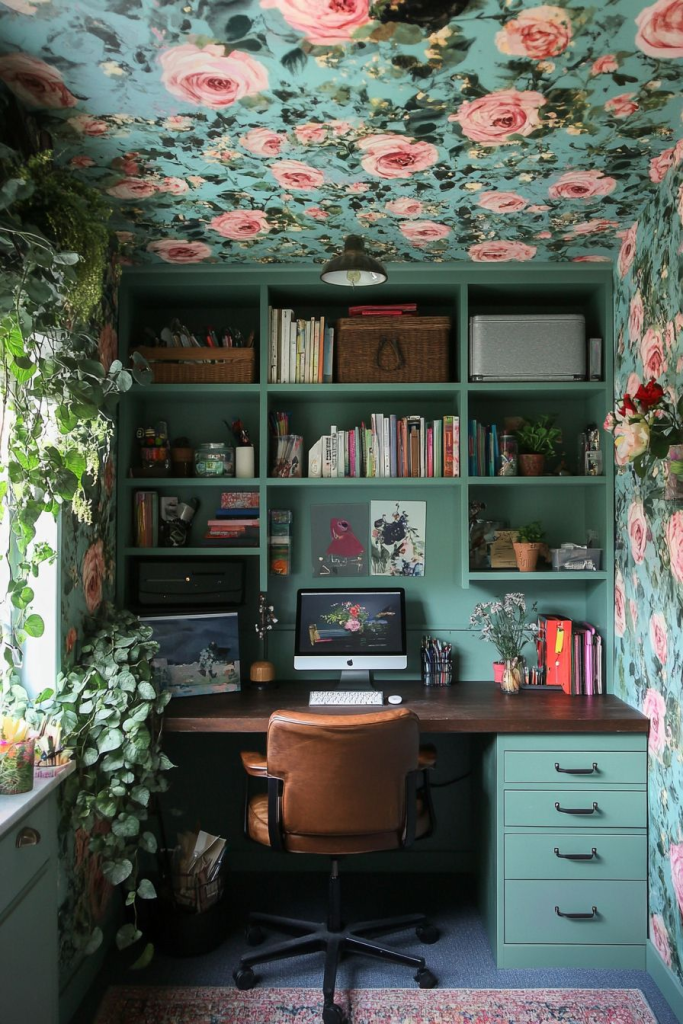
Maximalism in office spaces isn’t about cramming every available surface with decorative objects that’s just clutter with a fancy name. True maximalist design operates on principles of abundance with purpose, creating layered environments that tell stories while serving functional needs.
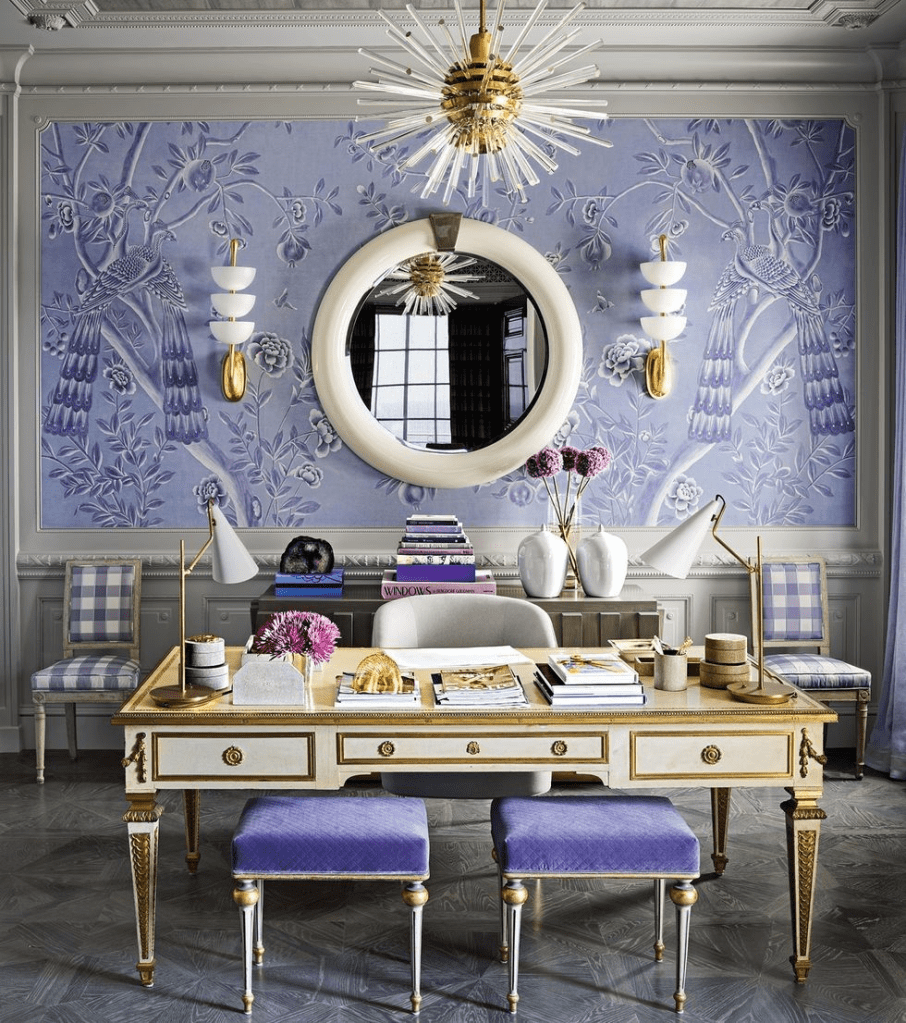
Color becomes your primary weapon. Bold, saturated hues work in harmony rather than competition. Pattern mixing follows the rule of three: choose patterns in different scales (large florals, medium geometrics, small dots) but maintain a consistent color palette.
Texture adds depth think velvet curtains against grasscloth wallpaper, paired with a sleek acrylic desk and a vintage Persian rug.
The magic happens in the details. Books stacked both vertically and horizontally. Art covering walls from floor to ceiling in salon-style arrangements. Plants, lots of plants creating living sculptures throughout the space.
How to Use Color Psychology in Your Maximalist Home Office
Your color choices do more than please the eye; they influence your work performance in measurable ways.
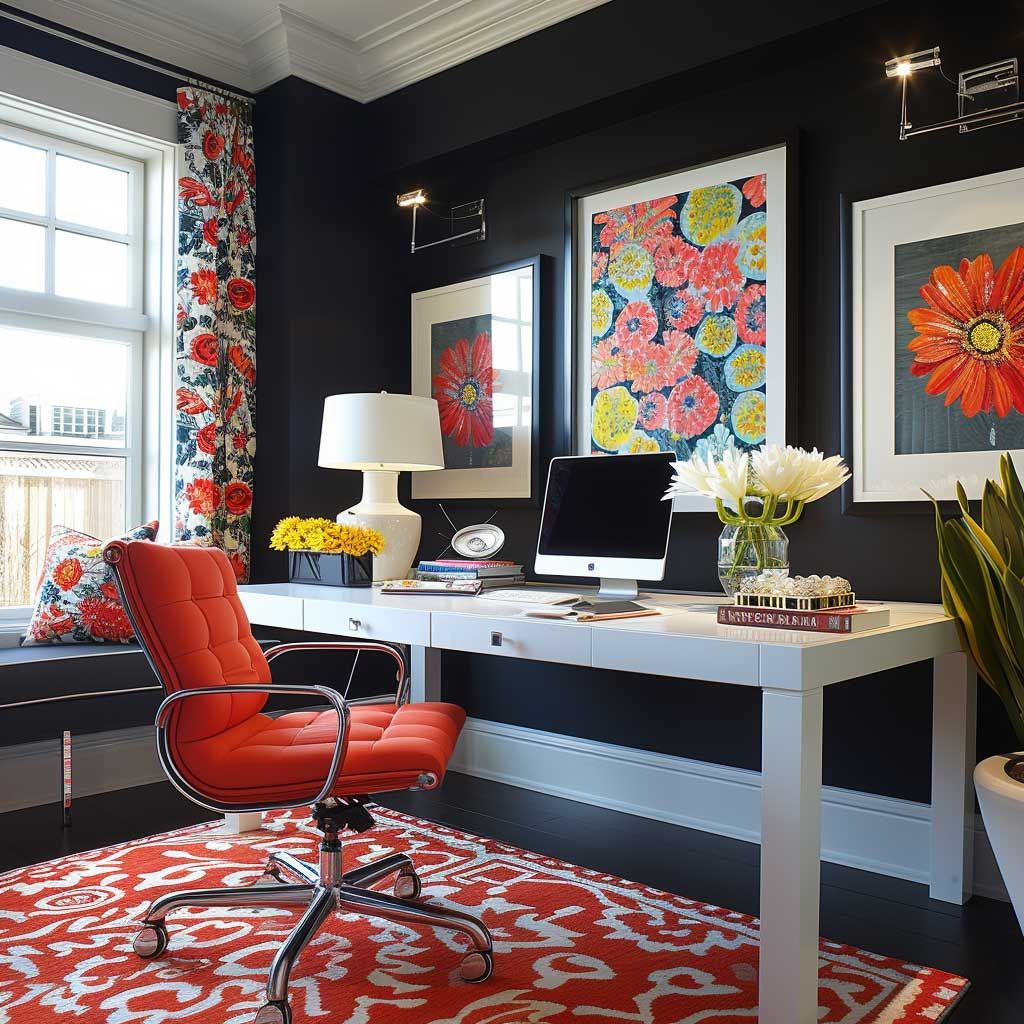
Red stimulates energy and urgency perfect for spaces where you need to tackle challenging projects or meet tight deadlines. However, too much red can increase stress levels, so use it as an accent rather than a dominant force.
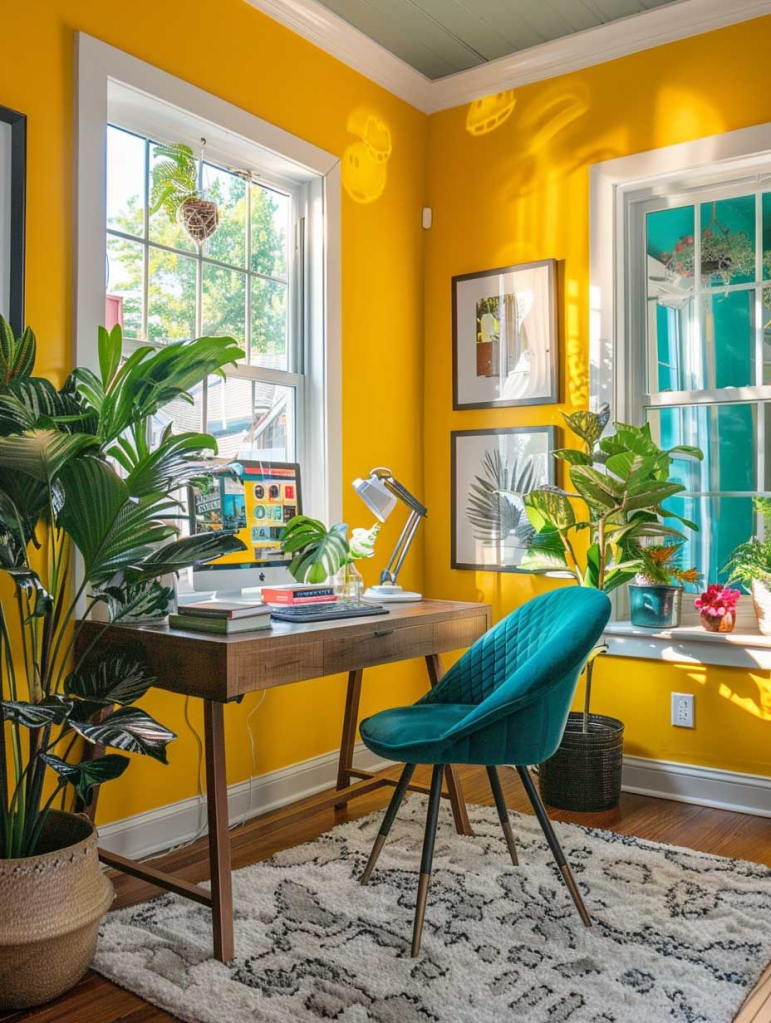
Yellow promotes optimism and creativity. Consider a sunny yellow accent wall behind your desk or incorporate it through artwork and accessories.
Green, particularly deeper emerald or forest tones, enhances focus and reduces eye strain crucial for those marathon work sessions.
Blue encourages calm concentration and is particularly effective for analytical work. But don’t limit yourself to one color family.
The beauty of maximalist design lies in unexpected combinations: jewel-toned purples with warm terracotta, deep navy with vibrant coral, forest green with rich burgundy.
Key Elements That Make Maximalist Office Spaces Work
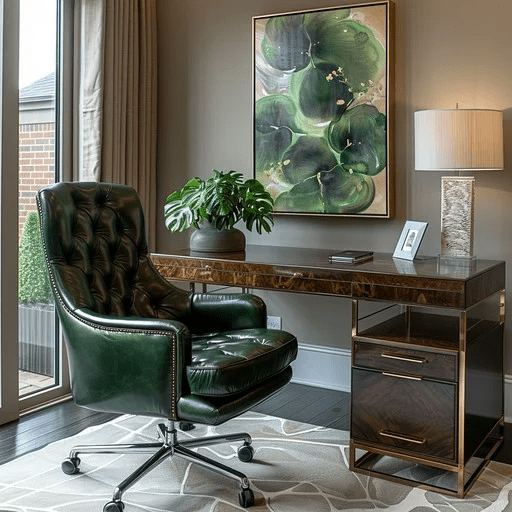
Statement Furniture: Your Workspace Foundation
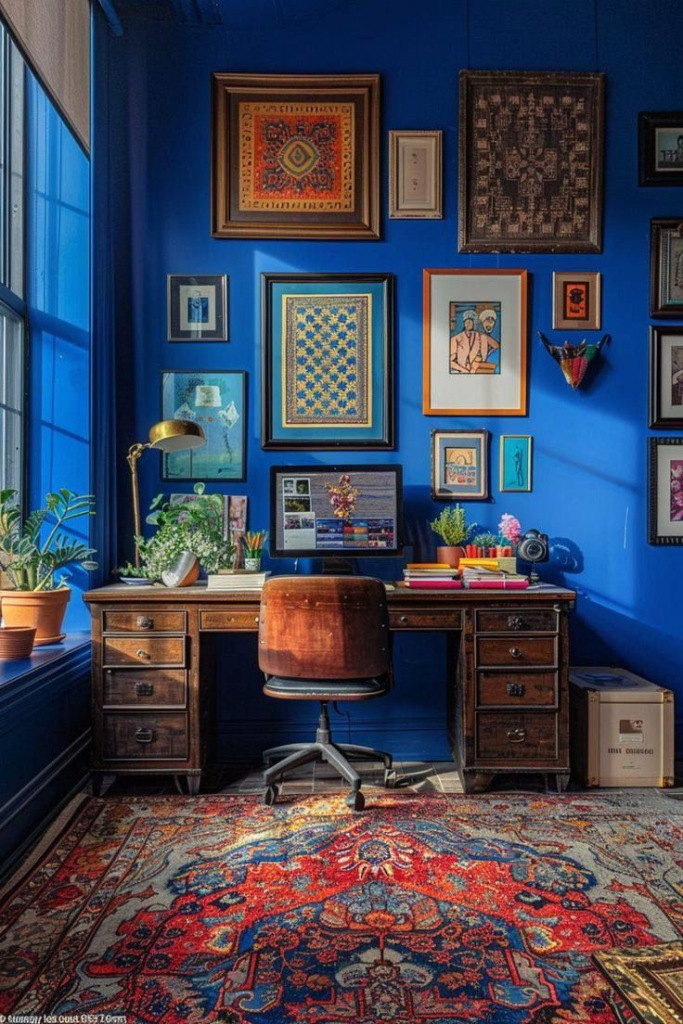
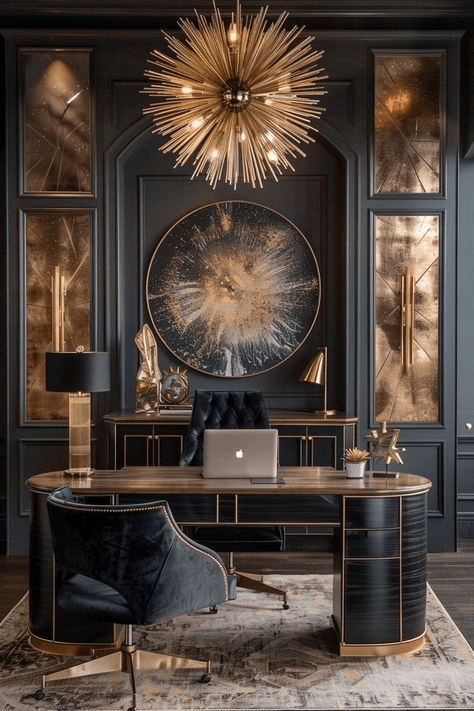
Your desk becomes the anchor choose something with personality. An antique wooden partner’s desk with intricate carvings tells a different story than a sleek glass-and-chrome modern piece, but both can work beautifully in maximalist settings when surrounded by complementary elements.
When I transformed my own bland home office, I started with a vintage mahogany roll-top desk from an estate sale. That single piece became the foundation for my entire maximalist room makeover, setting the tone for rich jewel tones and ornate accessories throughout the space.
You can find similar statement desks on sites like Wayfair, World Market, or even Facebook Marketplace for budget-friendly options.
Seating deserves equal attention. Forget the standard office chair. Consider a vintage leather wingback, a mid-century modern swivel chair in bold upholstery, or even an ornate French bergère if your space allows.
Some excellent options include the Amazon Basics Executive Chair in velvet upholstery, or for budget-conscious decorators, the IKEA Hattefjäll chair which can be customized with colorful seat covers. Comfort remains paramount, but style shouldn’t be sacrificed for functionality.
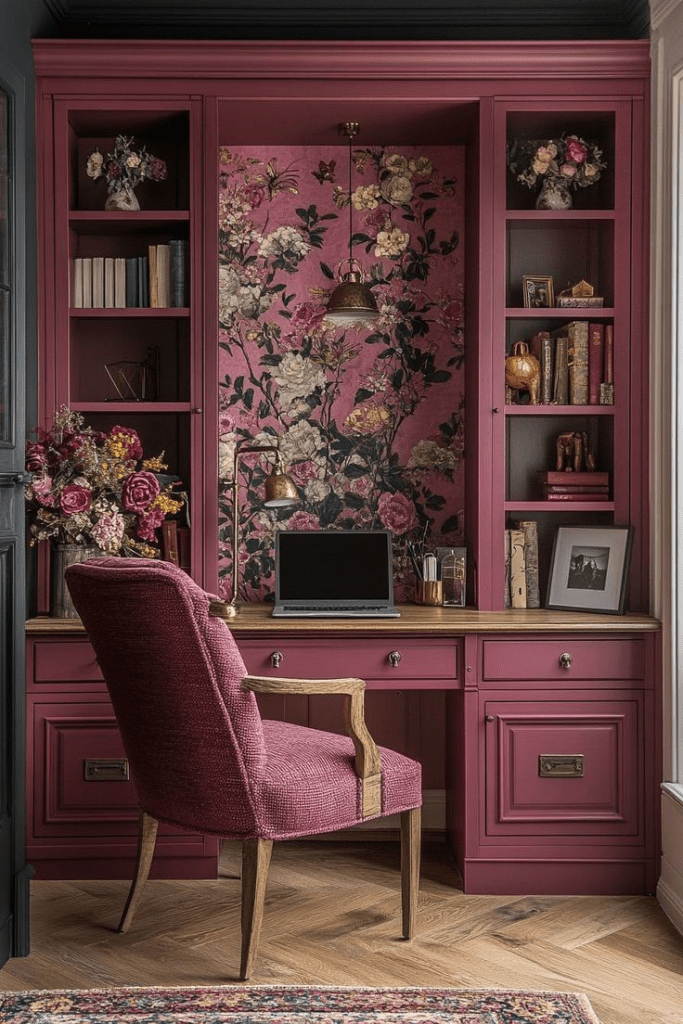
Storage becomes sculptural. Bookcases reach toward the ceiling, filled not just with reference materials but with collections that inspire: vintage cameras, colorful ceramics, interesting rocks, or antique curiosities. Open shelving allows for dynamic displays that change with your mood and projects.
Bold Wall Treatments and Gallery Art Displays
Maximalist walls are never bare. Wallpaper makes a dramatic comeback think bold botanicals, intricate damasks, or graphic geometrics. If wallpaper feels too permanent, removable wall decals from brands like RoomMates or Tempaper offer similar impact with flexibility.
Gallery walls reach new heights in maximalist spaces. Literally. Floor-to-ceiling arrangements create visual drama while showcasing your personality. Mix photography with paintings, vintage posters with contemporary prints.
Target and HomeGoods offer affordable frame collections, while Etsy provides unique vintage art pieces. Vary frame sizes and styles but maintain some unifying element perhaps all gold frames, or a consistent mat color.
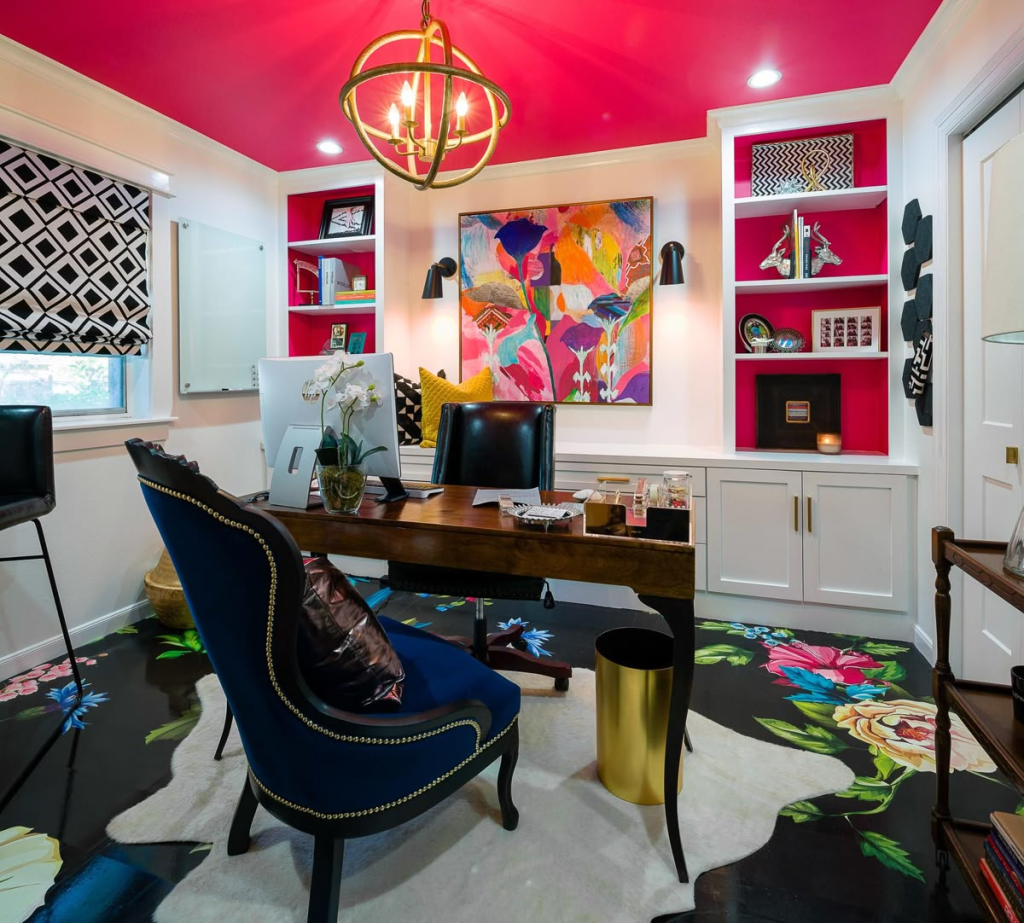
Don’t forget the ceiling the “fifth wall” offers untapped potential. Painted ceilings, applied moldings, or even fabric panels can transform the entire spatial experience.

Layered Lighting Solutions for Maximum Impact
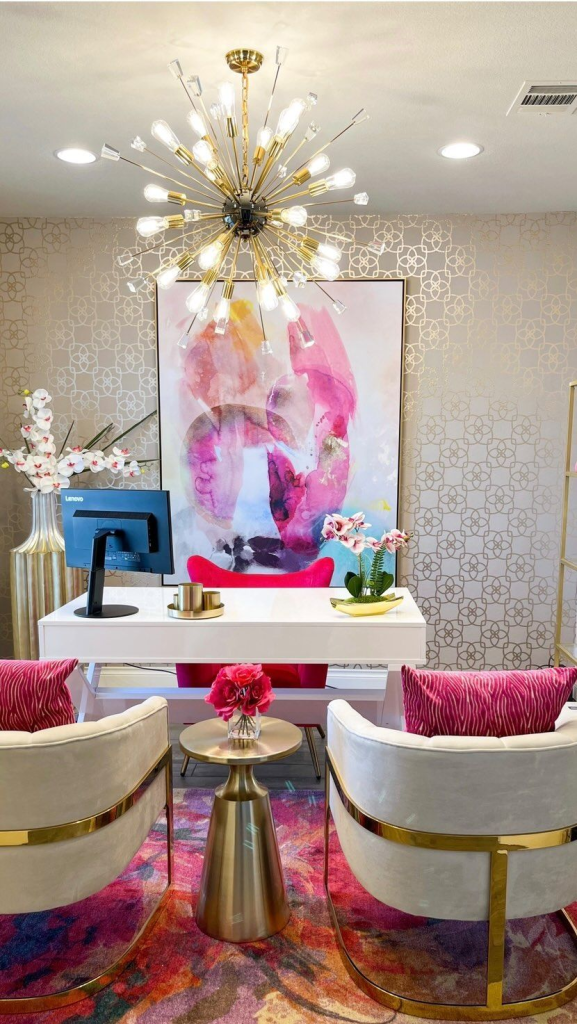
Layer your lighting like a professional designer. Overhead fixtures provide general illumination, but personality comes from table lamps, floor lamps, sconces, and accent lighting.
Chandeliers aren’t just for dining rooms a crystal chandelier over your desk creates unexpected glamour, while a Sputnik fixture adds mid-century flair.
For budget-friendly options, check out Amazon’s wide selection of statement chandeliers or West Elm’s modern fixtures. Ikea offers surprisingly stylish pendant lights that can be grouped for dramatic effect.
Consider the quality of light, not just quantity. Warm, soft lighting creates an inviting atmosphere that makes long work days more pleasant.
Dimmer switches allow you to adjust the mood throughout the day, from bright task lighting for detailed work to softer ambient lighting for video calls.
Mastering Pattern Mixing in Your Office Design
The art of pattern mixing separates amateur maximalists from design masters. Start with a large-scale pattern as your foundation perhaps wallpaper or a large area rug from retailers like Rugs USA or Overstock.
Add a medium-scale pattern in coordinating colors through curtains or upholstery. Finally, introduce small-scale patterns through pillows, artwork, or accessories.
Maintain visual cohesion through color repetition. If your wallpaper features navy, coral, and gold, ensure these colors appear throughout your other patterns, even if the designs are completely different.
Geometric patterns play well with organic shapes. Florals pair beautifully with stripes. Animal prints yes, leopard can work in an office add unexpected sophistication when balanced with more traditional patterns.
Displaying Personal Collections in Your Workspace
Maximalist offices celebrate personal interests and collections. Books, obviously, but also vintage typewriters, antique maps, musical instruments, or travel souvenirs. The key is thoughtful arrangement that doesn’t impede functionality.
Create vignettes small, carefully composed arrangements that tell visual stories. A collection of vintage cameras paired with old photography books and a small potted plant creates interest without chaos.
You can find unique vintage pieces on Etsy, while Amazon offers affordable decorative objects and planters. Rotate collections seasonally to keep your space feeling fresh and evolving.
Display items at varying heights using books, small stands, or wall-mounted shelves. This creates visual rhythm and prevents the dreaded “museum display case” effect.
Blending Technology with Maximalist Aesthetics
Hiding Cables and Wires Stylishly
Modern technology doesn’t have to compromise maximalist aesthetics. In my experience, cable management was one of the biggest challenges when designing bold spaces.
I discovered that decorative cord covers or routing cables through vintage wooden boxes maintains the aesthetic while keeping functionality intact.
Choose tech accessories in colors that complement your palette rose gold laptops, colorful phone cases, or patterned mouse pads.
Vintage-Inspired Tech Solutions
Consider vintage-inspired tech pieces: retro-styled speakers, typewriter keyboards for modern computers, or desk lamps that double as phone chargers. These pieces bridge the gap between functionality and style seamlessly.

How Can I Make My Small Home Office Look Maximalist?
Maximizing Vertical Space
Limited square footage doesn’t eliminate maximalist possibilities it simply requires strategic thinking. Vertical space becomes crucial. Floor-to-ceiling bookcases, wall-mounted desks, and hanging planters maximize impact while preserving floor space.
Using Mirrors to Expand Visual Space
Mirrors multiply visual space and light. A large ornate mirror can make a small office feel significantly larger while adding maximalist flair.
Position mirrors to reflect interesting vignettes or outdoor views for maximum effect. Consider statement mirrors from Target’s Project 62 line or Anthropologie for unique vintage-inspired options.
Multi-Functional Furniture Solutions
Choose furniture with dual purposes: storage ottomans, desk organizers that double as sculptural elements, or beautiful boxes that hide less attractive necessities.
Seasonal Updates for Your Maximalist Workspace
One advantage of maximalist spaces is their adaptability to seasonal changes. This approach keeps your home transformations feeling dynamic throughout the year.
Swap pillow covers from stores like Pottery Barn or Target, change artwork, or rotate collections to reflect different times of year.
Spring might bring lighter colors and fresh flowers, while autumn calls for richer tones and cozy textures.
This seasonal evolution keeps your workspace feeling dynamic and prevents visual fatigue that can occur in static environments. Check out my guide on metallic decor trends for seasonal accent ideas that work year-round.
What Are the Best Budget-Friendly Maximalist Design Ideas?
Thrift Shopping and Vintage Finds
Creating maximalist impact doesn’t require unlimited funds. Thrift stores, estate sales, and vintage shops offer unique pieces at affordable prices.
Mix high and low elements pair an expensive vintage desk with budget-friendly accessories from discount retailers like HomeGoods, TJ Maxx, or even Dollar Tree for small decorative elements.
DIY Maximalist Projects
DIY projects can create custom pieces that perfectly fit your vision and budget. Paint furniture in bold colors using Benjamin Moore or Sherwin Williams samples, create your own artwork with supplies from Michaels or Hobby Lobby, or reupholster chairs in striking fabrics from Fabric.com.
Some of my most successful room transformations have incorporated handmade elements that added personal touches while staying within budget constraints.

Is a Maximalist Office Hard to Keep Organized?
Smart Storage Solutions
Maximalist spaces require more attention to organization than minimalist ones. Implement systems that keep the abundance organized: labeled storage boxes, designated spaces for different types of items, and regular editing of displays.
Maintenance Tips for Busy Spaces
Clean regularly dust accumulates more visibly in busy spaces. But don’t let maintenance fears prevent you from embracing maximalism. The joy and inspiration these spaces provide often outweigh the additional upkeep required.
Famous Maximalist Office Inspirations
Consider the legendary offices of creative professionals: Anna Wintour’s Vogue office with its bold patterns and unexpected color combinations, or the eclectic workspace of Kelly Wearstler, where every surface tells a story. These spaces prove that maximalist design can enhance rather than hinder professional success.
Look to historical precedents too the richly appointed studies of Victorian authors or the pattern-heavy salons of 18th-century intellectuals demonstrate that maximalism and productivity have long been compatible companions.
The Future of Bold Workspace Design
As remote work becomes permanently embedded in professional culture, our home offices will continue evolving beyond purely functional spaces. They’re becoming expressions of identity, sources of inspiration, and reflections of our complex, multifaceted lives.
Maximalist design acknowledges this complexity. It celebrates the reality that we’re not single-dimensional beings who thrive in sterile environments. We’re complicated, interesting people who deserve workspaces that match our richness and depth.
The trend toward maximalist offices represents more than aesthetic preference it’s a rejection of the notion that professional spaces must be bland to be serious.
In our increasingly digital world, surrounding ourselves with tangible beauty, meaningful objects, and inspiring color becomes not just pleasant but necessary for maintaining our humanity and creativity.
Your home office should energize you every time you enter it. It should make you smile during difficult phone calls and inspire breakthrough thinking during challenging projects. Most importantly, it should feel authentically, unapologetically you.
Because when work feels more like play when your environment delights rather than depresses everything becomes possible. And isn’t that exactly the kind of workspace we all deserve?
Frequently Asked Questions About Maximalist Home Offices
Can maximalism be professional?
Absolutely! Maximalist design, when thoughtfully executed, can actually enhance professionalism by demonstrating attention to detail, creativity, and personal brand strength. Many successful executives and creatives use bold, pattern-rich offices to inspire innovation and make memorable impressions during video calls.
What are the best colors for a productive maximalist office?
The most productive maximalist color schemes combine energizing hues with calming anchors.
Try deep forest greens with coral accents for focus and creativity, or rich navy blues paired with warm golds for analytical work. Always include at least one neutral element to provide visual rest.
How do I start a maximalist design on a budget?
Begin with one statement piece perhaps a bold area rug or dramatic wallpaper accent wall.
Build around this foundation using thrift store finds, DIY projects, and budget-friendly accessories from discount retailers.
Mix high and low elements strategically rather than trying to achieve everything at once.
Is maximalist office design suitable for video calls?
Yes, when planned thoughtfully! Position your camera to showcase your most curated corner rather than busy backgrounds.
Consider having a beautiful, organized bookshelf or gallery wall behind your desk. The key is creating controlled abundance that looks intentional rather than chaotic on screen.
How often should I update my maximalist office decor?
Maximalist spaces thrive on seasonal updates and periodic refreshing. Rotate collections quarterly, swap out textiles twice per year, and consider one major element change annually. This keeps the space feeling dynamic while preventing visual fatigue.
What’s the difference between maximalism and clutter?
Maximalism follows intentional design principles with cohesive color palettes, varied scales, and purposeful arrangement.
Clutter lacks organization and aesthetic coherence. True maximalist design maintains functionality while creating visual richness through thoughtful curation rather than random accumulation.
Follow, Share and Suscribe !
 Linda Designs | Home Decor, Interior Design & Lifestyle Inspiration