
Transforming cramped quarters into stunning sanctuaries, one brilliant design decision at a time.
Small bathrooms are puzzles waiting to be solved. After renovations and years studying what makes compact spaces sing, I’ve discovered something remarkable: the most beautiful bathrooms aren’t always the biggest ones.
They’re the smartest ones.
Whether you’re wrestling with a vintage home’s original 40-square-foot bathroom or designing a powder room that barely fits the essentials, this guide will show you how to create spaces that feel twice their actual size. Ready to unlock your bathroom’s hidden potential?
Understanding Your Small Bathroom’s True Potential
Most small bathrooms hover between 35-40 square feet, but here’s what might surprise you: I’ve seen professionally designed bathrooms that absolutely dazzle in spaces as tight as 18 square feet. Size isn’t everything strategy is.
The secret lies in recognizing that every single square inch serves a purpose. No wasted space. No missed opportunities. When you approach small bathroom design with this mindset, even the tiniest powder room can feel luxurious and spacious.
The Psychology Behind Small Space Design
Small bathroom design transcends mere fixture placement. It’s about crafting an environment that breathes, calms, and inspires. Environmental psychology research reveals a fascinating truth: thoughtfully designed small spaces often feel more comfortable than poorly planned large ones.
The magic happens in the details. Sight lines guide your eye through the space. Color temperature affects how open everything feels. Material choices can make walls seem to disappear. When these elements work in harmony, your compact bathroom transforms from cramped to cozy, from tight to just right.
Small Bathroom Layout: Your Design Foundation
Layout determines everything in small bathroom design. The most effective approach? Start with what top designers call the “circulation triangle” the path connecting your toilet, sink, and shower or tub.
This triangle should allow comfortable movement while maximizing usable space around each fixture. Sounds simple, right? The execution requires careful planning and creative thinking.
The 15-Inch Rule That Changes Everything
The National Kitchen & Bath Association (NKBA) established a fundamental principle: maintain at least 15 inches of clear space in front of each fixture. In tiny bathrooms, this might seem impossible but clever placement makes it work beautifully.
Corner solutions unlock floor space: Position your toilet in a corner to free up valuable square footage while maintaining necessary clearances. Corner sinks, though less common, work wonders in powder rooms where space is at a premium.
Linear layouts create flow: In narrow bathrooms, arrange fixtures along one wall for a streamlined appearance. This approach shines in galley-style spaces where the door sits at one end.
Shower vs. Tub: The Space-Maximizing Decision
The shower-versus-tub debate becomes crucial in small bathroom design. Removing a tub in favor of a well-designed shower can increase usable floor space by 30-40%. That’s significant real estate in a compact bathroom.
Walk-in shower advantages include:
- Eliminating visual barriers created by tub surrounds
- Creating opportunities for stunning tile work that draws eyes upward
- Improving accessibility for all users
- Incorporating built-in storage niches seamlessly
Keep the tub when:
- Designing primary bathrooms where relaxation takes priority
- Planning for homes with children
- Considering resale value in markets that favor tub retention

Small Bathroom Ideas That Transform Spaces
Vertical Storage Solutions That Soar
The space above your toilet becomes prime real estate in small bathrooms. Custom-built cabinets or floating shelves provide substantial storage without claiming floor space. Design experts consistently recommend extending storage all the way to the ceiling why stop short?
Recessed medicine cabinets deserve an upgrade: Standard versions are functional but boring. Modern options with LED lighting, electrical outlets, and adjustable shelving transform this necessity into a design feature. Look for models that recess 4-6 inches into the wall for maximum storage depth.
Mirror Magic: Doubling Your Space Visually
Large mirrors are absolutely non-negotiable in small bathrooms. But placement and style make all the difference between “nice” and “wow.”
Instead of standard rectangular mirrors, consider:
- Full-wall mirrors extending from vanity to ceiling
- Rounded mirrors that soften angular spaces
- Mirrors with integrated lighting that eliminate harsh shadows
The right mirror can literally double your perceived space while adding sophisticated style. For stunning mirror inspiration that transforms rooms, check out our curated collection of statement wall mirrors that transform any space.
Consistent Flooring Creates Visual Flow
Here’s a trick that many homeowners overlook: extend identical flooring into adjacent spaces. When your bathroom flooring flows seamlessly into connected bedrooms or hallways, you eliminate visual breaks that make spaces feel choppy and cramped.
This simple continuity trick makes small bathrooms feel like natural extensions of larger spaces rather than closed-off boxes.
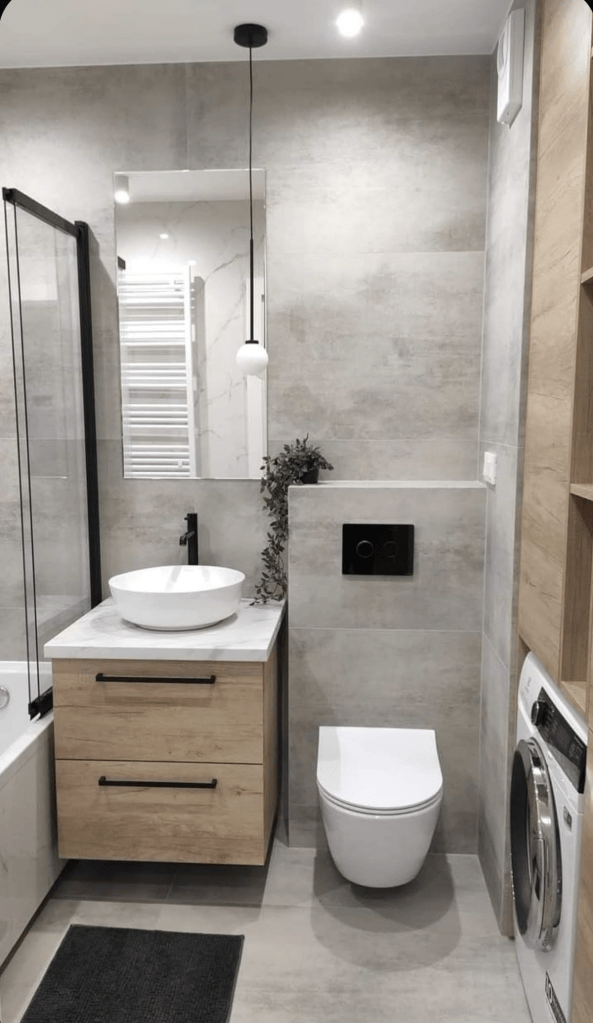
Small Bathroom Design Ideas for Every Style
Modern Minimalist Magic
Clean lines, neutral palettes, and hidden storage define modern small bathroom design. The minimalist approach excels in compact spaces because it eliminates visual clutter entirely.
Essential modern elements:
- Floating vanities that reveal floor space
- Frameless glass shower doors for seamless transitions
- Integrated storage solutions that disappear into walls
- Monochromatic color schemes that create continuity
Classic Traditional with Smart Editing
Traditional design in small bathrooms requires careful curation. The key? Select fewer, higher-quality traditional elements rather than cramming every classic detail into limited space.
Successful traditional touches include:
- Pedestal sinks with perfect proportions
- Subway tile in creative layouts beyond basic brick patterns
- Classic fixtures in updated finishes
- Wainscoting that adds texture without overwhelming
Industrial Chic That Adds Character
Industrial elements can work beautifully in small bathrooms, providing texture and visual interest without requiring additional square footage.
Industrial accents that work:
- Exposed plumbing as intentional design elements
- Metal and concrete textures for depth
- Edison bulb lighting fixtures for warmth
- Raw wood vanity tops for organic contrast

Small Bathroom Ideas with Shower: Maximizing Wet Areas
Glass Block Windows: Privacy Plus Light
Privacy without sacrificing natural light challenges many small bathrooms with showers. Glass block windows solve this perfectly, offering privacy while filtering beautiful natural light throughout the space. They’re particularly effective in shower areas where traditional windows would create problems.
Curbless Showers Create Seamless Transitions
Eliminate the shower curb to create seamless transitions that make entire bathrooms feel larger. This approach requires careful waterproofing and proper floor sloping, but the visual impact? Dramatic.
The continuous floor plane eliminates visual barriers and creates an open, flowing feeling that’s impossible to achieve with traditional shower entries.
Strategic Shower Niche Design
Built-in storage niches eliminate hanging caddies and corner shelves that make showers feel cramped. Best practice: create niches during construction or renovation, making them at least 12 inches wide and 6 inches deep for practical daily use.
For more shower design inspiration, check out our coastal bathroom makeover, where we transformed a cramped, dated space into a bright, airy retreat.
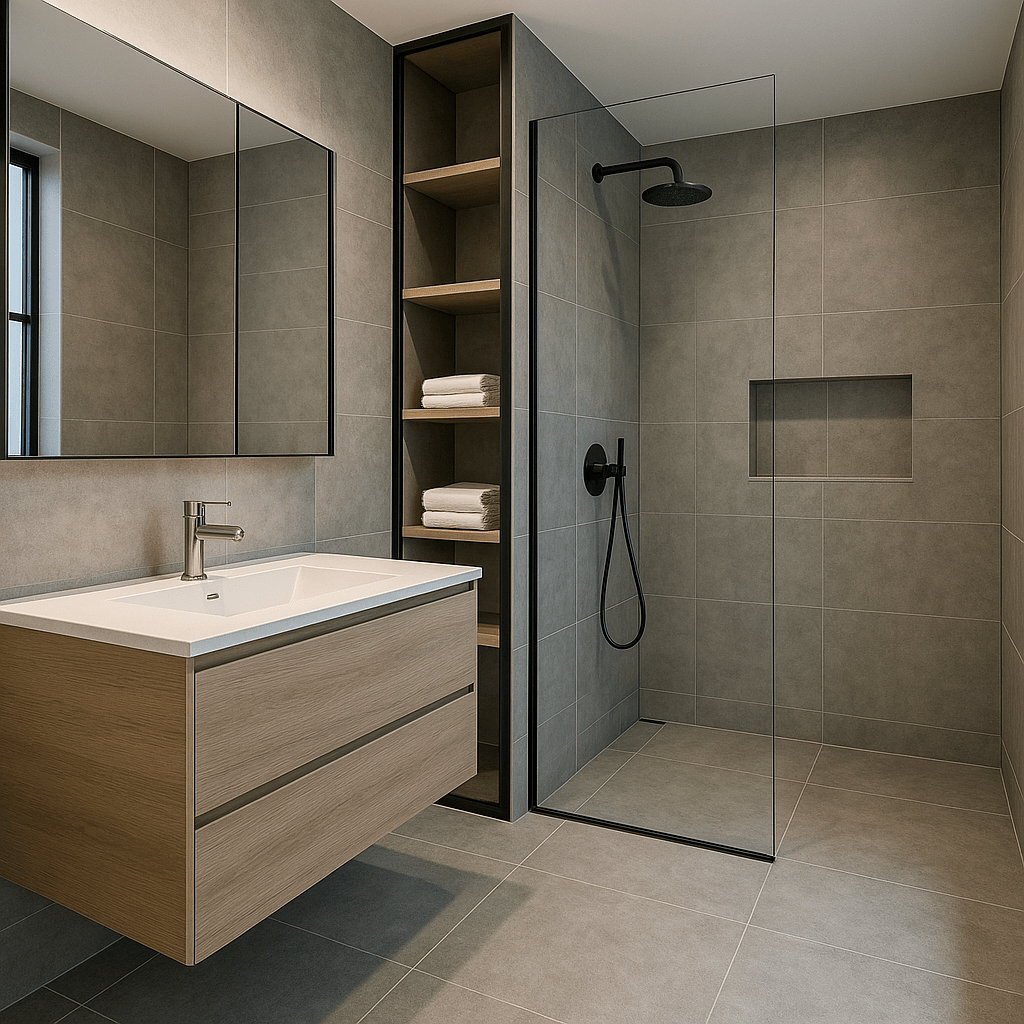
Small Bathroom Sink Solutions That Work
Pedestal Sinks: Beauty with Trade-offs
Pedestal sinks save precious floor space but sacrifice storage. If you choose this route, plan alternative storage solutions carefully. Wall-mounted cabinets, over-toilet storage, or slim rolling carts can provide the storage you’re losing.
Vessel Sinks on Floating Vanities
Vessel sinks on narrow floating vanities create spa-like feelings while providing some storage. Choose vanities that are 16-18 inches deep rather than standard 21-inch versions to maximize floor space without sacrificing function.
Corner Sink Solutions for Tight Spaces
Corner sinks work beautifully in powder rooms and secondary bathrooms. Modern versions are far more attractive than their outdated predecessors, available in both pedestal and vanity-mounted styles.
Small Bathroom Color & Design Strategies
Color Psychology in Compact Spaces
Light colors reflect light and create openness that’s conventional wisdom. But don’t fear darker colors in small bathrooms! Deep blues, charcoal grays, and even black can create cocoon-like intimacy that’s incredibly appealing in compact spaces.
The key? Balance. Use darker colors strategically while maintaining adequate lighting and reflective surfaces. For comprehensive guidance on selecting the perfect hues for your space, explore our ultimate guide to choosing the best paint colors for your home the principles apply beautifully to bathroom design.
Texture and Pattern Without Overwhelm
Introduce texture through tiles, wallpaper, or accessories to add visual interest without requiring additional space. Consider textured tiles on accent walls or interesting tile patterns that draw eyes upward, making ceilings feel higher.
Lighting Layers That Transform
Multiple light sources prevent harsh shadows and create ambiance that makes small spaces feel larger. Layer ambient lighting, task lighting, and accent lighting to create welcoming, well-lit environments.

Small Bathroom Tile Ideas That Wow
Large Format Tiles: Counterintuitive Magic
Here’s something that surprises many homeowners: large tiles can make small bathrooms feel bigger. Fewer grout lines create cleaner, more continuous surfaces that don’t break up space visually.
Subway Tile Variations
Classic subway tile remains popular for excellent reasons, but consider creative layouts like herringbone or vertical stacking to add interest without overwhelming compact spaces.
Statement Floors That Ground the Space
Bold floor tiles can ground small bathrooms while providing personality. Geometric patterns, encaustic tiles, or bold colors work beautifully when balanced with neutral walls.

Small Bathroom Storage Solutions
Built-in Solutions Maximize Every Inch
Custom built-ins maximize every available inch. Consider floor-to-ceiling cabinets, built-in hampers, or integrated makeup vanity areas if space allows.
Multi-functional Furniture
Pieces serving multiple purposes are essential in small bathrooms. Vanities with built-in laundry hampers, mirrors with hidden storage, or small stools doubling as storage provide incredible value in tight quarters.
Hidden Storage Maintains Clean Lines
Concealed storage maintains clean aesthetics while providing necessary function. Consider outlets hidden behind mirrors, storage behind false walls, or integrated shower niches.
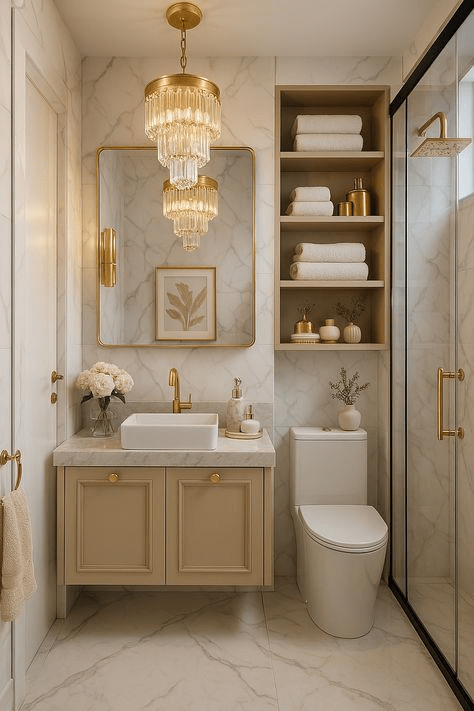
Professional Tips for Small Bathroom Success
Planning and Permits Matter
Always check local building codes before making structural changes. Many small bathroom renovations require permits, particularly when moving plumbing or electrical elements. According to building code requirements, proper planning prevents costly mistakes.
Working with Design Professionals
Invest in professional design help for small bathrooms. The margin for error is smaller, and experienced designers spot solutions that might not be obvious to homeowners. Professional expertise pays dividends in compact spaces.
Timeline Considerations
Small bathroom renovations often take longer than expected because every element requires precise planning and execution. Allow extra time for the detailed work that small spaces demand.
For comprehensive renovation planning, explore resources from the National Kitchen and Bath Association, which provides industry standards and best practices.
Conclusion: Embracing Your Small Bathroom’s Potential
Small bathroom design demands creativity, precision, and willingness to think beyond conventional solutions. Every element must earn its place, but when executed thoughtfully, compact bathrooms rival their larger counterparts in luxury and function.
The best small bathroom solutions reflect your lifestyle and preferences while maximizing your space’s unique characteristics. Whether you’re working with a tiny powder room or compact master bathroom, these principles will help you create spaces that are both beautiful and brilliantly functional.
Remember: limitations often spark the most innovative solutions. Embrace your small bathroom’s unique challenges, and you’ll discover that exceptional design isn’t about square footage it’s about thoughtful planning, creative problem-solving, and meticulous attention to detail.
Great design transforms constraints into opportunities. Your small bathroom isn’t a limitation it’s a canvas for creativity.
Frequently Asked Questions
Q: What is the best color for a very small bathroom?
Light, neutral colors like soft whites, pale grays, and warm beiges remain the safest choices for very small bathrooms because they reflect light and create an open feeling. However, don’t be afraid to experiment with darker colors!
Deep navy blues, charcoal grays, or even dramatic black can create an intimate, cocoon-like atmosphere that feels intentionally cozy rather than cramped. The key is balancing darker walls with adequate lighting, mirrors, and reflective surfaces to maintain brightness where it counts.
Q: Do large tiles really make a small bathroom look bigger?
Yes, large tiles genuinely make small bathrooms appear more spacious! This works because fewer grout lines create cleaner, more continuous surfaces that don’t visually chop up the space.
Large format tiles (12×24 inches or bigger) eliminate the busy grid pattern that smaller tiles create, allowing your eye to flow smoothly across surfaces. This technique works especially well on floors and shower walls, where continuous surfaces create the illusion of expanded space.
Q: Is a curbless shower a good idea in a small bathroom?
Absolutely! Curbless showers are excellent choices for small bathrooms because they eliminate visual barriers and create seamless floor transitions. The continuous floor plane makes the entire bathroom feel more open and flowing.
However, curbless showers require proper waterproofing and careful floor sloping to prevent water damage. When executed correctly by professionals, they’re one of the most effective ways to make small bathrooms feel significantly larger.
Q: How much does a small bathroom renovation typically cost?
Small bathroom renovation costs typically range from $6,500 on average, with most projects falling between $1,500 and $15,000 depending on the scope of work and materials chosen. Costs generally run $100-$200 per square foot for complete renovations.
Budget-friendly updates like new paint, fixtures, and accessories might cost $1,500-$3,000, while mid-range renovations with quality materials and some layout changes typically run 6,000-$12,000. High-end renovations with premium finishes, custom storage, and structural changes can reach $15,000 or more.
Expert Resources:
- Environmental Psychology Research on small space design
- National Kitchen and Bath Association Guidelines
- Building Code Requirements for bathroom design
- Accessibility Standards for inclusive bathroom design
 Linda Designs | Home Decor, Interior Design & Lifestyle Inspiration